


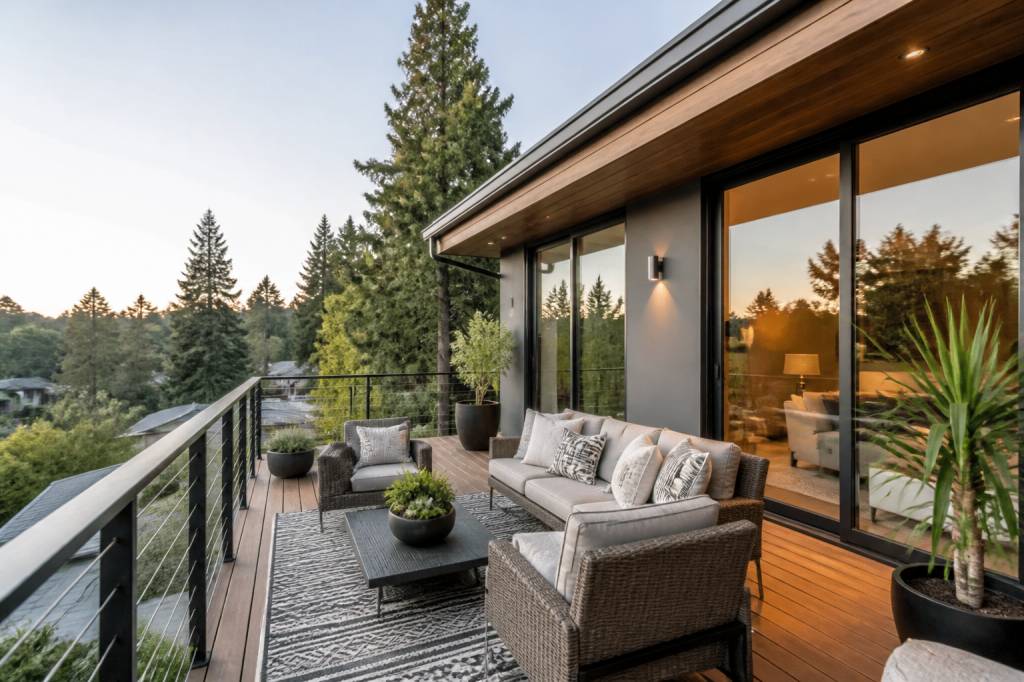
A second-story deck can transform the way a house lives. Done well, it adds a real outdoor room: a place for morning coffee, evening dinners, a safer play zone above a sloping garden, or simply a better connection between indoor and outdoor spaces. Done badly, it becomes a maintenance headache, a privacy problem, and in the worst case, a structural risk. So yes, this is one of those upgrades where design and engineering need to shake hands before anyone starts sketching railings.
For homeowners thinking about modernizing a house, a second-story deck can do more than create extra square footage without a full extension. It can change the façade, improve sightlines, and make a compact plot feel much larger. But because it sits high above ground level, it also raises important questions: How do you make it safe? What materials are worth the money? How do you avoid turning your living room into a fishbowl for the neighbours?
Let’s go through the practical side: what makes a second-story deck worth the investment, what needs to be planned before building, and where people tend to cut corners at their own expense.
Why second-story decks are gaining popularity
There’s a simple reason these decks are showing up more often in contemporary homes: they solve space problems elegantly. If your ground floor opens onto a small patio, a steep site, a garage roof, or a garden that doesn’t really function as a usable outdoor area, an elevated deck can create a proper exterior living space where none existed before.
They’re especially useful in these situations:
From a design point of view, a second-story deck also suits contemporary architecture very well. Clean lines, lightweight detailing, large openings, and a strong indoor-outdoor connection all work naturally with elevated outdoor platforms. If the deck is integrated properly, it looks intentional rather than tacked on.
Safety first: the non-negotiables
If you remember only one thing, let it be this: a second-story deck is not a decorative project. It is a structural addition that must be engineered for load, weather, movement, and long-term use. That means safety is not a place for improvisation.
The main safety points are straightforward, even if the technical checks behind them are not:
Railings deserve special attention. At second-story height, they are not a styling detail. They are a life-safety element. In practice, that means checking local building regulations for minimum height, opening sizes, and load resistance. If a contractor waves this away with “it’ll be fine,” that is your cue to ask for a second opinion.
Another overlooked issue is door threshold safety. If the deck sits directly outside a second-floor door, the transition from interior to exterior must be carefully detailed to prevent water entry while keeping access comfortable. A beautiful door opening that leaks after the first storm is not a win.
Designing for modern living, not just for looks
A well-designed second-story deck should feel like an extension of the home, not a platform floating outside it. That means planning how the space will actually be used.
Ask some practical questions before settling on a layout:
Modern homes often benefit from a simple, rectangular deck with minimal visual clutter. But that doesn’t mean plain. A good design uses proportion, material contrast, and careful detailing. For example, a timber-look composite deck with slim metal railings and integrated lighting can feel refined without becoming fussy.
One of the best upgrades I’ve seen on a two-storey renovation was a compact deck that wrapped around one corner of the upper floor. It did three jobs at once: created a seating zone, improved the master bedroom outlook, and visually balanced the rear elevation of the house. The owners had originally planned a larger footprint, but after reviewing the site and budget, they chose a smaller, better-detailed deck instead. That decision saved money and made the space more usable year-round.
Choosing materials: timber, composite, steel, and aluminium
Material choice is where design ambition meets maintenance reality. The cheapest option at installation is not always the least expensive over time, especially at height where access for repairs is more annoying and more expensive.
Timber remains popular because it feels warm and natural. Hardwoods and treated softwoods both have their place, but they require regular maintenance. Expect cleaning, sealing, and periodic inspection for movement, rot, and fastener corrosion. Timber works well if you like a softer, more traditional feel and you are prepared for upkeep.
Composite decking is often the practical choice for second-story decks. It offers a consistent finish, reduced maintenance, and better resistance to moisture than many natural timbers. It’s not perfect, though. Lower-quality products can fade, stain, or overheat in direct sun. Always compare warranties, slip performance, and the actual core composition of the board, not just the marketing language.
Steel framing is a strong option when spans are larger or when the deck design needs a slim profile. It is especially useful in modern builds, but it must be detailed carefully to avoid corrosion and thermal bridging. In exposed conditions, coating quality matters.
Aluminium framing is lighter and highly corrosion-resistant, making it attractive for coastal or wet environments. It can cost more upfront, but if you want a clean, long-life structure with minimal maintenance, it deserves serious consideration.
A sensible approach is often to mix materials: a steel or aluminium substructure for durability, paired with a timber or composite surface for comfort and appearance. That combination gives you the best of both worlds, assuming the detailing is done properly.
Waterproofing and drainage: the hidden make-or-break factor
Second-story decks fail most often where water is ignored. Not visually, necessarily, but structurally. Water gets in, gets trapped, and slowly causes damage that may not be obvious until repairs become expensive.
There are two broad approaches:
If the deck sits above living space, you need a proper membrane system, not optimistic assumptions and a few tubes of sealant. The membrane, flashings, upstands, drainage outlets, and termination details all need to be specified together. This is the part of the project where “we’ll sort that on site” is a dangerous phrase.
If the structure is open below, ensure that water can escape freely and that there is no standing water around fixings or posts. Hidden drainage problems can shorten the lifespan of even expensive materials. Slight falls, correct board spacing, and careful detailing at edges make a bigger difference than most homeowners expect.
Privacy, wind, and shade: the comfort issues people forget
A second-story deck can be brilliant on paper and awkward in real life if the comfort factors are ignored. Elevated spaces are exposed. Wind is stronger. Sun can be harsher. Neighbours can see more than you intended. This is where thoughtful design earns its keep.
For privacy, consider:
For wind protection, avoid over-enclosing the deck, which can make it feel boxed in. Instead, use partial screening in the right places. Even a simple side panel can make the space much more usable.
For shade, think beyond a garden parasol. Pergolas, retractable awnings, and fixed overhangs can all work, but they need to be sized properly. A shallow canopy that looks elegant on a drawing may provide little real shade in summer. On the other hand, a well-proportioned pergola can also help visually anchor the deck to the house.
How much does a second-story deck cost?
Costs vary widely depending on structure, access, size, materials, and whether the deck requires waterproofing over occupied space. As a rough planning range, a second-story deck generally costs significantly more than a ground-level deck because the engineering, safety detailing, and installation complexity increase quickly.
To budget properly, factor in these items:
For a mid-range project, it is wise to build in a contingency of at least 10 to 15 percent. More if your home is older, the structure is difficult to access, or the existing walls need reinforcement. Hidden conditions are common in renovation work. That’s not pessimism; it’s experience.
Permissions, codes, and the paperwork no one likes but everyone needs
Depending on where you live, a second-story deck may require building permits, planning approval, structural sign-off, or neighbor consultation. Do not assume that because it is “just a deck,” the rules are relaxed. Height, overlooking, egress, fire safety, and boundary distances can all come into play.
Before starting, check:
It’s also smart to document everything: drawings, specifications, product sheets, and contractor quotes. If a detail is challenged later, having clear paperwork will save time and stress. It also helps when comparing bids, because “we can do it cheaper” means very little without a defined scope.
Installation tips that save headaches later
Most deck problems are created before the first board is fixed. The good news is that they’re often avoidable with careful planning.
Here are the details worth insisting on:
Lighting deserves mention because it changes how a deck functions at night. Low-level step lights, subtle wall washers, or recessed perimeter lighting can make the space safer and more inviting without looking overdesigned. Over-light it, and you lose the calm. Under-light it, and it becomes a hazard. As usual, balance wins.
A smarter way to think about value
A second-story deck is not only about resale value, although it can certainly improve the appeal of a modern home. Its real value is daily use. If it gives you a better breakfast spot, a safer place for children to be outdoors, a view you can actually enjoy, or a private escape above a busy garden, then it is doing its job.
The strongest projects are the ones where structure, privacy, weather protection, and materials all work together. That usually means the deck is not oversized, not overcomplicated, and not under-specified. In other words: less fantasy, more planning.
If you’re considering one, start with the structure and the regulations, then move on to the layout, materials, and comfort features. Ask for drawings. Compare quotes. Check references. And if someone tells you the safety details are “standard,” ask them to show you exactly what that means. Standard is good. Assumed is not.
With the right design and a realistic budget, a second-story deck can be one of the most effective ways to improve a home’s architecture and everyday livability. It creates usable space where ground conditions may limit your options, and it can give a modern house that clean indoor-outdoor rhythm that makes contemporary living feel so good when it’s done properly.