


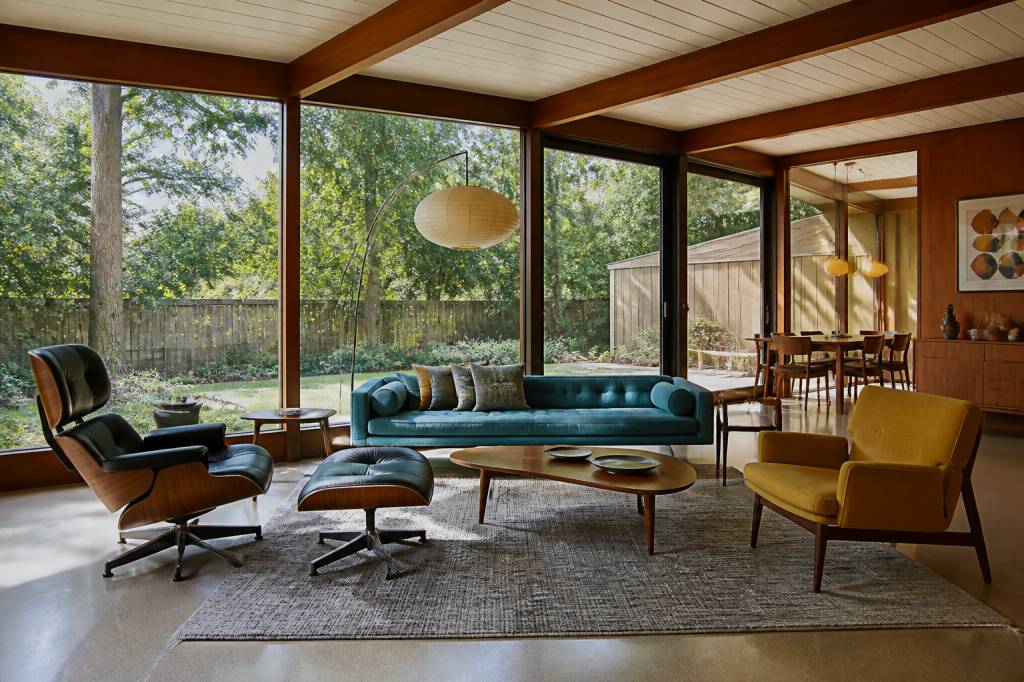
Mid-century interiors have survived every trend cycle for a reason: they’re practical, legible, and surprisingly easy to adapt to modern living. If you like clean lines but don’t want your home to feel cold, 1950s design gives you a very usable middle ground. It brings warmth, shape, and a bit of optimism without forcing you to turn your house into a film set.
The trick is not to copy the decade room by room. A contemporary home works best when you borrow the strongest ideas from the 1950s and edit the rest. That means choosing the right materials, proportion, and colour palette, then mixing in today’s comfort standards. Done well, the result feels current rather than nostalgic.
Here’s how to use 1950s design ideas in a contemporary home without overdoing it.
Start with the right 1950s design principles
Before buying a single chair or lamp, it helps to understand what actually defines 1950s design. The decade was shaped by post-war rebuilding, improved manufacturing, and a growing appetite for simpler, more efficient homes. That translated into furniture and interiors that were lighter, lower, and more functional than the heavy pre-war styles that came before.
The core ideas to keep in mind are straightforward:
- Low, horizontal furniture profiles
- Clean, tapered lines
- Natural materials such as wood, leather, wool, and glass
- Functional layouts with minimal visual clutter
- Warm but restrained colour palettes
- Graphic accents used sparingly
If you remember only one thing, make it this: 1950s style is more about proportion than decoration. A sofa with the wrong shape will look “retro” in the bad sense. The right silhouette, even in a modern fabric, will immediately read as mid-century influenced.
Use furniture with honest, simple shapes
The fastest way to introduce 1950s character is through furniture. Look for pieces with slim legs, open bases, and compact forms. This keeps the room visually light, which is especially useful in contemporary homes where floor plans are often open and every object is on display.
A few good examples:
- A walnut sideboard with tapered legs in the living room
- A rectangular coffee table with a thin solid-wood frame
- A dining table with simple splayed legs and no heavy ornament
- Upholstered armchairs with compact arms and button-free cushions
Budget-wise, this is where you need to be careful. Authentic vintage pieces can be excellent, but restoration adds up quickly. A second-hand sideboard may cost less than a new one, but if it needs veneer repair, new handles, and refinishing, you can easily spend €300 to €800 on work alone. For a contemporary home, high-quality reproductions or modern pieces with mid-century references often make more sense than chasing originals for every item.
One practical rule: if a piece is large, keep the shape simple. If it is small, you can be bolder with detail. A sculptural lounge chair can carry a room. A bulky sofa with decorative feet usually just makes the room feel busy.
Choose a 1950s-inspired colour palette that still feels current
The 1950s weren’t all pastels and mint green kitchens, although those certainly existed. Many interiors used earthy tones: olive, ochre, rust, teak brown, smoky blue, cream, and charcoal. These colours work well today because they are warm without being sugary.
For a contemporary home, try building your palette in layers:
- A neutral base: off-white, soft grey, or warm beige
- A wood tone: walnut, teak, smoked oak, or stained ash
- One saturated accent: mustard, forest green, petrol blue, or terracotta
- One dark anchor: black, deep brown, or graphite
This approach keeps the room grounded. If you use too many “retro” colours at once, the result can look themed rather than designed. And yes, there is a difference. Your home is not a diner set.
If you’re repainting, sample colours properly on at least two walls and check them in daylight and evening light. Mid-century tones can shift a lot under artificial lighting, especially if your bulbs are too cool. Aim for warm white lighting, ideally around 2700K to 3000K.
Bring in wood, but use it with discipline
Wood was central to 1950s interiors, but not in a heavy country-house way. It was used to add warmth to otherwise simple spaces. Walnut, teak, and oak are the classic choices, though modern stained ash can also work well.
The key is consistency. You don’t need every item in the same finish, but you do need to avoid random mixing. A room with walnut side tables, pale oak shelving, cherry cabinets, and a dark teak dining set will feel fragmented unless there is a very deliberate design plan.
A safer strategy is to choose one dominant wood tone and repeat it three or four times in the room:
- Sideboard or storage unit
- Table frame or chair legs
- Picture frames or shelving
- One decorative object, such as a lamp base or bowl
If you’re renovating, wood veneer can be a smart budget option. It delivers the look of solid timber at a lower cost and is often more stable in modern interiors. For kitchens and built-ins, this can save several hundred euros per linear metre compared with premium solid wood joinery.
Use lighting as a design feature, not an afterthought
1950s design understood something many homes still get wrong: lighting should shape the room, not just illuminate it. In a contemporary space, this means mixing ambient, task, and accent lighting rather than relying on one central ceiling fixture.
Look for fixtures with a simple geometry and a bit of personality. Classic 1950s references include dome pendants, tripod floor lamps, arc lamps, and globe lights. You don’t need to go full vintage showroom. A modern lamp with a brass stem, opal glass shade, or slim metal base can carry the same feeling.
Practical tips:
- Use one statement pendant per main zone in open-plan spaces
- Add a floor lamp near seating to avoid harsh overhead light
- Use table lamps to create evening atmosphere
- Keep finishes consistent: brass, blackened steel, or chrome rather than all three
Expect to spend around €80 to €250 for a well-made pendant, €120 to €400 for a floor lamp, and more if you want designer pieces. If the budget is tight, spend more on one good lamp and less on decorative accessories. Lighting does more work than cushion scatter ever will.
Mix graphic patterns carefully
One of the easiest ways to reference the 1950s is through pattern, but this is also where people can overdo it quickly. The decade loved atomic motifs, boomerang shapes, sunbursts, and geometric repeats. In a contemporary home, those elements should appear as accents, not as the entire mood board.
Good places to introduce pattern include:
- One cushion fabric in a geometric print
- A rug with a subtle repeating motif
- Wallpaper on a single wall or in a small room
- Artwork with bold line work or abstract shapes
If you’re considering wallpaper, choose a small-scale pattern for compact spaces and a larger, more open motif for bigger rooms. In a hallway or guest WC, a 1950s-inspired print can be brilliant because you can be more daring without committing the whole house to it. Material cost for good wallpaper is typically €30 to €90 per roll, not including installation. And yes, bad wall preparation will ruin the effect, so don’t skip filling and priming.
Don’t forget the kitchen: where 1950s ideas still work well
The 1950s kitchen was all about efficiency, storage, and easy-clean surfaces. That is still relevant. In fact, many of the best contemporary kitchen layouts borrow directly from this logic: clear work zones, streamlined cabinetry, and durable materials.
To get the look without making your kitchen feel dated:
- Choose flat-front or lightly framed cabinets
- Use a simple handle profile, such as slim pulls or integrated rails
- Combine timber with painted units instead of using one finish everywhere
- Keep worktops clean and uncluttered
- Consider a retro-style fridge only if the rest of the room is restrained
For a subtle nod, a coloured appliance in cream, sage, or soft black can work. For a stronger 1950s feel, pair it with terrazzo splashback tiles or a linoleum floor in a muted tone. Budget note: a good quality kitchen refresh using repainting, new handles, and a splashback update can often stay within €1,500 to €4,000, depending on labour and material choices. A full replacement is, of course, a different conversation altogether.
Use curves sparingly to soften modern interiors
Although 1950s interiors are often associated with straight lines, they also used curves in a very controlled way. Think rounded chair backs, arched lamp shades, and soft-edged tables. These shapes are useful in contemporary homes because they stop open-plan rooms from feeling too rigid.
A few strategic curved elements are enough:
- A rounded lounge chair in a reading corner
- An oval mirror above a console
- A circular dining table in a compact kitchen
- A coffee table with softened corners
Do not fill the room with curves just because they’re trendy. If everything is rounded, the design loses its structure. Use them to offset harder architectural elements such as boxy windows, straight wall runs, or a linear kitchen.
Choose textiles that feel tactile rather than shiny
Textiles in the 1950s were often practical and tactile. Wool, cotton, boucle, and woven blends fit the period better than glossy synthetics. In a contemporary home, this matters because texture is what keeps mid-century references from feeling flat.
Good textile combinations include:
- Wool rug + linen sofa cover + leather accent chair
- Cotton curtains + timber blinds + boucle cushion
- Plain upholstery + one patterned cushion + one textured throw
If you’re furnishing on a budget, start with the large fabric surfaces first. A cheap sofa can be transformed visually with the right throw and cushions, but a poor-quality fabric on a main chair will always look tired. Expect a decent wool rug to start around €250 for a smaller size and climb quickly with custom dimensions.
Balance vintage references with modern living requirements
This is where many projects go wrong. A 1950s-inspired room should not require you to live less comfortably than you do now. Contemporary homes need better storage, better lighting, better insulation, and better sockets than a period set from a film set.
So keep these modern requirements in place:
- Enough closed storage to reduce visual clutter
- Power points where you actually use them
- Easy-clean surfaces in kitchens and family spaces
- Good-quality seating with proper ergonomic support
- Window treatments that improve privacy and heat control
In other words, borrow the look, not the inconvenience. There’s no award for having an authentic 1950s chair that gives you back pain after twenty minutes.
A simple room-by-room approach
If you want a practical way to get started, use this method:
- Living room: one walnut or teak storage piece, one iconic lamp, one geometric rug
- Dining area: a clean-lined table, slim chairs, pendant lighting, and one artwork with strong shapes
- Bedroom: low bed frame, warm timber bedside tables, linen bedding, and a restrained colour palette
- Hallway: oval mirror, compact console, and a bold but limited wallpaper or paint colour
- Kitchen: flat-front cabinets, simple hardware, and a mix of timber and painted finishes
That is usually enough. You do not need every item to scream “mid-century.” In fact, the best rooms usually don’t. They feel collected, practical, and calm, with just enough reference to make you look twice.
What to avoid if you want the look to stay contemporary
There are a few common mistakes that can derail a good idea quickly:
- Overusing orange, avocado, and mustard in the same room
- Buying too many novelty “retro” accessories
- Mixing too many wood tones without a plan
- Choosing bulky furniture with fake vintage detailing
- Ignoring proportions because the item is “authentic”
If something feels too themed in the shop, it will probably feel even more themed at home. The goal is a room that uses 1950s design intelligence, not a museum display.
When in doubt, edit harder. Keep the best shape, the best material, and the best colour, then remove the rest. That is often the difference between stylish and confusing.
1950s design still works because it solves real problems: it lightens rooms, simplifies layouts, and adds warmth without clutter. For contemporary homes, that is a very good trade. Start with one or two strong references, repeat them with discipline, and let the rest of the room breathe.