


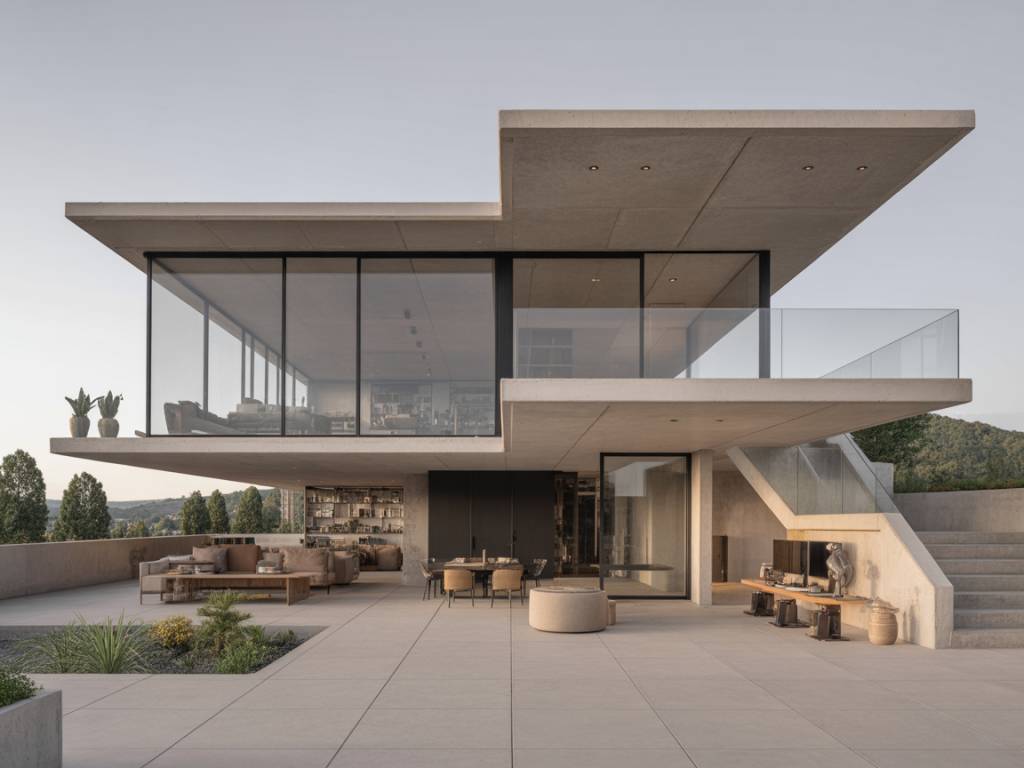
Concrete floors, exposed steel beams, glass partitions… and yet you still want your home to feel cosy, not like a showroom or an office lobby. It’s absolutely possible to mix industrial materials with a warm, livable atmosphere, mais ça ne s’improvise pas. If you only copy Pinterest photos sans réfléchir aux volumes, à l’acoustique et aux usages, vous risquez une ambiance froide, bruyante et peu confortable.
Let’s break it down in a practical way: how to use concrete, steel and glass at home, how to “soften” them, where to invest, and what mistakes to avoid if you don’t want to regret that polished concrete floor in six months.
What “industrial but warm” really means (in real life)
In professional language, we’d talk about “hard” versus “soft” finishes, “cold” versus “warm” materials. In everyday terms:
- Concrete, steel and glass = hard, reflective, often cold to the eye and touch.
- Wood, textiles, cork, lime paint, rugs, curtains = soft, absorb sound, add depth and warmth.
A balanced industrial interior is not 100% raw materials. It’s usually something like:
- 30–50% visible structural / industrial elements (concrete, steel, glass)
- 30–40% warm finishes (wood, paint, textiles)
- 10–20% “soul” elements (books, art, plants, vintage pieces, patina)
If you only see concrete, steel and glass, you’re in a lobby. If you only see wood, cushions and plants, you’re in a chalet. The good proportion is what makes the space feel designed but still human.
Understanding your three key materials
Before choosing decorative tricks, you need to understand how each material behaves in real life: weight, cost, maintenance, comfort.
Concrete: powerful but unforgiving
Used for floors, worktops, staircases, wall cladding.
- Pros: very durable, visually strong, perfect for open spaces and minimal interiors, easy to pair with wood and black steel.
- Cons: hard (no forgiveness if you drop something), cold if not heated, stains easily if badly sealed, cracks possible.
- Budget (France, 2024, indicative):
- Polished or waxed concrete floor: ~70–150 €/m² supplied & installed.
- Microcement on existing tiles: ~80–160 €/m².
- Timeframe: 3–7 days for a room (depending on system), plus drying time before furniture goes back.
- Key vigilance:
- Always ask for sample boards and sealing system details.
- Clarify crack policy in the contract: hairline cracks are often considered normal.
- Check compatibility with underfloor heating if you have it.
Steel: structure and graphic lines
Visible in beams, stairs, railings, glass partitions, furniture legs.
- Pros: brings rhythm, structure, slim profiles, industrial flavour without taking visual space.
- Cons: can feel cold or “office-like” if overused; poor acoustic performance if combined with large glass areas only.
- Budget:
- Custom steel & glass partition (type “atelier”): from ~800 to 1,500 €/m (height ~2.4m), depending on finish and glass type.
- Custom steel stair with wooden treads: easily 5,000–12,000 € depending on complexity.
- Timeframe: 4–10 weeks from design to installation for custom-made pieces.
- Key vigilance:
- Ask for anti-corrosion treatment if near humidity.
- Check sound transmission: a steel and glass partition does not stop noise like a solid wall.
- Check weight and fixings if using on existing slab or wall.
Glass: light, transparency… and privacy issues
Used in partitions, doors, railings, skylights, big windows.
- Pros: brings natural light deep into the home, enlarges spaces visually, perfect to link kitchen and living room while keeping smells somewhat controlled.
- Cons: poor acoustic insulation if single glazed, fingerprints and cleaning, privacy can be an issue in bedrooms and bathrooms.
- Budget:
- Interior glass partition with steel or aluminium frame: 800–1,500 €/m.
- Glass balustrade: ~350–600 €/linear meter (without complex fixing system).
- Key vigilance:
- Prefer laminated safety glass for partitions and staircases.
- Think about acoustics: is this between a kid’s bedroom and a noisy hallway?
- Manage privacy: fluted glass, partial frosting, curtains on ceiling rail if needed.
Three levers to warm up an industrial base
If your structure is already concrete / steel / glass, or if you plan to introduce them, your best allies to avoid the “cold loft” effect are:
- Texture
- Colour temperature
- Volume & light
Lever 1: Work with texture, not just colour
Against smooth concrete and reflective glass, texture is your best friend.
- Wood:
- Choose visible grain and a matte or satin finish (avoid very glossy varnish).
- Use it where you touch: table tops, stair treads, handrails, kitchen fronts.
- Textiles:
- Large wool or cotton rugs in living room and bedroom to “break” the concrete floor.
- Full-height curtains on big glass surfaces – even if you rarely close them, they add acoustic and visual warmth.
- Mix weaves: linen, bouclé, knits instead of all-flat fabrics.
- Wall finishes:
- Mineral or lime-based paints with a slight texture instead of plastified finishes.
- Wood panelling or slats on one wall to soften a long corridor or stairwell.
Realistic example: Concrete floor + white walls + black steel partition. Add: oak dining table, wool rug under the table, linen curtains, one wall painted in a warm greige. Cost-wise, you’re around:
- Rug 2×3 m: ~300–800 €
- Linen curtains for 3m bay window: 400–1,000 € (fabric + rails + installation)
- Paint for one wall (pro): ~150–300 € labour + 80–150 € paint, depending on surface.
Lever 2: Warm colour temperature, not just “grey and black”
Industrial style is often associated with grey and black. The trap is to stay only in cold tones.
- Base palette:
- Keep your concrete and steel neutral.
- Choose warm whites and greiges for walls (with a hint of yellow or red, not blue).
- Accents:
- Rust, terracotta, camel, khaki, dark petrol blue work very well on wood, textiles and accessories.
- Avoid multiplying strong colours; select 2–3 accent tones and repeat them.
- Metals:
- Mixing a bit of brass or bronze (on handles, lamps) with black steel helps avoid the “total black” look.
Lighting is critical. On concrete and glass, a cold 4000–5000K bulb will turn your home into a dentist’s office. For living spaces, aim for:
- 2700–3000K bulbs for warm, domestic light.
- Multiple layers of lighting: indirect, wall lights, table lamps – not just one ceiling spot rail.
Lever 3: Manage volume, sound and privacy
Large open spaces with concrete and glass can echo, feel empty, and become stressful on a daily basis.
- Acoustics:
- Rugs + curtains + upholstered furniture are your minimum combo.
- In very echoey rooms, add acoustic panels disguised as artwork or slatted wood ceilings.
- Space definition:
- Use steel & glass doors rather than completely open partitions between kitchen and living.
- Consider half-height walls plus glass, or a mix of solid and glazed modules for better privacy.
- Furniture layout:
- Create islands of comfort: rug + sofa + lamp + side table. Don’t spread everything against the walls.
Room-by-room strategies
Living room: soften the hard shell
Often the main space with the most concrete and glass. Priority: comfort and acoustics.
- At least one large rug (bigger than the sofa area, not a mini mat).
- Full, thick curtains on all large windows, with rails mounted as high as possible.
- One warm wall: textured paint, wood slats, built-in shelves.
- Mixed materials furniture: wood table, fabric sofa, maybe one leather armchair, not all metal bases.
Typical budget range for a 25–30 m² living room upgrade (without structural work):
- Rugs + curtains + 2–3 lamps: 1,200–3,000 €
- Paint / wall treatment: 300–1,000 €
- Additional wood furniture (sideboard, coffee table): 500–2,000 €
Kitchen: industrial style that you can actually clean
Concrete worktops and steel shelves are beautiful… until you live with them. Think maintenance.
- Worktops:
- Concrete: demands very good sealing and regular care; stains and etching are normal with time.
- Alternatives with industrial look but easier maintenance: compact laminate, sintered stone with concrete effect.
- Fronts:
- Combine wood lower units with plain matte uppers to avoid visual heaviness.
- Backsplash:
- Glass sheet, tiles with slightly irregular surface, or microcement – but always think of joint maintenance.
- Lighting:
- Warm LED strips under shelves, and 2700–3000K spots over worktop.
Bedroom: dial down the industrial
In a bedroom, concrete and glass should be handled with caution if you want actual rest.
- Limit glass partitions unless you manage blackout (curtains, blinds) and sound.
- Keep the floor warm (wood, cork, or at least 2/3 of the floor covered with rugs).
- Soften the headboard wall with textured paint, fabric headboard, or panelling.
- Prioritise dimmable, warm lighting and table lamps over ceiling spots.
Bathroom: industrial without the “cold locker room” effect
Concrete and steel can work beautifully in bathrooms, as long as you compensate.
- Combine finishes: concrete floor + tiled shower + wood vanity.
- Use fluted or frosted glass for partitions to avoid a harsh, see-through effect.
- Add warmth with:
- Wood or wood-effect fronts
- Textured towels, baskets, stool
- Wall lights with warm bulbs rather than only ceiling downlights
- Check slip resistance of concrete or large format tiles (R rating).
If you’re starting from scratch: where to put your budget
On a renovation with an industrial vibe, you won’t be able to do everything. Prioritise.
- Invest in the envelope:
- Quality floors (concrete or wood) – they’re expensive to change later.
- Good windows and glass doors for comfort and energy efficiency.
- Keep steel elements simple but solid:
- One well-designed partition or stair is better than multiple cheap imitations.
- Plan “softening” elements from the start:
- Budget for rugs, curtains, lighting in your global renovation budget, not “later if there’s money left”. There usually isn’t.
For a 60–80 m² apartment with industrial style in mind, a very rough distribution might look like:
- Concrete / microcement floors (partial): 4,000–8,000 €
- One steel & glass partition: 2,000–4,000 €
- Lighting (incl. spots + decorative): 2,000–5,000 €
- Rugs + curtains: 2,000–4,000 €
- Paint / wall finishes: 1,500–3,000 €
Obviously, numbers vary wildly depending on country, height under ceiling, technical constraints, and whether you DIY some items.
If you’re on a tighter budget: cosmetic industrial
You don’t need to pour a concrete slab to get the effect. Play with finishes and furniture.
- Walls:
- Mineral-effect paints or limewash to mimic concrete on one wall.
- Floor:
- Vinyl or laminate with concrete aspect for ~20–40 €/m², installed over existing floor.
- Steel effect:
- Ready-made “atelier” style partitions in aluminium or MDF painted black.
- Metal-legged furniture, open shelving with black brackets.
- Glass:
- Swap one solid door for a glazed door with simple black frame.
With 2,000–3,000 €, you can already transform a living room–kitchen area visually if you choose your priorities and DIY painting.
Common mistakes to avoid
- Too much glass, not enough walls:
- Result: no privacy, noise everywhere, difficulty to furnish. Keep some proper walls.
- Concrete everywhere:
- Floor + walls + worktops + table = visual monotony and coldness. Mix materials.
- Only ceiling spots:
- They flatten textures and make everything look harsher. Add lamps, wall lights, indirect light.
- Underestimating maintenance:
- Unsealed concrete worktop, black steel next to sea air, glass everywhere in a house with toddlers… think about fingerprints, water marks, chips.
- No acoustic plan:
- Before opening all your partitions, go stand in the future big room and clap your hands. If the echo is already strong, imagine with kids and TV.
A simple action plan to balance your industrial interior
If you already have concrete, steel and glass at home and feel it’s too cold, start with this checklist:
- List your hard surfaces (floors, walls, glass)
- List your soft surfaces (rugs, curtains, upholstered furniture, wood surfaces)
- If the hard list is twice as long as the soft list, you know where to act.
Then, step by step:
- Step 1 – Textiles:
- Add / upgrade rugs in living, dining, bedrooms.
- Install curtains wherever you have big glass surfaces.
- Step 2 – Lighting:
- Change too-cold bulbs to 2700–3000K.
- Add at least two lamps in each main room.
- Step 3 – One warm wall per main room:
- Paint, wood, shelves with books and objects – something that breaks the hard shell.
- Step 4 – Review steel and glass:
- Add curtains or frosting to exposed glass if privacy is an issue.
- If a partition is too transparent, consider partial solid infill (lower half in plasterboard, top in glass).
L’objectif n’est pas de cacher le béton, l’acier et le verre, mais de leur donner un contexte habitable. When these materials are framed by warm light, textured surfaces and real-life objects, they stop looking like a developer’s brochure and start feeling like a home.