


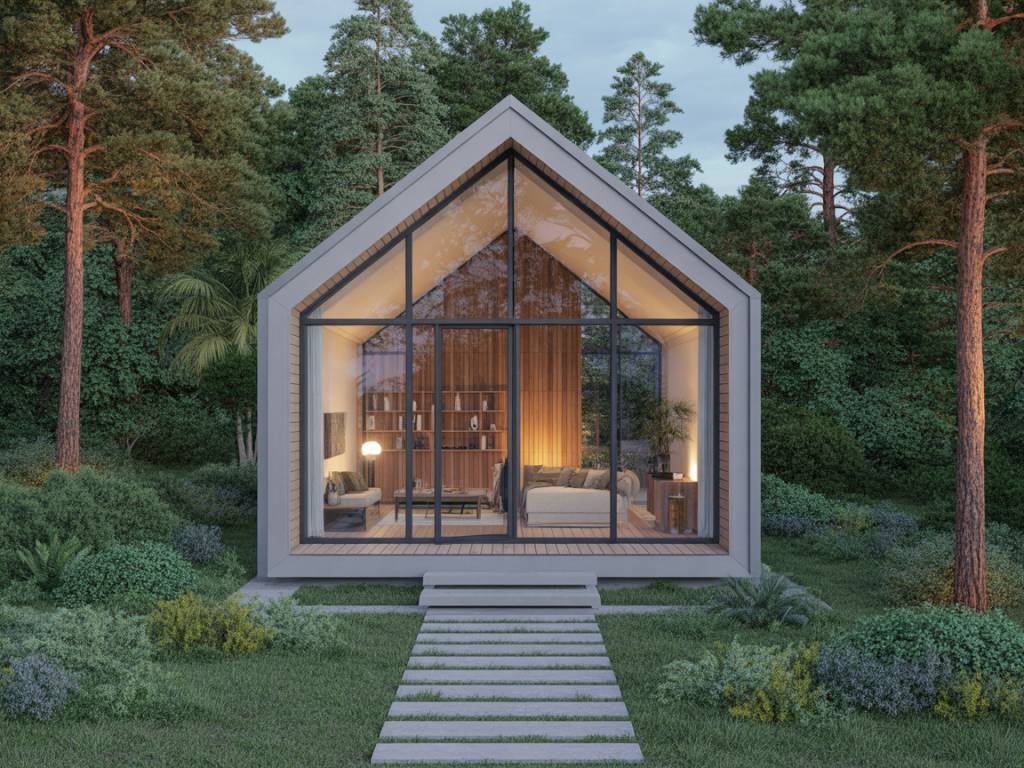
Biophilic design is everywhere in magazines right now: plant walls, raw wood, giant windows with forest views… But behind the trend, there’s something much plus solide: a design approach that genuinely changes how you feel at home, how you sleep, how you work, even how you relate to your space.
As a former renovation project manager, I’ve seen apartments that were impeccably decorated – and pourtant pénibles à vivre – simply because they were disconnected from any natural cues. And I’ve seen cramped city flats become calm, breathable places in a few targeted interventions inspired by biophilic principles. The difference is often not the budget, but the method.
What biophilic design really means (and what it’s not)
Let’s start by being clear: biophilic design is not “putting three plants on a shelf and calling it a day”.
Biophilic design = integrating nature into the way a space is conceived, built and used. It’s based on a simple idea: as humans, we function better when our environment reminds us (visually, acoustically, tactilely) of the natural world we’re biologically wired for.
That translates into three big families of strategies:
- Direct contact with nature: real plants, natural light, water, fresh air, views on vegetation or sky.
- Indirect evocations of nature: materials, colours, textures and patterns that recall natural forms (wood grain, stone, leaf-like patterns, earthy palettes).
- Spatial qualities inspired by nature: perspectives, refuges, transitions, nooks vs. open areas – like in a forest where you alternately see far and feel protected.
So no, biophilic design is not a “style” you apply on top of everything. It’s a framework you use to rethink choices you were going to make anyway: windows, layout, materials, lighting, storage, even DIY.
Why biophilic homes feel better to live in
Before getting into the “how”, it’s worth understanding the “why”. What changes concretely for you if you bring biophilic design into a contemporary home?
On most projects, clients report:
- Better sleep once daylight and artificial lighting are properly designed.
- Less visual fatigue when working from home thanks to natural focal points and calmer palettes.
- A lower perceived noise level when natural materials and plants help absorb sound.
- A more stable temperature and humidity when vegetation and breathable finishes are used intelligently.
- More attachment to their home – they simply want to spend time there.
From a more technical point of view, several studies show that regular views of nature, even micro-views (a tree, the sky, a courtyard garden) can reduce stress markers and improve concentration. That’s why offices invest massively in biophilic design. There’s no reason not to apply the same logic at home.
The question is not “Do you like plants?” but rather “Do you want a home that helps your body and brain function at a better baseline?” If the answer is yes, then we can get specific.
Three levels of biophilic design in a home
To keep things actionable, I usually break down biophilic interventions into three levels, from the easiest to the most engageant.
Level 1 – Décor and movable elements (budget: €50–€800 per room)
Here you don’t touch the structure; you work with what you have:
- Add plants chosen for your light level (snake plant, pothos, ZZ plant for low light, ficus and olive tree for bright rooms).
- Change textiles for more natural fibres: linen curtains, cotton throws, wool rugs, jute runners.
- Replace one big synthetic piece (plastic coffee table, glossy console) with wood, bamboo, cork or stone.
- Rework your lighting with warmer bulbs, floor lamps that bounce light off walls and a clear day/evening scenario.
- Introduce nature-inspired patterns (leaf, wave, organic lines) on one or two items maximum – cushion covers, a rug, a headboard.
Level 2 – Light building works and finishes (budget: €800–€7,000 per space)
Here you touch walls, floors, sometimes small joinery:
- Open a partial partition to create a visual axis to a window or to a view.
- Replace a dark floor with light wood or wood-effect (engineered oak, bamboo, quality laminate).
- Use mineral paints or limewash to create more breathable, softer-looking walls.
- Install custom storage that frees up wall space around windows (never block the light with tall units).
- Add a fixed bench under a window as a “refuge” spot with views on the outside.
Level 3 – Structural and envelope changes (budget: €7,000–€50,000+)
This is for renovation or extension projects:
- Increase window area (French doors, corner windows, roof windows) while respecting regulations and thermal constraints.
- Reorient key functions (living, working, dining) towards the best natural light and view available.
- Create indoor–outdoor continuity: large sliding doors, same floor level, same or compatible flooring inside/outside.
- Design a patio, lightwell or planted courtyard in dense urban areas.
- Integrate passive climate strategies: overhangs, exterior blinds, deciduous vegetation to filter summer sun.
You don’t need to tackle all three levels at once. Many city flats become radically more pleasant with a mix of level 1 and 2 interventions, well thought out.
Room-by-room ideas you can actually implement
Let’s get more concrete with some typical spaces and what biophilic design can change there.
Living room
- Position the main seating so you see both the room and the outside – people hate having their back to a window.
- Create one “green focal point”: a group of plants of different heights near a window or on a low sideboard.
- Use a large wool or jute rug to soften acoustics and bring a natural texture underfoot.
- Replace a TV wall painted dark grey + LED strips (very common, very froid) with a warmer paint, shelves in wood and a few books/objects that evoke nature.
Kitchen
- Prioritise a clear worktop under a window – even if it means moving appliances elsewhere.
- Use wood, bamboo or matt stone on worktops, fronts or open shelves (even on a small surface) to break up lacquered finishes.
- Introduce edible plants: herbs in pots, a vertical planter, microgreens on a sunny ledge.
- Work your lighting in three layers: ceiling (general), under-cabinet (task), and a warmer pendant over the dining area.
Bedroom
- Keep the zone around the window as dégagé as possible: no massive wardrobe blocking light.
- Choose a headboard in natural material (wood, cane, padded linen) rather than a cold synthetic panel.
- Go for breathable bedding: cotton percale or linen, wool or cotton blanket instead of polyester-only duvets.
- Limit screens and harsh lighting; add a small, low-intensity lamp oriented towards the wall for a “sunset” effect.
Bathroom
- Favour textured tiles that recall stone, sand or pebbles (but easy to clean – avoid deep grooves in the shower).
- Add at least one real plant that supports humidity (fern, pothos, monstera in bright bathrooms).
- Replace a cold white LED mirror with a warmer, dimmable one (2,700–3,000K).
- If you’re renovating, think about a small high window or a skylight rather than a completely blind piece.
Home office
- Place the desk sideways to the window: you see outside, but you’re not blinded by direct sun or glued to a wall.
- Provide a distant focal point: a view of the sky, a tree, or at least a large plant on the other side of the room.
- Use a real office chair but dress the space warm: wool throw, cork board, wooden accessories.
- Set up a “break corner”: a simple armchair by a window where you can read or take calls facing daylight.
Outdoor spaces (balcony, terrace, small garden)
- Think in layers like a small urban forest: groundcovers (herbs, low plants), mid-height plants, one or two taller elements.
- Work with perennial species adapted to your climate: less maintenance, more resilience.
- Use the same colour range or material inside/outside (for example, similar grey tiles and a wood deck) for continuity.
- Add one water element if possible: a small fountain, even a discreet recirculating bowl – the sound changes the perception of the place.
Planning a biophilic renovation: method and budget
Making a Pinterest board is easy; transforming a real apartment or house with real constraints is another story. Here’s a method you can apply to keep the project under control.
Step 1 – Audit your existing space
- Identify where natural light is best and where it’s lacking.
- List existing views: street, courtyard, sky, trees, neighbours’ wall (it happens).
- Note the materials already present: which ones feel “alive” (wood, stone, brick), which ones feel “dead” (glossy plastified, very cold ceramics without texture).
- Observe your habits: where you naturally settle with a book, your coffee, your laptop.
Step 2 – Prioritise interventions
Ask yourself:
- Which room do you spend most waking hours in?
- Where is the biophilic potential the highest for the least work? (Example: an existing large window in a room currently used as storage.)
- What’s your budget range: decor (< €1,000), partial renovation (€1,000–€10,000), heavy works (€10,000+)?
Step 3 – Choose materials and systems calmly
- Floors: engineered wood from €40–€90/m² installed, quality laminate from €25–€50/m², tiled floors with stone effect from €30–€80/m².
- Walls: mineral or lime paints from €10–€25/L, standard paints from €5–€15/L.
- Joinery: change of single window to double-glazed from roughly €500–€1,200 per unit installed (varies enormously by size/region).
- Lighting: plan about €150–€400 per room for decent fixtures and bulbs, more if you go for custom solutions.
Always ask for at least two quotes for any work above €3,000 and check reviews or references. And verify compatibility of new materials with your existing structure (humidity, floor load, fire regulations).
Step 4 – Phase the project
If you can’t do everything at once:
- Phase 1: orientation of furniture, lighting, plants, textiles.
- Phase 2: floors, wall finishes, light joinery, minor layout changes.
- Phase 3: structural openings, extensions, major glazing, patio, terrace.
This avoids living in a chantier permanent while still progressing towards a coherent biophilic home.
Common mistakes and how to avoid them
Biophilic design has its clichés and false good ideas. Better to know them before spending your budget.
- “Greenwashing” with plastic plants
Artificial plants have their place (for safety or in impossible locations), but they do not improve air quality, humidity, or your contact with living things. Use them only in complement, never as a base. - Overloading with plants you can’t maintain
A jungle of sick plants is worse than a few healthy specimens. Start small, check the light, set a realistic maintenance routine (watering once a week, repotting twice a year), and adjust. - Ignoring overheating risks
Large south-facing windows without shading = greenhouse in summer. Combine glazing with exterior blinds, overhangs, deciduous trees or at least interior filters (light curtains, adjustable slats). - Choosing “raw” materials that aren’t adapted to use
Yes, a raw stone floor is beautiful, but slippery and difficult to maintain in a bathroom. Check slip resistance, porosity, stains, and necessary treatments before buying. - Creating Instagram corners instead of coherent spaces
A successful biophilic home is a global atmosphere, not a single wall of hanging plants in an otherwise sterile flat. Think about continuity from room to room: colours, materials, light.
A real-life scenario: from grey box to green home
To finish, let’s look at a concrete example – a fairly typical one.
The starting point: a 65 m² new-build apartment, ground floor on courtyard, white walls, grey tiles everywhere, one decent-sized sliding window in the living room, small north-facing bedrooms, very standard kitchen.
Constraints:
- Limited budget: €12,000 works + €4,000 furniture/decor.
- No structural changes allowed (co-ownership rules, new building guarantees).
- Owners working from home 3 days a week.
Strategy:
- Focus on living room + office nook: main daytime space.
- Work mainly at Level 1 and 2: finishes, layout, decor.
Key interventions:
- Living room floor: covering the cold grey tiles with quality floating engineered wood (budget around €3,500 supplied/installed).
- Walls: lime-effect paint on the wall facing the window to soften reflections and add texture.
- Layout: sofa and armchair placed sideways to the window, small bench directly under the sliding window as a reading/work spot.
- Office nook: compact desk against an interior wall, facing perpendicular to the window, with a view of both the room and the outside.
- Plants: 6 main plants (olive tree, monstera, two pothos, one fern, one sansevieria) placed at different heights.
- Lighting: one ceiling light with warm, diffused shade; two floor lamps oriented towards the walls; one adjustable desk lamp; warm bulbs throughout (2,700K).
- Bedroom: linen bedding, wood headboard, blackout curtains lined with lighter sheers for daytime softness.
Results after 6 months (owner feedback):
- They spend most of their evenings in the living room without turning on the TV, simply reading or working by the window.
- They report “forgetting” the fact they’re on the ground floor – the bench and plants create an indoor–courtyard transition.
- Their heating consumption is slightly down thanks to the wood floor and better-managed curtains (less sensation of cold from the tiled floor).
- They ended up adding two more plants, but only after seeing they could maintain the first group without stress.
Was it a radical, Instagram-ready transformation? No. Was it a home that moved from “generic box” to a living, evolutive, calming place? Yes – and that’s the real objective of biophilic design in contemporary homes.
Whether you’re planning a full renovation or simply rethinking a room this month, use this lens: Where and how can I reconnect this space with light, life and natural materials, within my real constraints? If each decision passes through that filter, your home will slowly but surely start to feel more like a place where you can breathe – not just live.