






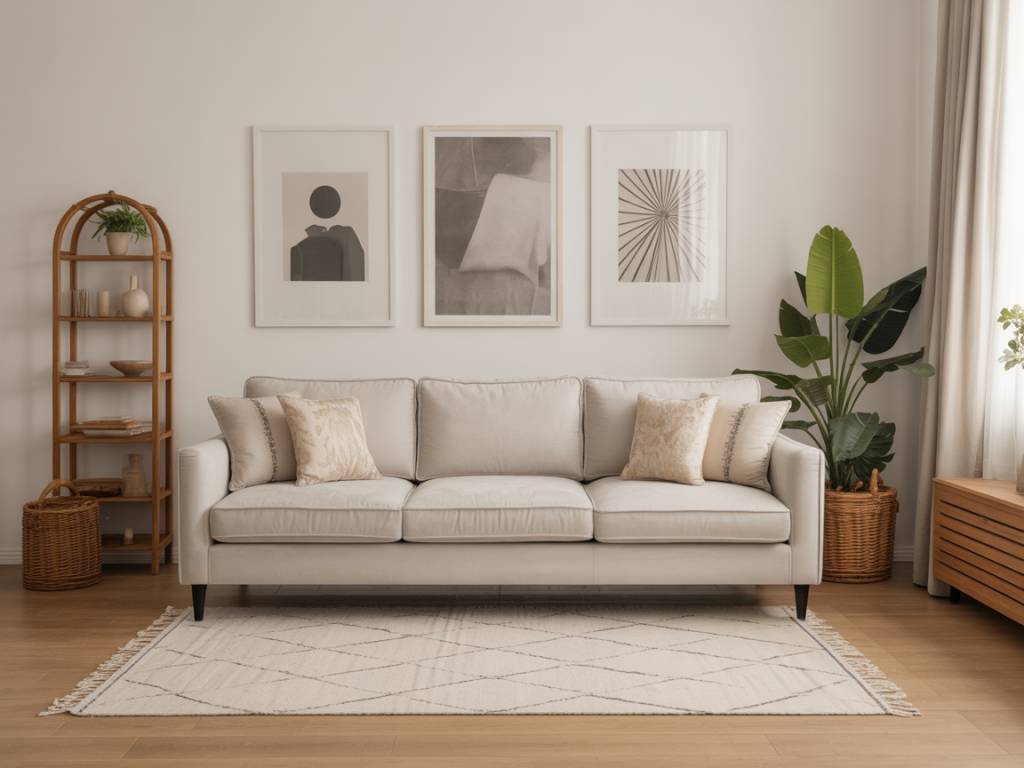
Choosing a sofa for a modern living space looks simple on Pinterest and painfully complicated in real life. Between the dimensions, fabrics, delivery access, kids, pets, and your actual habits (Netflix vs. apéro dinatoire), there is a lot that can go wrong… and an expensive piece that you’ll regret pendant 10 ans.
Let’s do it the way a renovation project manager would : step by step, with measurements, options, trade-offs and a few hard truths. The goal : help you pick a sofa that works in a contemporary interior and in your real life.
Start with your space, not with the sofa
Most sofa mistakes viennent d’un réflexe simple : tomber amoureux d’un modèle en showroom, puis essayer de le faire rentrer chez soi. Inverse the process : start with the room, then find the sofa that fits.
Actions concrètes :
- Measure your living room : length, width, and height. Note the position of doors, windows, radiators, sockets, TV, circulation paths.
- Draw a simple plan on squared paper or with a free app (Roomstyler, Floorplanner). Even a rough sketch with measurements is enough.
- Define “no-go zones” : areas you must leave clear (door swing, balcony access, passage to kitchen, etc.).
- Mark the maximum footprint your sofa can have :
- Length: usually 20–30 cm less than the wall length, to avoid a “squeezed in” effect.
- Depth: be careful in small rooms; 100–110 cm deep sofas look cosy but can eat the whole space.
- Test circulation with masking tape :
- On the floor, tape the footprint of the potential sofa sizes (e.g. 220×95 cm, 260×100 cm).
- Walk around it as if you were using the room. If you’re constantly turning sideways, it’s too big.
Modern living spaces often combine living + dining + kitchen. Your sofa should structure the space, not block it. Think in terms of zones and views : what do you see when you enter the room, what do you face when you sit down?
Design around how you actually live
Forget “ideal you” for a moment. Think “Tuesday night you”. Your usage determines the right type of sofa more than any style label.
Posez-vous ces questions :
- How many people sit there regularly?
- Couple: a 2.5–3 seater can be enough if you often curl up.
- Family with 2–3 kids: L-shaped or big 3–4 seater becomes more realistic.
- Apéro with friends: modular or multiple seating options (sofa + armchairs + poufs).
- Do you lie down on the sofa often?
- If yes, length and armrest shape matter. You want at least 180 cm of clear seating length and arms that are not higher than your shoulders.
- TV-centric or conversation-centric?
- TV focus: sofa facing TV, low back not blocking views.
- Conversation: face-to-face layout (sofa + armchairs, or 2 sofas forming an L or facing each other).
- Guests sleeping over?
- Occasionally: a good sofa + separate fold-out mattress is often more comfortable than a cheap sofa bed.
- Frequently: consider a quality sofa bed with a real mattress (12–14 cm thick), not just a thin foam layer.
- Kids, pets, red wine?
- This will strongly influence fabric choice, color, and cushion construction (fixed vs loose, washable covers).
Write your answers down. They will act as a filter when you’re about to fall for a delicate cream linen sofa with feather cushions in a house with a Labrador and two toddlers.
Choose the right sofa type and layout
Once you know your space and your habits, you can choose the type of sofa that makes sense structurally.
Les grandes familles :
- Straight sofa (2–4 seater)
- Best for: small to medium rooms, flexible layouts.
- Pros: easier to place, lighter visually, easier to move later or resell.
- Combine with: one or two armchairs + a pouf for extra seats.
- Corner / L-shaped sofa
- Best for: open-plan spaces where you want to “draw” the living area.
- Pros: maximizes seating, ideal for lounging and TV.
- Watch out for: the long “meridian” part can block circulation if badly placed.
- Tip: prefer a model where you can choose which side the chaise is on, or modular elements you can reconfigure.
- Modular sofa
- Best for: evolving households (moving, growing family, location changes).
- Pros: you can add/remove modules, create an L, a U, or split in two sofas.
- Watch out for: cheap connectors that let modules drift apart; check the fixing system.
- Sofa with chaise longue
- Good compromise between straight and corner.
- Works well in medium rooms; slightly lighter visually than a full corner sofa.
- Check: chaise depth vs room depth, to avoid covering half a patio door.
- Sofa bed
- Best when you have no dedicated guest room.
- Prioritize: sleeping comfort if it’s regular, sitting comfort if it’s occasional.
- Check: opening system (easy to handle, no need to remove 15 cushions each time).
Pour le plan, regardez 3 choses :
- What does the sofa face? TV, fireplace, a view? Avoid turning its back to the main attraction of the room, unless you’re deliberately zoning an open-plan space.
- Circulation : always keep at least 80 cm clear for passages; 90–100 cm is comfortable.
- Natural light : placing the sofa back to a large window is often visually pleasant in modern spaces, but check glare on the TV.
Style choices for a modern living space
“Modern” doesn’t mean cold or uncomfortable. It usually means clean lines, coherent proportions, and controlled details.
Points de repère concrets :
- Lines and shape
- Straight, simple lines with a limited number of visible seams feel more contemporary.
- Rounded edges and soft corners work well in modern spaces too, especially to soften minimal architecture.
- Legs
- Visible legs (metal, wood) lighten the volume and help in small rooms.
- Low or invisible legs = more massive look, good for large spaces or cosy, grounded atmospheres.
- Armrests
- Thin arms = more seating length for the same overall width, and a lighter look.
- Wide arms can act as mini side tables, but they eat into the overall dimension.
- Backrest height
- Low back = sleek, contemporary, great for open spaces (you see over the sofa).
- High back = more ergonomic for tall people and reading, but visually heavier.
- Color strategy
- Small space or first “serious” sofa: neutral (beige, taupe, grey, greige, caramel) is safer and longer-lasting.
- Use cushions, plaids, and a rug for color; they are cheaper to replace as trends change.
- Dark colors hide stains better but show dust, fluff, and pet hair more.
- Compatibility with your architecture
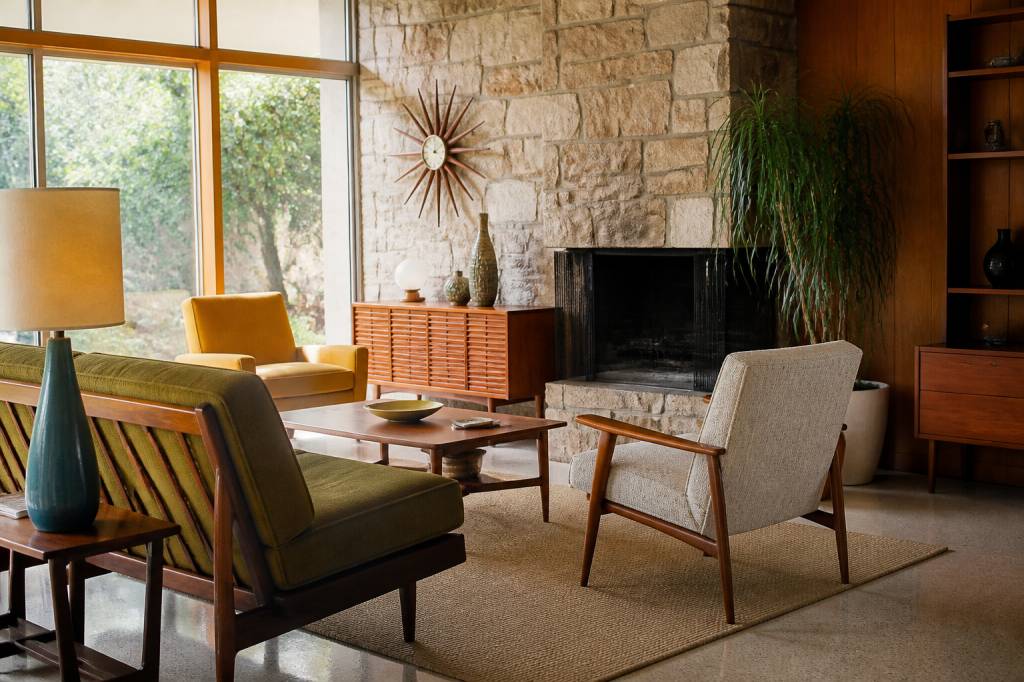
- Very minimal room (white walls, large windows, concrete floor): a slightly softer, textured sofa (bouclé, linen, wool blend) warms the space.
- Old apartment with mouldings and parquet: a clean-lined sofa in a solid color creates a contemporary contrast.
Materials, fabrics and what they really mean
Fabric choice has more impact on daily life than most design details. It affects maintenance, durability, and how “modern” the sofa feels.
Les grandes options, traduites en langage non-commercial :
- Cotton / cotton blends
- Pros: breathable, comfortable, often affordable.
- Cons: can wrinkle, may stain easily if untreated.
- Good for: casual modern interiors if you accept a bit of patina.
- Linen / linen blends
- Pros: very chic, natural texture, beautiful in modern, light interiors.
- Cons: wrinkles, can be more fragile; not ideal with young kids + dark juices.
- Solution: choose a linen blend with synthetic fibers for better resistance.
- Polyester / synthetic fabrics
- Pros: very resistant, easy to clean, doesn’t wrinkle much, large color range.
- Cons: can look “flat” or cheap in low-end versions.
- Tip: look for textured weaves (bouclé, mélange) rather than flat basic microfibers.
- Velvet
- Pros: luxurious, deep color, warm feel.
- Cons: marks and shading, can show pressure marks; with cats, it’s often a scratch magnet.
- Best: short-pile, high-quality velvets, and households without claw-happy pets.
- Leather
- Pros: ages nicely (real leather), easy to wipe, very durable if good quality.
- Cons: cold at first touch, can be slippery, and budget is higher for good hides.
- Look for: full-grain or top-grain leather; avoid super-thin “bonded” leather that peels.
Points techniques utiles :
- Martindale test (for abrasion resistance on fabrics):
- 20,000+ rubs: adequate for normal home use.
- 30,000–40,000: better for intensive use, kids, pets.
- Stain protection
- Some fabrics are treated against stains (Teflon-like treatments). Useful but not magical.
- Removable, machine-washable covers remain the most effective “system D”.
- Color fastness
- If your sofa is near a big window, ask about UV resistance to reduce fading over time.
Comfort: dimensions that actually work
Comfort is not subjective only. There are proportions that tend to work for most bodies. When you try sofas, forget how they look for 5 minutes and focus on how your body reacts.
Les dimensions à vérifier :
- Seat height (floor to top of cushion)
- Standard: 40–45 cm.
- Lower looks more contemporary but can be hard for older people or those with back/knee issues.
- Seat depth (front of cushion to back cushion)
- 50–55 cm: for sitting fairly upright.
- 60–65 cm: for lounging, crossing legs, curling up.
- Beyond 65–70 cm: very deep; comfortable if you add extra back cushions, otherwise smaller people will end up with feet dangling.
- Back height (seat to top of backrest)
- 40–50 cm: low, modern, good for casual seating.
- 50–60 cm: more support for shoulders and neck.
- Firmness
- Very soft: cosy at first, but you may “sink” and struggle to get up; cushions deform faster.
- Medium-firm: generally the best compromise between comfort and longevity.
- Check the structure: foam density (around 30–35 kg/m³ for seat foam is decent) and whether there’s a spring system under the cushions.
Test method in store :
- Sit as you would at home: shoes off if possible, lean back, then forward, lie down.
- Stay at least 5–10 minutes. The “too soft” effect appears after a few minutes, not after 30 seconds.
- If two people will often sit together, test together. Narrow seats that feel fine alone can be awkward for two.
Budget, quality markers and where to save or splurge
A sofa is a structural element in a living room. In a modern interior where volumes are quite minimal, a poor-quality sofa will be very visible. That doesn’t mean you need designer prices, but you should spend with a strategy.
Ordres de grandeur (Europe, grands enseignes et marques milieu de gamme) :
- Entry level (approx. 400–800 €)
- Expect: basic structure (often particleboard), simple foams that may sag after a few years, limited fabric choice.
- OK for: first flat, rental, short to medium term (3–5 years) if you accept some patina.
- Mid-range (approx. 800–2,000 €)
- Expect: better frames (often solid wood + panels), higher-density foam, more fabric options.
- Good target for: main home if you want 7–10 years of comfortable use.
- Upper mid / high (2,000 € and up)
- Expect: very solid structure, quality suspension (no-sag springs, etc.), premium fabrics or leather, better finish.
- Relevant if: your sofa is a key design piece in a large open plan space and you plan to keep it long term.
Indicateurs simples de qualité :
- Frame: solid wood (beech, pine, etc.) + plywood is better than 100% particleboard.
- Suspension: zig-zag springs or webbing under the cushions are better than just a flat board.
- Cushions: foam core + feather or fiber wrap often keeps shape better than pure feather (which compresses) or very cheap foam.
- Guarantees: check frame warranty; 5 years is a good sign, 2 years only is minimum legal in many countries.
Où investir, où économiser :
- Invest in:
- Frame and structure (you don’t see them, but you feel them every day).
- Good, durable fabric if the sofa is in intensive daily use.
- A size that is really right for your room (do not compromise here).
- Save on:
- Removable decorative cushions and throws: you can change them over time to refresh the room.
- Hyper-trendy colors or shapes: better to keep them in accessories than in a 2,000 € sofa.
Practical checks before you click “buy”
Last step, often neglected: logistics and practical details. This is where many disasters happen: sofa that doesn’t fit through the staircase, covers impossible to wash, non-replaceable cushions, etc.
Checklist à passer en revue :
- Access and delivery
- Measure: width of doors, staircases, elevators, angles in corridors.
- Compare with: sofa in its packaged size (ask the retailer if not shown).
- Option: sofas delivered in modules or with removable feet are easier to bring in.
- Assembly
- Who assembles? You or the delivery company?
- Is assembly included in the delivery cost?
- Covers and maintenance
- Are covers removable? On seat cushions only or also on the frame?
- Washing instructions: machine 30 °C, dry cleaning only, or surface cleaning?
- Are replacement covers or extra covers available later?
- Modularity over time
- Can you buy additional modules later if you move (extra seat, extra meridian)?
- Is the model part of a long-term collection or a short seasonal one that will vanish next year?
- Return and warranty
- Online order: what is the return period and cost?
- Warranty on structure and mechanism (if sofa bed or recliner)?
Finally, take one evening to compare 2–3 options calmly, with your plan, your measurements, and your notes on how you live in the room. Ignore the marketing names (“Scandi chic”, “Urban loft”) and look at the fundamentals: size, structure, comfort, fabric, maintenance.
Un bon canapé moderne n’est pas seulement beau sur photo : il fluidifie la circulation, absorbe vos habitudes quotidiennes, et vieillit avec la maison. If you treat it as a small architectural project rather than a quick purchase, you’ll feel the difference every single day when you drop onto it at the end of a long day.