
Accueil Blog

Concrete, steel and glass: balancing industrial and warm design

0
Concrete, steel and glass: balancing industrial and warm design

Concrete floors, exposed steel beams, glass partitions… and yet you still want your home to feel cosy, not like a showroom or an office lobby. It’s absolutely possible to mix industrial materials with a warm, livable atmosphere, mais ça ne s’improvise pas. If you only copy Pinterest photos sans réfléchir aux volumes, à l’acoustique et aux usages, vous risquez une ambiance froide, bruyante et peu confortable.

Let’s break it down in a practical way: how to use concrete, steel and glass at home, how to “soften” them, where to invest, and what mistakes to avoid if you don’t want to regret that polished concrete floor in six months.

What “industrial but warm” really means (in real life)

In professional language, we’d talk about “hard” versus “soft” finishes, “cold” versus “warm” materials. In everyday terms:

  • Concrete, steel and glass = hard, reflective, often cold to the eye and touch.
  • Wood, textiles, cork, lime paint, rugs, curtains = soft, absorb sound, add depth and warmth.

A balanced industrial interior is not 100% raw materials. It’s usually something like:

  • 30–50% visible structural / industrial elements (concrete, steel, glass)
  • 30–40% warm finishes (wood, paint, textiles)
  • 10–20% “soul” elements (books, art, plants, vintage pieces, patina)

If you only see concrete, steel and glass, you’re in a lobby. If you only see wood, cushions and plants, you’re in a chalet. The good proportion is what makes the space feel designed but still human.

Understanding your three key materials

Before choosing decorative tricks, you need to understand how each material behaves in real life: weight, cost, maintenance, comfort.

Concrete: powerful but unforgiving

Used for floors, worktops, staircases, wall cladding.

  • Pros: very durable, visually strong, perfect for open spaces and minimal interiors, easy to pair with wood and black steel.
  • Cons: hard (no forgiveness if you drop something), cold if not heated, stains easily if badly sealed, cracks possible.
  • Budget (France, 2024, indicative):
    • Polished or waxed concrete floor: ~70–150 €/m² supplied & installed.
    • Microcement on existing tiles: ~80–160 €/m².
  • Timeframe: 3–7 days for a room (depending on system), plus drying time before furniture goes back.
  • Key vigilance:
    • Always ask for sample boards and sealing system details.
    • Clarify crack policy in the contract: hairline cracks are often considered normal.
    • Check compatibility with underfloor heating if you have it.

Steel: structure and graphic lines

Visible in beams, stairs, railings, glass partitions, furniture legs.

  • Pros: brings rhythm, structure, slim profiles, industrial flavour without taking visual space.
  • Cons: can feel cold or “office-like” if overused; poor acoustic performance if combined with large glass areas only.
  • Budget:
    • Custom steel & glass partition (type “atelier”): from ~800 to 1,500 €/m (height ~2.4m), depending on finish and glass type.
    • Custom steel stair with wooden treads: easily 5,000–12,000 € depending on complexity.
  • Timeframe: 4–10 weeks from design to installation for custom-made pieces.
  • Key vigilance:
    • Ask for anti-corrosion treatment if near humidity.
    • Check sound transmission: a steel and glass partition does not stop noise like a solid wall.
    • Check weight and fixings if using on existing slab or wall.

Glass: light, transparency… and privacy issues

Used in partitions, doors, railings, skylights, big windows.

  • Pros: brings natural light deep into the home, enlarges spaces visually, perfect to link kitchen and living room while keeping smells somewhat controlled.
  • Cons: poor acoustic insulation if single glazed, fingerprints and cleaning, privacy can be an issue in bedrooms and bathrooms.
  • Budget:
    • Interior glass partition with steel or aluminium frame: 800–1,500 €/m.
    • Glass balustrade: ~350–600 €/linear meter (without complex fixing system).
  • Key vigilance:
    • Prefer laminated safety glass for partitions and staircases.
    • Think about acoustics: is this between a kid’s bedroom and a noisy hallway?
    • Manage privacy: fluted glass, partial frosting, curtains on ceiling rail if needed.

Three levers to warm up an industrial base

If your structure is already concrete / steel / glass, or if you plan to introduce them, your best allies to avoid the “cold loft” effect are:

  • Texture
  • Colour temperature
  • Volume & light

Lever 1: Work with texture, not just colour

Against smooth concrete and reflective glass, texture is your best friend.

  • Wood:
    • Choose visible grain and a matte or satin finish (avoid very glossy varnish).
    • Use it where you touch: table tops, stair treads, handrails, kitchen fronts.
  • Textiles:
    • Large wool or cotton rugs in living room and bedroom to “break” the concrete floor.
    • Full-height curtains on big glass surfaces – even if you rarely close them, they add acoustic and visual warmth.
    • Mix weaves: linen, bouclé, knits instead of all-flat fabrics.
  • Wall finishes:
    • Mineral or lime-based paints with a slight texture instead of plastified finishes.
    • Wood panelling or slats on one wall to soften a long corridor or stairwell.

Realistic example: Concrete floor + white walls + black steel partition. Add: oak dining table, wool rug under the table, linen curtains, one wall painted in a warm greige. Cost-wise, you’re around:

  • Rug 2×3 m: ~300–800 €
  • Linen curtains for 3m bay window: 400–1,000 € (fabric + rails + installation)
  • Paint for one wall (pro): ~150–300 € labour + 80–150 € paint, depending on surface.

Lever 2: Warm colour temperature, not just “grey and black”

Industrial style is often associated with grey and black. The trap is to stay only in cold tones.

  • Base palette:
    • Keep your concrete and steel neutral.
    • Choose warm whites and greiges for walls (with a hint of yellow or red, not blue).
  • Accents:
    • Rust, terracotta, camel, khaki, dark petrol blue work very well on wood, textiles and accessories.
    • Avoid multiplying strong colours; select 2–3 accent tones and repeat them.
  • Metals:
    • Mixing a bit of brass or bronze (on handles, lamps) with black steel helps avoid the “total black” look.

Lighting is critical. On concrete and glass, a cold 4000–5000K bulb will turn your home into a dentist’s office. For living spaces, aim for:

  • 2700–3000K bulbs for warm, domestic light.
  • Multiple layers of lighting: indirect, wall lights, table lamps – not just one ceiling spot rail.

Lever 3: Manage volume, sound and privacy

Large open spaces with concrete and glass can echo, feel empty, and become stressful on a daily basis.

  • Acoustics:
    • Rugs + curtains + upholstered furniture are your minimum combo.
    • In very echoey rooms, add acoustic panels disguised as artwork or slatted wood ceilings.
  • Space definition:
    • Use steel & glass doors rather than completely open partitions between kitchen and living.
    • Consider half-height walls plus glass, or a mix of solid and glazed modules for better privacy.
  • Furniture layout:
    • Create islands of comfort: rug + sofa + lamp + side table. Don’t spread everything against the walls.

Room-by-room strategies

Living room: soften the hard shell

Often the main space with the most concrete and glass. Priority: comfort and acoustics.

  • At least one large rug (bigger than the sofa area, not a mini mat).
  • Full, thick curtains on all large windows, with rails mounted as high as possible.
  • One warm wall: textured paint, wood slats, built-in shelves.
  • Mixed materials furniture: wood table, fabric sofa, maybe one leather armchair, not all metal bases.

Typical budget range for a 25–30 m² living room upgrade (without structural work):

  • Rugs + curtains + 2–3 lamps: 1,200–3,000 €
  • Paint / wall treatment: 300–1,000 €
  • Additional wood furniture (sideboard, coffee table): 500–2,000 €

Kitchen: industrial style that you can actually clean

Concrete worktops and steel shelves are beautiful… until you live with them. Think maintenance.

  • Worktops:
    • Concrete: demands very good sealing and regular care; stains and etching are normal with time.
    • Alternatives with industrial look but easier maintenance: compact laminate, sintered stone with concrete effect.
  • Fronts:
    • Combine wood lower units with plain matte uppers to avoid visual heaviness.
  • Backsplash:
    • Glass sheet, tiles with slightly irregular surface, or microcement – but always think of joint maintenance.
  • Lighting:
    • Warm LED strips under shelves, and 2700–3000K spots over worktop.

Bedroom: dial down the industrial

In a bedroom, concrete and glass should be handled with caution if you want actual rest.

  • Limit glass partitions unless you manage blackout (curtains, blinds) and sound.
  • Keep the floor warm (wood, cork, or at least 2/3 of the floor covered with rugs).
  • Soften the headboard wall with textured paint, fabric headboard, or panelling.
  • Prioritise dimmable, warm lighting and table lamps over ceiling spots.

Bathroom: industrial without the “cold locker room” effect

Concrete and steel can work beautifully in bathrooms, as long as you compensate.

  • Combine finishes: concrete floor + tiled shower + wood vanity.
  • Use fluted or frosted glass for partitions to avoid a harsh, see-through effect.
  • Add warmth with:
    • Wood or wood-effect fronts
    • Textured towels, baskets, stool
    • Wall lights with warm bulbs rather than only ceiling downlights
  • Check slip resistance of concrete or large format tiles (R rating).

If you’re starting from scratch: where to put your budget

On a renovation with an industrial vibe, you won’t be able to do everything. Prioritise.

  • Invest in the envelope:
    • Quality floors (concrete or wood) – they’re expensive to change later.
    • Good windows and glass doors for comfort and energy efficiency.
  • Keep steel elements simple but solid:
    • One well-designed partition or stair is better than multiple cheap imitations.
  • Plan “softening” elements from the start:
    • Budget for rugs, curtains, lighting in your global renovation budget, not “later if there’s money left”. There usually isn’t.

For a 60–80 m² apartment with industrial style in mind, a very rough distribution might look like:

  • Concrete / microcement floors (partial): 4,000–8,000 €
  • One steel & glass partition: 2,000–4,000 €
  • Lighting (incl. spots + decorative): 2,000–5,000 €
  • Rugs + curtains: 2,000–4,000 €
  • Paint / wall finishes: 1,500–3,000 €

Obviously, numbers vary wildly depending on country, height under ceiling, technical constraints, and whether you DIY some items.

If you’re on a tighter budget: cosmetic industrial

You don’t need to pour a concrete slab to get the effect. Play with finishes and furniture.

  • Walls:
    • Mineral-effect paints or limewash to mimic concrete on one wall.
  • Floor:
    • Vinyl or laminate with concrete aspect for ~20–40 €/m², installed over existing floor.
  • Steel effect:
    • Ready-made “atelier” style partitions in aluminium or MDF painted black.
    • Metal-legged furniture, open shelving with black brackets.
  • Glass:
    • Swap one solid door for a glazed door with simple black frame.

With 2,000–3,000 €, you can already transform a living room–kitchen area visually if you choose your priorities and DIY painting.

Common mistakes to avoid

  • Too much glass, not enough walls:
    • Result: no privacy, noise everywhere, difficulty to furnish. Keep some proper walls.
  • Concrete everywhere:
    • Floor + walls + worktops + table = visual monotony and coldness. Mix materials.
  • Only ceiling spots:
    • They flatten textures and make everything look harsher. Add lamps, wall lights, indirect light.
  • Underestimating maintenance:
    • Unsealed concrete worktop, black steel next to sea air, glass everywhere in a house with toddlers… think about fingerprints, water marks, chips.
  • No acoustic plan:
    • Before opening all your partitions, go stand in the future big room and clap your hands. If the echo is already strong, imagine with kids and TV.

A simple action plan to balance your industrial interior

If you already have concrete, steel and glass at home and feel it’s too cold, start with this checklist:

  • List your hard surfaces (floors, walls, glass)
  • List your soft surfaces (rugs, curtains, upholstered furniture, wood surfaces)
  • If the hard list is twice as long as the soft list, you know where to act.

Then, step by step:

  • Step 1 – Textiles:
    • Add / upgrade rugs in living, dining, bedrooms.
    • Install curtains wherever you have big glass surfaces.
  • Step 2 – Lighting:
    • Change too-cold bulbs to 2700–3000K.
    • Add at least two lamps in each main room.
  • Step 3 – One warm wall per main room:
    • Paint, wood, shelves with books and objects – something that breaks the hard shell.
  • Step 4 – Review steel and glass:
    • Add curtains or frosting to exposed glass if privacy is an issue.
    • If a partition is too transparent, consider partial solid infill (lower half in plasterboard, top in glass).

L’objectif n’est pas de cacher le béton, l’acier et le verre, mais de leur donner un contexte habitable. When these materials are framed by warm light, textured surfaces and real-life objects, they stop looking like a developer’s brochure and start feeling like a home.

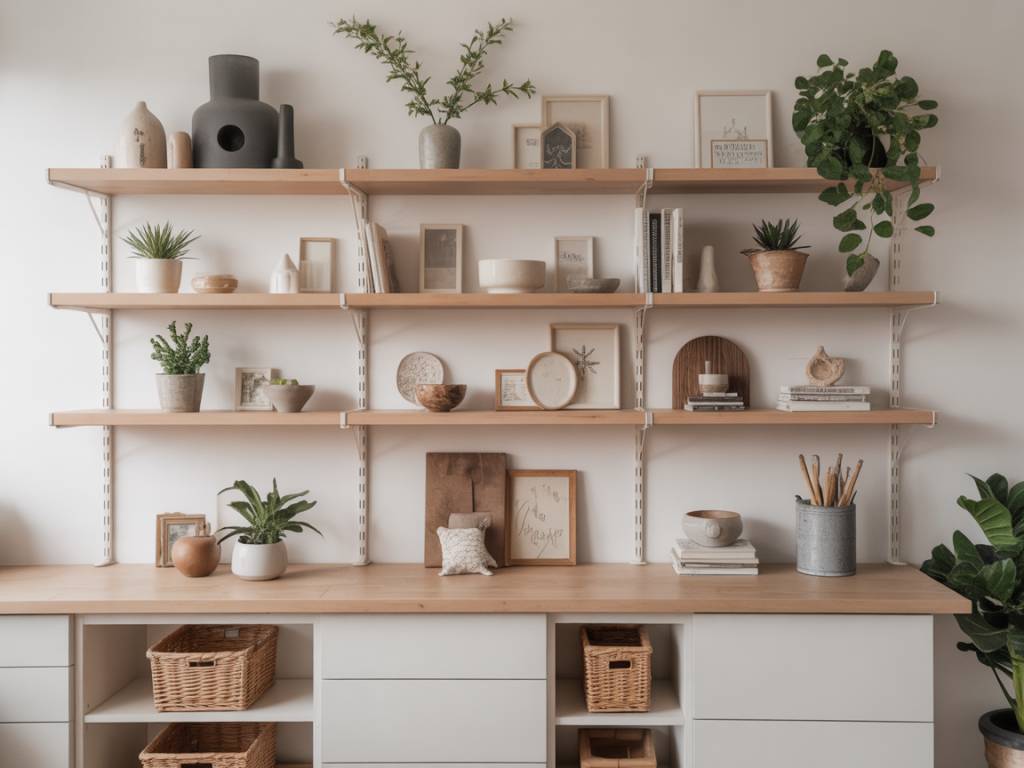
Creative storage ideas that keep modern interiors clutter free

0
Creative storage ideas that keep modern interiors clutter free

If your living room looks like a design magazine until you open a cupboard… this article is for you. A modern interior only feels “clean” when storage is doing 80% of the work in silence. The good news? You don’t need a bigger home, juste smarter square meters.

We’ll go through concrete storage ideas you can actually implement, with indications of budget ranges, materials, time frames and what to watch out for. Keep your plan of the house nearby or open it on screen: the goal is that you finish this article with a small action list, not just inspiration.

Start by auditing your clutter (before buying a single box)

Storage is not about adding furniture, it’s about subtracting chaos. Before you call the carpenter, you need to know exactly what you’re trying to house.

Take one room at a time and ask three questions:

  • What lives permanently here? (books, records, coats, kids’ toys, paperwork…)
  • What is just passing through? (laundry, mail, sports bags, deliveries…)
  • What should not be here at all? (storage overflow from other rooms)

Practical exercise (plan 30–45 minutes par pièce) :

  • Empty one visible area that annoys you daily: the entry console, the coffee table, the chair-that’s-actually-a-closet.
  • Group items by family: “papers”, “cables”, “bags”, “beauty products”…
  • Estimate volume per family in liters or boxes (1 shoe box ≈ 5–6L). This sounds obsessive but it changes everything when designing storage depth and number of shelves.
  • Decide what must stay in this room and what can migrate elsewhere.

Only when you know you have, for example, “about 60L of board games” or “12 pairs of daily shoes” can you design storage that fits your real life instead of an idealized Pinterest version.

Built-in storage: using your architecture as a closet

In contemporary interiors, the most effective storage is often invisible. The wall stays visually calm, but it works hard in the background.

Where to look for built-in potential:

  • Unused niches or recesses
  • Either side of a fireplace or structural column
  • Hallways wider than 110–120 cm
  • Under stairs with closed risers
  • Under windows (perfect for shallow cabinets or benches)

Three highly effective built-in strategies:

  • Full-height, flush wardrobes
    From floor to ceiling, plain fronts, no visible handles (push-to-open / recessed pulls). They visually disappear, especially if painted the same color as the wall.
  • Storage walls with mixed depth
    Deeper modules at the bottom for bulky items, shallower up top for books and decor. Vary depth by 10–15 cm to keep the wall dynamic without cluttering the space.
  • Window-seat storage
    Base cabinet 35–45 cm high with a hinged top or front drawers. Ideal for blankets, magazines, kids’ toys in a living room.

Budget & materials (indicative, for EU prices):

  • Custom, MDF painted: from 900–1 500 € per linear meter (floor-to-ceiling, mid-range finish).
  • Semi-custom (IKEA or similar bases + custom doors/top): 400–800 € per linear meter.
  • Timeframe: design + quotes 2–4 weeks, fabrication + installation 1–3 days for a standard wall.

Points of vigilance:

  • Plan electrical outlets and lighting before building: inside cabinets (charging), under cabinets (LED strip), and on the facade (sconces).
  • Think ventilation for electronics: leave 2–3 cm at the back or provide ventilation grills.
  • Check opening radius of doors in tight corridors; in some cases, sliding doors or fabric panels are more practical.

Case in point: in a 65 m² apartment, we “lost” 30 cm of depth along a 4 m hallway to create flush closets. The corridor visually shrank on plan, but in real life it felt more spacious because coats, shoes and suitcases disappeared completely.

Multi-functional furniture that actually works

Multi-use furniture is often sold as a miracle but disappoints in daily use (unstable, not enough storage, awkward to open). The key is to choose pieces where storage is the primary function, not an afterthought.

Living room ideas:

  • Coffee table with drawers or lift-top
    Perfect for remotes, chargers, coasters, current magazines. Avoid deep chests without internal organization: they become black holes.
  • Sideboard instead of TV stand
    A 40–50 cm deep, 60–75 cm high sideboard provides way more storage than a low, open TV bench. Choose models with doors (visual calm) and only one or two open niches for devices.
  • Modular poufs with storage
    Light enough to move, with removable tops. Great for throws, extra cushions, kids’ toys.

Bedroom ideas:

  • Bed with integrated drawers
    Ideal in small rooms where you can’t add a dresser. Check the clearance around the bed so drawers can fully open.
  • Headboard as storage wall
    Shelves, niches, or a full-width box headboard (30–40 cm depth) can absorb books, bedside clutter, and even some clothing.

Budget & practicality:

  • Storage coffee table: 150–600 € depending on quality and materials.
  • Storage bed base: 400–1 200 € (beware of cheap mechanisms that jam after a year).
  • Time: 1–2 evenings to assemble and reorganize, if bought ready-made.

Non-negotiables to check before buying:

  • Check maximum load per shelf/drawer (especially for books and records).
  • Test opening system in store if possible: can you open drawers while seated on the sofa or lying on the bed?
  • Measure your real storage needs: no point in a bed with 4 giant drawers if you own 30 pieces of clothing and no spare linens.

Vertical and overhead storage: go up, not out

Walls are the most underused resource in modern interiors. Used intelligently, they increase storage without eating floor space.

In a living room or office:

  • Wall-mounted shelves with rhythm
    Alternate closed elements (cabinets) and open shelves. Keep heavy visual elements low and lighter ones high. Avoid saturating every centimeter; aim for 60–70% coverage.
  • Picture ledges
    Shallow shelves (8–12 cm) perfect for books, frames, candles, small plants. They create visual layers without large volumes intruding into the room.

In the kitchen:

  • Ceiling-height cabinets
    Even if you can’t easily reach the top, that last 30–40 cm is ideal for things you use 2–3 times a year (serving platters, seasonal decor). Use labeled boxes.
  • Rail systems
    A metal rail with hooks and small shelves frees up worktop space: utensils, spices, small planters. Choose a consistent finish (black, stainless, brass) to keep it contemporary.

In the hallway and entry:

  • Over-door storage
    Shelves above door frames (with a minimum ceiling height of 260 cm) are perfect for rarely used items. Keep baskets or boxes for a clean line.

Budget & materials:

  • Wall shelves (DIY boards + brackets): from 60–150 € for 2–3 linear meters.
  • System shelves (Elfa, String, etc.): 200–800 € depending on length and accessories.
  • Ceiling-height kitchen extensions: 300–800 € if you add modules to an existing kitchen.

Points of vigilance:

  • Check wall type (plasterboard vs masonry) and choose appropriate anchors.
  • Avoid deep shelves (more than 30 cm) high on the wall; they visually weigh down the space and can feel oppressive.
  • Leave at least 2 m head clearance for anything above circulation zones.

Smart storage for small spaces and awkward corners

If your apartment is more “compact studio” than “loft”, storage must be micro-planned.

Entryway (even if it’s 80 cm of wall next to the door):

  • Ultra-shallow shoe cabinets (depth 18–22 cm)
  • Rail with double row of hooks (children’s level + adult level)
  • One small closed cabinet or basket for “stuff that lands here”: keys, mail, masks, sunglasses, etc.

Under-stairs:

  • Pull-out drawers for shoes and bags
  • Open niches for books and decor
  • Hidden utility closet for vacuum, cleaning products and toolbox

Behind doors:

  • Over-door racks for bathroom towels, bedroom accessories, or cleaning tools
  • Thin custom shelving in the 10–15 cm gap between door and wall

Mini-budget ideas (under 200 € per zone):

  • Entry kit: shallow shoe cabinet + rail + mirror with small shelf.
  • Bathroom kit: over-toilet shelving + over-door rack + drawer organizers.
  • Office corner: wall-mounted desk + one vertical shelf column.

Time needed: a focused weekend can completely change the storage potential of a small apartment if you target these micro-zones one by one.

Room-by-room quick wins for a clutter-free look

Sometimes you don’t need a full renovation. A few well-chosen interventions can visually declutter a room in 48 hours.

Living room:

  • Replace open bookcases overflowing with items by one or two units with doors + one lighter open shelf.
  • Add a basket per person in the household near the entry of the room: at the end of the day, everything lying around goes in the basket, to be emptied later in the right room.
  • Hide cables with a simple cable trunking and a small “tech box” (router, multi-plug, chargers) placed inside furniture with ventilation.

Kitchen:

  • Install one extra interior shelf in half of your cabinets: vertical space is often wasted.
  • Use drawer organizers for cutlery, utensils and spices; set a maximum space for each category.
  • Keep only three items on the worktop daily: coffee machine, kettle, and one decorative/functional element (board, plant, fruit bowl).

Bedroom:

  • Divide your wardrobe by frequency of use: daily (easy access), weekly (higher up), seasonal (very high or under-bed).
  • Use identical hangers for visual calm; it genuinely changes the perception of order.
  • Limit bedside table surfaces: choose models with drawers or a small door to hide books, glasses, cables.

Bathroom:

  • Add a mirrored cabinet instead of a simple mirror: immediate storage gain for small objects.
  • Use clear, labeled boxes inside drawers to group products by use (face, body, hair, first aid).
  • Set a rule: products that don’t fit into the designated storage don’t stay in the room.

Planning, budget and phasing your storage project

To avoid spending a fortune in pretty but useless boxes, treat storage like a mini-renovation project.

Step 1 – Define your priorities (1–2 hours)

  • List the 3 rooms that stress you the most in terms of clutter.
  • For each, identify the main problem: clothes, papers, toys, kitchenware, hobby equipment…
  • Rank them by impact on daily life (not by “Instagram potential”).

Step 2 – Fix your budget range

  • Low budget (under 500 €): focus on modular shelves, wall storage, organizers, and one or two strategic pieces of furniture.
  • Medium (500–3 000 €): add one semi-custom built-in or a large wardrobe/storage wall.
  • High (3 000 €+): consider a full rethinking of a corridor, living room wall, or bedroom with custom carpentry.

Step 3 – Choose your materials

  • MDF painted: smooth, contemporary, can be painted wall color; needs good ventilation in damp rooms.
  • Plywood / birch: warmer, visible grain, great for Scandinavian-modern interiors.
  • Melamine / laminate: budget-friendly, very resistant, but more “furniture-like” in appearance.
  • Metal: rail systems, industrial vibe, ideal for garages, studios, creative spaces.

Step 4 – Quotes and timing

  • Ask at least two quotes for any custom work.
  • Ask for 3D or at least elevation drawings with dimensions before validating.
  • Plan storage works before painting and flooring whenever possible, to avoid touching up later.

Keeping it clutter-free: systems, not heroics

The most creative storage in the world is useless if you can’t maintain it with minimal effort. You’re not trying to become a professional organizer; you’re building systems that work on tired evenings.

Some simple rules that actually hold over time:

  • One home for each object type
    Cables live in one box. Tools have one toolbox. Important documents in one filing system. No duplicates.
  • Visible limits
    Each category gets a defined container: one shelf for shoes, one drawer for t-shirts. When it’s full, something has to go before something new comes in.
  • Labels are not optional
    For closed boxes, especially those higher up, labels are essential: otherwise you’ll pull everything out to find one thing, and chaos returns in 24 hours.
  • Small daily reset
    5–10 minutes in the evening to put the visible mess back where it belongs. It’s only possible if every item actually has a place.

Designing storage is not about discipline or aesthetics alone. It’s about making the “tidy choice” the easiest one. When the hook is exactly where you drop your bag, when the drawer for cables is closer than the table edge, order wins by default.

Pick one room, one corner even, and start there: an entry hook rail, a coffee table with hidden drawers, a custom closet wall. Modern, clutter-free interiors are rarely the result of a single big transformation; they’re built detail by detail, with storage that’s as intentional as your furniture choices.

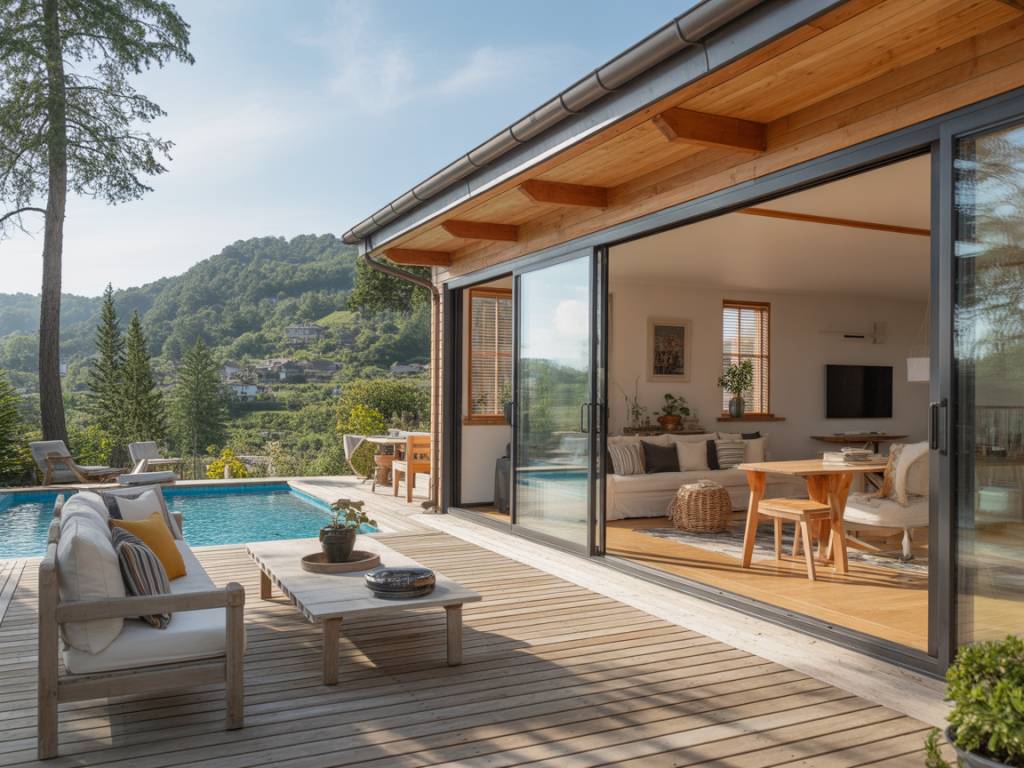
Outdoor living rooms that feel like an extension of your interior

0
Outdoor living rooms that feel like an extension of your interior

When an outdoor living room really fonctionne, you almost forget you’ve stepped outside. The floor flows, the sofa invites you to sit down, and the whole space feels like a natural prolongation of your interior – juste avec plus de lumière et d’air. That’s exactly what we’re aiming for here: not a “nice terrace”, but an extra room of the house.

In this guide, we’ll go through the key principles and the very concrete decisions that make the difference: level transitions, materials, protection from the elements, furniture choices, lighting, and budget ranges. The idea is that you finish this article capable of sketching a first layout and asking the right questions to your contractor or landscaper.

Start with the function, not the furniture

Before you fall in love with a designer outdoor sofa, be brutally clear about what this “room” will actually be used for. The best outdoor spaces are planned like interior floor plans.

Ask yourself:

  • Is this primarily for everyday family life (kids, pets, quick breakfasts)?
  • Is it more for entertaining (aperitivo area, long dinners with 8–10 guests)?
  • Do you need a quiet corner to work or read outside?
  • Will you cook outside regularly (full outdoor kitchen) or just use a portable barbecue a few times a month?

From there, define 1 or 2 main functions maximum. An outdoor living room that wants to do everything usually does nothing well. Typical combinations that work:

  • Lounge + dining for larger terraces (20 m² and more)
  • Lounge + compact cooking area for terraces directly off the kitchen
  • Lounge only for smaller balconies or patios (under 12 m²)

Once the function is clear, you can dimension the space like an indoor room: circulation, furniture footprints, storage. This avoids the classic error of buying furniture first and discovering you can no longer open the sliding door.

Make the outside speak the same language as the inside

To feel like a true extension, your outdoor living room has to “continue” your interior design instead of competing with it. The goal is visual and material continuity.

Work on three key elements:

  • Color palette: pick 2–3 main colors and 1 accent, ideally echoing your interior. If your living room has warm oak, off-white walls and black metal details, stay in that world outside: sand or light grey floor, black steel lanterns, cushions in off-white and terracotta.
  • Materials: repeat at least one major interior material outside – it can be the floor tone, a wood species, a metal finish. For example, if you have oak flooring inside, choose a deck or outdoor tiles in a similar warm tone; if you have brushed brass inside, pick warm-toned metal outdoor lights instead of cold chrome.
  • Lines and shapes: if your interior is very rectilinear and minimal, avoid overly rustic or curvy, ornate outdoor furniture. If your inside has rounded sofas and organic shapes, bring that softness outside with rounded coffee tables or curved benches.

Think of the two spaces as one large open-plan room briefly interrupted by glass. When you stand inside looking out, your eye should travel comfortably from the interior coffee table to the exterior one without a visual “shock”.

Sort out levels and thresholds first

Nothing kills the “extension” feeling faster than a 20 cm step down or a clumsy threshold that trips everyone up. If you’re still in the design phase, this is where you win or lose the battle.

Ideally, you want:

  • Same finished floor height inside and out (or a minimal 2–3 cm difference for drainage and door frames).
  • Flush threshold at the patio door: no big step, no rail to climb over.
  • Continuity of floor formats: if you can’t use the exact same material, use a similar size and pattern for a smooth visual transition.

In renovation, this often means building a small raised deck to align with the interior. Anticipate:

  • Drainage (slope away from the house, gutters, drainage mats).
  • Regulations: in some countries, raising a terrace above a certain height triggers safety railing requirements or planning permissions.
  • Accessibility: a flush transition is not only more beautiful, it’s also safer for children, elderly people and anyone with reduced mobility.

Budget ballpark: expect roughly €100–€200/m² for a simple timber deck built to align with interior level (labour + materials), more for composite or stone on pedestals.

Choose the right flooring for an “indoor” feel

Your outdoor floor is the visual extension of your interior flooring, but it also has to deal with rain, sun, stains and frost. The trick is to choose something technically suitable that still looks like it belongs to a living room.

Common options:

  • Porcelain stoneware tiles (2 cm outdoor grade)
    Pros: huge range of finishes (stone, concrete, even wood effect), non-porous, easy to clean, durable, works on pedestals for level adjustment.
    Cons: can be slippery if you don’t choose the right anti-slip rating; requires good substrate preparation.
    Look: great if you want a seamless effect with your interior tiles.
  • Timber decking (larch, exotic woods, thermo-treated)
    Pros: warm, soft underfoot, visually very “living room”, easy to cut and adapt.
    Cons: maintenance (oiling or greying gracefully), sensitivity to standing water, potential for splinters if not maintained.
    Look: perfect for softening a very mineral interior.
  • Composite decking
    Pros: low maintenance, stable tone, non-slip options, good for heavy-use family terraces.
    Cons: can look artificial if you choose the cheapest versions, heats up more in full sun.
    Look: clean, contemporary, practical.
  • Polished concrete or microtopping (on slab)
    Pros: very contemporary, seamless, strong “loft” feeling.
    Cons: requires excellent execution and proper expansion joints; can crack; not suitable everywhere in freezing climates.
    Look: ideal to continue an interior concrete floor outside.

Whatever you choose, verify:

  • Slip resistance rating adapted to a wet exterior area.
  • Resistance to frost and UV.
  • Compatibility with your existing substrate or planned deck structure.

Think in zones, like an open-plan interior

Instead of pushing all furniture against the façade and leaving an empty rectangle, treat your outdoor area like an open-plan living room. Create clear zones:

  • Sofa/lounge area near the interior living room, to visually extend it.
  • Dining area closer to the kitchen door for obvious practical reasons.
  • Secondary corner (bench, reading chair, daybed) at the far end to “close” the perspective.

Allow for comfortable circulation:

  • 80–100 cm minimum clear passage behind chairs and sofas.
  • 90–120 cm in front of sliding doors so they open freely even with furniture nearby.
  • At least 60 cm between edge of table and any wall or railing – 90 cm is ideal to pull chairs out easily.

Outdoor rugs, low planters and changes in lighting (a floor lamp for the lounge, a pendant or string lights above the table) help to subtly mark each zone, just as inside.

Protect from sun, rain… and neighbours

If you want your outdoor living room to be used more than ten days per year, you need a microclimate: shade, at least partial rain protection, and a bit of privacy.

Main options for the “roof”:

  • Fixed pergola (wood or aluminium)
    Budget: roughly €250–€600/m² supplied and installed, depending on material and finish.
    Pros: durable, can integrate lighting and blinds; bioclimatic versions with adjustable slats manage sun and rain.
    Cons: more expensive upfront, might require planning permission in some locations.
  • Retractable awning
    Budget: €1,500–€4,000 for a quality motorised awning covering a 10–15 m² terrace.
    Pros: flexible, retracts to let winter sun in, lower cost than a full pergola.
    Cons: limited rain protection; fabric needs eventual replacement.
  • Shade sails
    Budget: €300–€1,000 depending on size and quality, plus fixing posts if needed.
    Pros: light, airy, visually interesting, relatively affordable.
    Cons: less durable in strong winds; more limited rain protection unless you choose specific fabrics and slopes.

For privacy and wind, think in layers:

  • Fixed elements: half-height walls, timber slat screens, glass windbreaks.
  • Soft elements: planters with grasses, bamboo (in pots to control spread), climbing plants on a light structure.
  • Movable elements: outdoor curtains on a pergola, folding screens, large parasols.

The idea is to filter views and wind, not build a bunker. You still want light and a sense of openness.

Choose furniture as if it were indoor, but built for outdoor

This is where most people either overspend on “statement” pieces that age poorly, or underspend on low-cost sets that ruin the whole look after one winter. Apply the same criteria you would for an indoor sofa: comfort, proportions, and quality of construction.

Key points:

  • Structure: aluminium (rust-proof, light) or treated/grade A outdoor wood. Avoid basic steel frames near the sea or in very wet climates unless fully galvanized and powder-coated.
  • Cushions: quick-dry foam, removable covers in UV- and water-resistant fabric (Sunbrella-type or equivalent). Check that covers can go in the washing machine.
  • Depth & height: standard indoor sofa comfort applies: 90–100 cm depth for lounging; seat height 40–45 cm; table height 35–45 cm for a coffee table, 72–75 cm for a dining table.
  • Flexibility: modular sofas and stacking chairs let you adapt to different uses and store in winter if needed.

Typical budgets for decent, not luxury, quality:

  • Outdoor 3-seat sofa with cushions: €800–€2,000.
  • Dining table for 6–8 people: €500–€1,500.
  • Stackable dining chairs: €80–€250 each.
  • Outdoor rug (polypropylene): €100–€400 depending on size.

Combine one or two quality “anchor” pieces (sofa, main table) with simpler, less expensive side tables and accessories. This is exactly how you would structure an indoor living room budget.

Layer lighting like in a real living room

If your terrace is only lit by one blinding wall fixture next to the door, it will never feel like an inviting room. Think in three layers, as indoors:

  • Ambient lighting: soft, general light that allows you to move around without tripping – wall sconces on a dimmer, integrated LED strips in steps or under benches, indirect light on the façade.
  • Task lighting: focused light where you need it – a pendant or string lights above the dining table, a directional light near the grill if you cook outside.
  • Accent lighting: decorative light points – lanterns on the floor, candles, LED spotlights to highlight a plant or textured wall.

Practical tips:

  • Plan outdoor electrical outlets and cable paths before finishing surfaces.
  • Choose fixtures rated for exterior use (IP44 minimum, higher if directly exposed to rain).
  • Use warm color temperature (2700–3000K) to match interior ambience and avoid the “car park” effect.
  • Automate with timers or presence sensors for functional lights; control decorative ones with simple switches or connected plugs.

Textiles, plants and accessories: what makes it feel “finished”

Outdoor spaces often look cold because they’re missing the same elements we use indoors to soften a room. Without going overboard, a few well-chosen details completely change the perception.

  • Outdoor rug: it visually anchors the seating area and bridges the mental gap between interior and exterior. Choose a size large enough for at least the front legs of the sofa and chairs to sit on it.
  • Cushions & throws: mix textures (linen-effect, woven, structured fabric) in your chosen palette. Provide a storage box or bench so they don’t live permanently on the floor in bad weather.
  • Planters: use fewer, larger containers rather than many small ones. Group them to create green “walls” and frame views instead of scattering pots randomly.
  • Small tables: side tables are crucial – if no one has anywhere to put their glass or book, the space won’t be used for long.
  • Fire element (where allowed): gas fire pit, bioethanol burner or even a well-designed brazier instantly brings a “living room” vibe. Always check local safety rules.

Plan storage and maintenance from day one

The least glamorous part, but the one that decides if your outdoor living room stays beautiful or turns into a sad corner of faded cushions and dirty tiles.

Think about:

  • Where will cushions live in winter? Inside a nearby closet, in an exterior storage box, or in a dedicated bench with storage? Measure volumes realistically.
  • How will you clean the floor? Is there a hose connection nearby? Is the surface easy to mop or brush? Avoid very textured tiles if you hate scrubbing.
  • Wood maintenance: are you okay with a natural grey patina, or will you oil annually? Decide now and choose species and finishes accordingly.
  • Covers: custom or semi-custom protective covers for sofas and tables significantly increase their lifespan. Budget for them from the start.

A good rule of thumb: if maintenance looks overwhelming on paper, you won’t do it. Adjust materials and the amount of textile accordingly.

Budgeting and phasing: how to tackle the project realistically

You don’t have to do everything at once to get a usable outdoor living room. But some elements are much harder to change later. Prioritise in this order:

  • 1. Structure and levels: slab or deck, drainage, alignment with interior floor, railings if needed.
  • 2. Protection: pergola/awning, privacy screens that require fixings, main electrical lines.
  • 3. Floor finish: tiles, decking, concrete finish.
  • 4. Core furniture: sofa, main table, chairs.
  • 5. Lighting details: decorative fixtures, extra outlets.
  • 6. Textiles and accessories: rug, cushions, planters, lanterns.

Very rough budget envelopes for a 20 m² terrace (excluding major structural works):

  • Entry level / DIY-heavy: €3,000–€6,000 (simple deck or tiles, basic awning or sail, mid-range furniture, minimal lighting).
  • Comfortable mid-range: €10,000–€20,000 (quality floor finish, aluminium pergola or good awning, durable furniture, layered lighting, custom screens).
  • High-end: €25,000+ (bioclimatic pergola with automation, seamless interior/exterior floors, built-in benches and planters, outdoor kitchen, custom furniture, integrated sound and lighting).

Whatever your budget, invest first in the elements that are hard or expensive to modify later: structure, levels, weather protection and floor. Furniture and textiles can evolve over time.

Checklist before you start

To wrap up, a quick checklist you can literally copy into your project notebook:

  • Defined 1–2 primary functions for the outdoor room (lounge, dining, cooking, work)?
  • Checked level differences and possible solutions for a near-flush transition?
  • Chosen a material palette that extends your interior (color, floor, metal/wood accents)?
  • Validated exterior floor choice for slip resistance, frost and UV?
  • Sketched circulation paths and furniture footprints with realistic dimensions?
  • Planned sun and rain protection (type, orientation, fixing points)?
  • Reserved space and budget for privacy and wind filtering (screens, planting)?
  • Designed lighting with ambient, task and accent layers, and enough outlets?
  • Anticipated storage for cushions and accessories + covers for furniture?
  • Clarified maintenance level you’re willing to accept and chosen materials accordingly?
  • Established a phased plan if budget doesn’t allow everything at once?

Once these boxes are ticked, you’re no longer improvising a “nice terrace”; you’re deliberately designing a real additional room – one that just happens to be outdoors.

Designing a functional home office that actually inspires work

0
Designing a functional home office that actually inspires work

Working from home is no longer a stopgap; for beaucoup de gens, it’s the new normal. Yet many “home offices” are still a laptop on the dining table, a chair that hurts after 30 minutes, and a pile of cables that threaten to strangle the vacuum cleaner.

If you want a space that really supports your work – focus, comfort, and yes, motivation – you need to treat it like a mini renovation project, pas comme un coin improvisé. Let’s walk through how to design a home office that’s both functional and genuinely inspiring, sans blabla décoratif inutile.

Start with what you actually do all day

Before choosing a pretty desk on Instagram, be brutally clear on your real needs. A graphic designer and a lawyer don’t work the same way, and their offices shouldn’t either.

Take 10 minutes and list:

  • Your main tasks: calls, deep-focus writing, drawing, coding, video meetings, paperwork…
  • Your tools: laptop only, 2 screens, printer, drawing tablet, physical files, samples, books…
  • Time spent: 1–2 hours/day or full 8–10 hour days?
  • Privacy needs: confidential calls? background noise ok or not?
  • Shared space or solo: children, conjoint, colocataire using the same room?

This quick diagnosis will guide everything else: surface needed, level of storage, acoustic treatment, and your budget priorities.

Real-life example: Claire, freelance copywriter, thought she wanted a big desk and lots of shelves. After listing her real tasks (writing + video calls + reading), we prioritised a comfortable chair, good lighting, a second screen and a discreet backdrop. A compact 120 cm desk with a tall, narrow bookcase was enough. Total budget: about €900 all-in instead of the €2,500 she had in mind for “relooking the room”.

Choose the right spot (even in a small apartment)

Not everyone has a spare room, but almost everyone has some square metres that can be optimised. The idea is to choose a location that matches your work pattern, not just what “looks nice”.

Questions to ask yourself:

  • When do I work? Early morning, daytime, late evening?
  • Who is at home at those times? Children, partner, colocataires?
  • Do I need a door that closes, or is a quiet corner enough?

Options to consider:

  • Dedicated room: ideal if you have confidential calls or a lot of equipment. Plan at least 6–8 m² for a comfortable setup.
  • Office in the living room: workable if you define a clear zone: backing the desk against a wall or window, or using a low shelf as a visual separator.
  • Office in the bedroom: useful if you need isolation, but separate “sleep” and “work” areas: use a rug, a screen, or a change of wall colour.
  • Circulation areas: hallways, under-stair spaces, niches. Perfect for compact wall-mounted desks if you mostly do laptop work.

Minimum dimensions to keep in mind:

  • Desk: 120 cm wide x 60–70 cm deep for a standard computer setup.
  • Clear knee space: 60 cm wide x 70 cm high minimum.
  • Chair movement: ideally 80–90 cm clearance behind the chair.

Do a quick layout sketch with a pencil, or use a basic online planner. You’re looking for a position that allows you to sit facing a wall or window, not with your back to a busy circulation area.

Get ergonomics right first, aesthetics second

An inspiring office is one where your body doesn’t hurt after two hours. Start with the three essentials: desk, chair, and screen setup.

The desk

  • Standard height: around 72–75 cm. If you’re short or tall, consider an adjustable desk or adjustable chair with footrest.
  • Depth: 60 cm is a minimum; 70–80 cm is more comfortable if you have a screen + laptop.
  • Surface finish: matte (no reflections), easy to clean. Avoid ultra-glossy tops that reflect the screen light.
  • Sit-stand option: interesting if you work long hours. Budget: from €250–€300 for basic electric models to €700+ for high-end.

The chair

Do not reuse your dining chair if you work more than 3 hours/day. Your back will send you the bill.

  • Essential features: adjustable height, lumbar support, tilting or rocking mechanism, and armrests that can slide under the desk.
  • Budget ranges (for serious use):
    • €150–€300: decent ergonomic chairs for 4–6 hours/day.
    • €300–€800: pro-level chairs for 8+ hours/day (Herman Miller, Steelcase, etc. often available second-hand).

The screen(s)

  • Top of the screen at (or slightly below) eye level when you sit straight.
  • Distance: roughly an arm’s length from your eyes.
  • If you work on a laptop: invest €20–€40 in a laptop stand + external keyboard/mouse.

Adjust everything, then test: 30 minutes of work. Any pain = something is too high, too low, or too far.

Plan storage so the chaos never reaches the desk

Paperwork, cables, chargers, samples… they will accumulate. The goal isn’t a Pinterest-perfect desk at all times; it’s to give every item a defined “home” so you can clear surfaces in 2 minutes.

Think in 3 zones:

  • Zone A – On the desk: only what you use daily: laptop, screen, notepad, 1 pen pot, maybe a small plant.
  • Zone B – Within arm’s reach: drawers, desktop organisers, wall shelves above the desk.
  • Zone C – A bit further: cupboards, a taller cabinet, archive boxes for monthly/annual storage.

Storage solutions that work well in home offices:

  • Under-desk drawer units on wheels (for stationery, active files, tech accessories).
  • Wall-mounted cabinets above the desk (use the full height of the wall; 35–40 cm depth is plenty).
  • Vertical file holders to free desk space but keep documents accessible.
  • Cable organisers: cable trays under the desk, Velcro straps, multi-plugs fixed to the underside of the top.

Budget markers:

  • Basic under-desk unit: €60–€150.
  • Wall shelves (DIY plank + brackets): €20–€60 per metre.
  • Closed cabinets (Ikea, etc.): €80–€200 per module.

If you’re in a small space, prioritise closed storage: visual calm will matter more than showing off your stationery collection.

Light that wakes you up, not your migraines

Lighting is one of the main factors that influence your energy, concentration, and eye fatigue. Treat it like a mini lighting design project.

Natural light

  • Position the desk perpendicular to the window if possible (light from the side), to avoid glare on the screen.
  • Left-handed: window on the right; right-handed: window on the left (to avoid casting your own shadow on what you write).
  • Use light, non-shiny curtains to diffuse direct sun if necessary.

Artificial light

  • General light: a ceiling light or floor lamp, warm neutral (2700–3000K) or neutral (3000–3500K).
  • Desk lamp: adjustable arm, wide head, neutral white (3000–4000K), no visible bulb in your field of view.
  • Accent light: small wall light or LED strip on a shelf for ambiance in late hours.

For video calls, watch your face lighting: avoid the “horror movie” backlit effect. Have a soft light source in front of you or slightly to the side. A simple desk lamp with a matte white shade often does the job.

Acoustics and privacy: stop working in a train station

Noise is one of the top complaints in home offices, especially with children or neighbours nearby. You’ll rarely get perfect silence, but you can control the sound environment.

Easy acoustic improvements:

  • Rug under the desk (absorbs sound and makes the space visually “anchored”).
  • Heavy curtains (especially if you’re near a window on a street).
  • Bookshelves and filled cabinets along the walls (excellent sound absorbers/diffusers).
  • A few acoustic panels placed opposite each other if you have lots of hard surfaces (budget: €40–€100 per panel; DIY possible with fabric + insulation).

For calls and online meetings:

  • Invest in a decent headset with microphone: game changer for sound quality. From €60–€200 for a good model.
  • Define clear rules with the household for “do not disturb” times; a simple sign on the door during meetings can be surprisingly effective.
  • If you’re in an open space, consider a folding screen behind your chair: it filters visual distractions and improves sound a bit.

Make tech invisible (or almost)

Nothing kills inspiration faster than a nest of cables and blinking chargers everywhere. You don’t need a server room; just a bit of planning.

Before buying furniture, check:

  • Power outlets: how many are near your future desk?
  • Network: Wi-Fi stable or do you need an Ethernet cable?
  • Printer/scanner: in the same room or elsewhere?

Practical solutions:

  • Install a multi-plug with surge protection fixed under the desk.
  • Use cable trays screwed under the top to hold transformers and excess lengths.
  • Choose a desk with an integrated cable pass-through, or drill one (with a 60 mm hole saw, €10–€15).
  • Group small accessories (chargers, adapters, USB keys) in a single labelled box or drawer divider.

If you often switch between laptop and tablet/phone, think about a small docking station or a vertical stand: less clutter, fewer cables on the surface.

Colours and materials that actually help you focus

Forget the idea that you must paint everything white to “feel calm”, or everything dark to look “serious”. The goal is to create a visual environment that supports your way of working.

Safe, efficient base:

  • Walls: off-white, light greige, or very light sage/blue-grey.
  • Desk: wood or wood-effect matte, or a muted solid colour (e.g. warm grey, sand, olive).
  • Floor: avoid strong contrasts (black and white) that tire the eye; if you can add a rug, choose a simple pattern or plain colour.

Add colour strategically:

  • Paint one wall (ideally the one you face) in a deeper but not aggressive tone: ink blue, terracotta, forest green.
  • Use textiles (rug, curtains, chair cushion) for a bit of warmth and texture.
  • Limit strong patterns to small surfaces (a poster, a notebook) so they don’t distract you.

Materials to favour:

  • Matte finishes (for walls, furniture) to avoid reflections.
  • Warm materials near touch points: wood, cork, fabric.
  • A few plants (real ones) for visual rest and better air quality if the room is ventilated.

Ask yourself: “Could I stare at this wall for 3 hours during a deadline without getting a headache?” If the answer is no, tone it down.

Style it with intention, not clutter

Inspiration doesn’t come from filling the room with decorative objects; it comes from a few elements that resonate with your goals and your personality. Think “curated”, not “crowded”.

3–5 items that can make all the difference:

  • 1 or 2 frames (posters, photos, drawings) that energise you, placed in your field of vision but not directly above the screen.
  • 1 plant that you’ll actually keep alive (pothos, sansevieria, zamioculcas… resistant and tolerant to low light).
  • 1 beautiful, comfortable pen + notebook set that makes you want to write or sketchnote.
  • 1 board (magnetic, cork, pegboard) reserved for your projects or your current week’s plan.
  • 1 small ritual object: candle, diffuser, hourglass, anything that marks “work mode” when you sit down.

Avoid accumulating small decorative items on the desk; reserve them for shelves or a secondary surface. Visual noise = mental noise.

Budgets and timelines: what to expect

To give you an idea, here are three typical investment levels for a home office, excluding structural renovations.

Minimal, efficient setup – from around €400–€700

  • Simple desk (120 x 60): €80–€200
  • Ergonomic chair (entry level): €150–€250
  • Desk lamp: €30–€80
  • Basic storage (shelf + small drawer unit): €80–€150
  • Accessories (cable management, organiser, plant): €60–€120

Comfort + aesthetics – from around €900–€1,800

  • Higher quality or sit-stand desk: €250–€700
  • Ergonomic chair mid/high range (possibly second-hand pro): €250–€600
  • Lighting (ceiling + desk lamp + ambiance): €100–€250
  • Paint and minor decor: €100–€200
  • Storage furniture: €200–€400
  • Tech accessories (stand, headset, docking station): €100–€250

Integrated, custom office – from around €2,000–€5,000+

  • Made-to-measure joinery (desk + full-height storage): €1,500–€3,500 depending on materials and complexity.
  • Mid/high-range chair and lighting: €600–€1,200
  • Possible electrical upgrades (extra outlets, data): €200–€600
  • Decoration, accessories and textiles: €300–€700

Timeframe:

  • Simple setup with off-the-shelf furniture: 1 weekend of shopping + 1 day of assembly and installation.
  • Paint + furniture + small electrical adjustments: 2–3 weekends.
  • Custom-made joinery: 4–8 weeks of lead time + 1–3 days of installation.

Common mistakes to avoid

After years on renovation sites and dozens of home office projects, I see the same errors again and again. Avoid them, and you’re already ahead.

  • Choosing the desk for its look, not its dimensions. Check depth and leg space before falling for a design desk.
  • Ignoring acoustics. Hard floors + bare walls + empty room = echo chamber. Rug and textiles are not “nice to have”; they’re functional.
  • Overloading the space with decor. An inspiring office is not a concept store. Leave negative space.
  • Underestimating cable management. If you don’t plan it, you’ll hate the result in two weeks.
  • Not testing the setup. Once everything is in place, work there for a few days, then adjust heights, distances, lighting before fixing anything permanently.

Your action plan in 7 steps

If you want to move from “I should redo my office one day” to a concrete project, follow this sequence.

  • Step 1 – Define your needs. Tasks, tools, schedule, privacy. Write them down.
  • Step 2 – Choose your spot. Measure the available space, sketch a layout, check outlets and light.
  • Step 3 – Fix your budget. Decide on a range and where you’re ready to invest (chair? lighting? storage?).
  • Step 4 – Select the essentials. Desk, chair, lighting, basic storage. Prioritise ergonomics.
  • Step 5 – Organise tech and cables. Multi-plugs, tray, stand, docking station if needed.
  • Step 6 – Work on colours and materials. One coherent palette, some texture, no aggressive patterns right in front of your nose.
  • Step 7 – Add your inspiration layer. 3–5 carefully chosen elements that really motivate you, not generic “office decor”.

Designing a home office that truly supports your work is less about buying the “perfect” desk and more about asking the right questions, in the right order. If you treat this as a small, structured project – with measurements, a budget, and a clear plan – you’ll end up with a space where you actually want to sit down and get things done.

Accent ceilings as the new feature wall in interiors

0
Accent ceilings as the new feature wall in interiors

Why your next feature wall should be… the ceiling

For years, the “feature wall” has been the go-to trick to dynamise a room without repainting everything. A darker colour behind the sofa, a patterned wallpaper behind the headboard, and you were done.

The problem? This trick has been so overused that it often blends into the background. In many interiors, the feature wall doesn’t surprise anymore – it’s predictable.

The new playground for designers and architects is now above your head: the accent ceiling. Instead of pretending the ceiling doesn’t exist, we use it as a fifth wall – sometimes even as the main decorative statement of the room.

If that sounds risky, stay with me. Used intelligently, an accent ceiling can structure a space, balance volumes and even solve layout problems. The key is to know how to use it: materials, colours, budget, and also what to avoid.

What is an accent ceiling – and why is it so powerful?

An accent ceiling is simply a ceiling that is deliberately highlighted by colour, material or shape to become a key design element in the room, instead of a neutral plane painted white by default.

Compared with a traditional feature wall, the ceiling has three big advantages:

  • It doesn’t “eat” usable wall space: you keep your walls free for storage, windows, radiators, art or shelves.
  • It unifies the room: an accent wall attracts the eye to one side; the ceiling works on the entire footprint of the room.
  • It can visually correct proportions: too high? too long? too narrow? The ceiling is your best tool to rebalance.

Of course, the effect can be spectacular – but only if you choose the right technique for your space, your budget and your constraints (height, lighting, existing structure, etc.).

When an accent ceiling makes sense (and when it doesn’t)

Before you take out the paint roller, ask yourself three questions:

  • What do I want to correct or highlight?
    Low ceiling to “lift”, high ceiling to warm up, overly long room to break up, lack of character, poor lighting… An accent ceiling is a tool, not just a decorative whim.
  • What are my real constraints?
    Ceiling height, condition of the existing support (cracks, stains, beams), presence of utilities (ducting, spotlights, smoke detectors), rental vs. ownership.
  • What is my budget + time frame?
    A weekend and 150 € is not the same project as a 5,000 € budget and professional plasterers.

Situations where an accent ceiling works particularly well:

  • Open-plan living spaces where you need to visually zone functions: kitchen / dining / living
  • Bedrooms with very little wall space (sloping ceilings, many openings)
  • Long, narrow rooms that feel like corridors
  • High ceilings that make the room feel cold or “echoey”
  • Small spaces where you can’t add much furniture or wall decor (entry, WC, dressing)

Cases where it’s wiser to be careful:

  • Very low ceilings (below 2.40 m) where a dark or heavily textured ceiling can compress the volume
  • Rooms already very busy visually (heavy patterned wallpapers, many colours, lots of furniture)
  • Spaces with very poor natural light where the ceiling is the only luminous surface

Painted accent ceiling: the most accessible option

If you want to test the concept without blowing your budget, paint is your best ally. With a good preparation and two coats, you can totally change a room in a weekend.

Budget estimate (DIY, 15–20 m² room):

  • Paint (quality acrylic): 50–90 €
  • Prep + tools (roller, telescopic pole, masking tape, tarp): 30–60 €
  • Total DIY: around 80–150 €
  • With a painter (France, average): 20–35 €/m² of ceiling, labour + materials

Which colours to choose?

  • Dark ceiling in large or high rooms
    Deep blue, charcoal, bottle green, even black. A dark ceiling “brings down” the height visually, creates intimacy and highlights mouldings or lights.
    Ideal in: living rooms with 2.80 m+ height, period apartments, master bedrooms.
  • Coloured ceiling to energise a neutral base
    Terracotta, muted sage, dusty pink, linen, sand. Perfect to warm a white-box new build without repainting all the walls.
    Ideal in: rentals, small living rooms, children’s rooms.
  • Ceiling + wall in the same colour (enveloping effect)
    Painting the ceiling and at least one wall in the same shade creates a cocooning atmosphere and masks irregularities at the junction surfaces.
    Ideal in: bedrooms, reading nooks, home offices.

Technical tips (the stuff professionals actually do):

  • Always check the existing paint type (water-based vs. oil-based). If in doubt, do a test patch and use an adhesion primer.
  • Prepare seriously: dust, fill cracks, sand lightly, remove loose plaster. A dark colour will exaggerate defects.
  • Use a satin or matte finish for ceilings. Gloss will show every flaw.
  • Protect the walls with 2–3 cm of masking tape along the junction and remove it before the paint is completely dry to avoid tearing.
  • Work your roller in the direction of the light (towards the main window) to minimize roller marks.

Wooden ceilings: warmth and acoustic comfort

If your goal is to warm up a cold room or hide a very damaged ceiling, wood is an excellent candidate. It also improves acoustics and brings a real architectural presence.

3 main options:

  • Wood panelling (planks or slats)
    Mounted on battens or clips, in solid wood or MDF veneer. Wide planks for a Scandinavian vibe, narrow slats for a more contemporary feel.
    Budget (excluding labour): 25–70 €/m² depending on essence and quality.
  • Open slat ceilings (slatted baffle style)
    Wooden slats spaced out, often with black felt behind, very graphic.
    Benefits: hides utilities and spot rails while letting sound absorb and air circulate.
    Budget materials: 50–120 €/m².
  • Wood-effect panels
    Laminated or PVC panels imitating wood, lighter and more economical, interesting in bathrooms or rentals where you can’t significantly add load.
    Budget: 15–40 €/m².

Points of vigilance:

  • Height loss: count at least 3–5 cm for battens + panels, more if you integrate spotlights.
  • Weight and fixing: check the ceiling structure (concrete, brick, plasterboard) and use appropriate anchors.
  • Fire and humidity: in kitchens and bathrooms, choose treated wood or adapted panels and respect local fire safety regulations.

Where wood ceilings work particularly well:

  • Large living spaces where you want a strong warm identity
  • Duplexes or lofts where the ceiling is visually very present
  • Home cinemas or music rooms where acoustics matter

Structural accent ceilings: beams, coffers, dropped ceilings

Sometimes the accent is already there – you just need to reveal it.

Existing beams

  • Strip layers of paint, sand and either wax, oil or stain the beams to bring out the wood.
  • Paint the infill between beams in a contrasting colour to highlight the rhythm.
  • In very low rooms, often it’s better to keep beams and infill in the same light tone to avoid cutting the height.

Coffered ceilings and frames

  • Create a central frame in plasterboard with LED strips recessed inside.
  • Paint the inside of this “tray” in a stronger colour: you get a sort of inverted feature wall.
  • Useful in open-plan spaces to visually mark a dining area or living area without partitions.

False ceilings for lighting

  • A dropped ceiling (plasterboard) of 10–20 cm allows you to integrate spotlights, LED strips, ventilation ducts, etc.
  • To turn it into an accent, combine:
    • structured shape (island above the kitchen, band above the hallway)
    • colour or different material (paint, wood, acoustic panel)
    • integrated lighting (peripheral LEDs, recessed spots)

Budget range (indicative, with pros):

  • Simple dropped plasterboard ceiling: 40–70 €/m² (supply + installation, excluding finish paint)
  • Coffered or complex shaped ceiling: often 80–150 €/m² depending on design and lighting

Bold options: wallpaper, colour blocking, pattern on the ceiling

For small surfaces or “secondary” rooms (entry, WC, hallway), the ceiling can become a playground.

Wallpaper on the ceiling

  • Very impactful in small surfaces: floral paper in a powder room, graphic pattern in a hallway, panoramic in a bedroom above the bed.
  • Use non-woven wallpaper (paste-the-wall) which is easier to apply overhead.
  • Be realistic about your DIY level: applying wallpaper upside down is significantly more physical than on walls.

Budget (DIY):

  • Mid-range non-woven wallpaper: 20–40 €/roll (5 m² on average)
  • Adhesive and tools: 20–40 €

Colour blocking and stripes

  • Extend a wall colour 30–50 cm onto the ceiling to visually “frame” the space.
  • Create a coloured rectangle on the ceiling above the dining table or bed to define the zone.
  • Draw stripes or a geometric design on the ceiling to visually shorten or widen a room:
    • Stripes along the short side to “stretch” length
    • Stripes along the long side to “widen”

These techniques cost little in materials but require precision in marking and masking tape. Take the time to measure, draw with a chalk line and do tests.

Lighting: the ally that makes or breaks an accent ceiling

An accent ceiling without a lighting strategy is like a kitchen without sockets: you’ll regret it daily.

Think lighting before you build anything (false ceiling, wood slats, frames). Ask yourself:

  • Do I need a general light, task lighting, ambient light – or all three?
  • Where are my existing electrical points? Can I move them or do I use them as is?
  • Do I want to highlight the ceiling (washing it with light) or simply integrate lights discreetly?

Three approaches that work well with accent ceilings:

  • Perimeter LEDs
    Recessed LED strip around the perimeter of a dropped ceiling or frame. It gives a floating effect and highlights textures (wood, relief paint, coffers).
  • Clustered pendants
    Particularly effective with painted or patterned ceilings: a group of pendants above a table or island draws the eye up and emphasises the chosen area.
  • Accent spots
    Adjustable spotlights aimed at specific points on the ceiling (pattern, beam, art) to create depth and shadows.

On a practical level, plan for:

  • Access hatches if you hide junction boxes or transformers above a false ceiling
  • Dimmable lighting where possible – a dramatic accent ceiling under a 4,000 K cold spotlight is rarely a success
  • LED strips and spots with good CRI (colour rendering index) so your chosen colour or material is not distorted

Step-by-step: how to plan your accent ceiling project

Whether you only repaint or go for a full structural modification, the logic stays the same.

1. Diagnose your existing situation

  • Measure the height at several points (especially in old buildings).
  • Identify visible defects: cracks, stains, sagging, traces of old leaks.
  • Note existing electrics: junction boxes, connection points, smoke detectors, VMC vents.

2. Define your objective

  • Is it mainly aesthetic (add character)?
  • Functional (hide utilities, improve acoustics, correct proportions)?
  • Both? In that case, prioritise: what is non-negotiable?

3. Choose your technique

  • Paint only (minimal intervention)
  • Paint + lighting adaptation
  • Wood or panels (with or without false ceiling)
  • Structural (dropped ceilings, coffers, slats)
  • Wallpaper or pattern (small/medium surfaces)

4. Set your budget and level of DIY

  • Paint: easily DIY if you’re comfortable working overhead and prepping.
  • Wallpaper overhead: intermediate to advanced, or delegate.
  • Wood / plasterboard / electrics: generally best done by pros, unless you already have experience.

Get at least two quotes if you involve trades. Ask them:

  • What are the surface prep steps?
  • What materials are planned (brands, technical specs)?
  • How much height will be lost, exactly?
  • What happens if existing ceiling is worse than expected once open?

5. Plan the schedule

  • Paint only: 1–2 days for an average room (including prep and drying).
  • False ceiling + paint + lighting: 3–7 days depending on complexity.
  • Wood slats or panels: 2–5 days, often with drying time for finishes.

And yes, expect dust and some disruption: cover furniture, protect floors, and if you’re redoing multiple rooms, organise work zone by zone.

Common mistakes to avoid

After years on renovation sites, here are the recurring traps around accent ceilings:

  • Choosing colour in the shop only
    Always test a patch directly on the ceiling and observe it morning, noon and evening. A grey that looks soft under neon lights can become almost blue at home.
  • Ignoring the rest of the room
    An accent ceiling that has no link with the walls, the floor or furniture will look arbitrary. Reuse the same tone in at least two other elements (textiles, artwork, accessories).
  • Underestimating surface preparation
    Cracks, stains, joints between plasterboard plates – the ceiling reveals everything. Don’t skip filler, sanding and priming, especially for dark shades.
  • Forgetting future changes
    If you’re adding a complex structure, think about access for future electrical or plumbing work. A superb coffered ceiling that needs to be opened the first time you change a spotlight is not a success.
  • Overloading low spaces
    In very low ceilings, prefer light colours, subtle textures, and slight contrasts rather than very dark or visually heavy materials.

Where to start if you’re hesitant

You don’t have to start with your living room. To test the concept without stress, the most forgiving rooms are:

  • The entry: small surface, strong impact, and you see it several times a day.
  • The WC: perfect for bold wallpaper or strong colour overhead.
  • A hallway or passage: an excellent place for a coloured or patterned “strip” that guides movement.

Choose a technique that matches your skills (often paint at first), monitor the effect for a few weeks, and adjust in your next project. Many homeowners start with a simple coloured ceiling in the hallway… and then can’t imagine leaving their main rooms white.

Used intelligently, an accent ceiling is not a gimmick. It’s a real design tool to structure volumes, bring coherence to an open plan, disguise flaws and add character where you thought you had no room to manoeuvre. The trick is the same as on any good renovation project: diagnose, plan, choose the right materials, and don’t skip the unglamorous prep work. The visual reward, however, is often far greater than the effort invested.

Neutral palettes that still feel warm and inviting

0
Neutral palettes that still feel warm and inviting

Neutral palettes have a reputation they don’t really deserve: “boring”, “cold”, “seen everywhere on Instagram”. In reality, a neutral interior can be incredibly warm, enveloping and personal… if you treat it as a project and not as a default setting.

In this article, we’re going to look at how to build a neutral scheme that feels cosy and lived-in, not clinique or showroom-ish. On the menu: where to start, which tones to choose, how to layer textures, where to invest, what you can DIY, and the classic mistakes to avoid.

What do we actually mean by a “neutral palette”?

Let’s align on vocabulary before picking paint.

A neutral palette isn’t “everything in white and beige”. It’s a base built around colours with low saturation and soft contrast:

  • Whites (warm, cool, broken)
  • Beiges, sands, linens
  • Greys (greige, taupe, stone)
  • Brown tones (café au lait, caramel, chocolate)
  • Soft black / charcoal

What makes it feel warm or cold is not the “neutral” label, but:

  • The undertone (yellow/red = warm, blue/green = cool)
  • The materials you pair with it (oak vs high-gloss lacquer)
  • The light in the room (orientation, size of windows, type of bulbs)

Before you choose anything, stand in your room at three different times of day and observe the light. North-facing rooms and cities with grey winters don’t forgive the same choices as a sun-drenched loft in Marseille.

Start with the envelope: walls, ceilings, floors

If you want a neutral palette that feels intentional, start with the “envelope” of the room. This is what will set the overall temperature.

Walls: pick the right kind of neutral, not just “the one that looked nice on Pinterest”

On a renovation project, we usually test 3–5 neutral paints per room directly on the wall. Not on a tiny swatch. Not on your phone screen.

Work with two axes:

  • Warm vs cool: For a welcoming feel, lean warm to slightly warm (yellow, red or pink undertones) rather than cold (blue/green).
  • Light vs medium depth: Ultra-light colours are airy but can look flat. A very light greige or linen can feel warmer than a bright gallery white.

Concrete tip: paint A4-sized test patches at eye level on at least two walls, and live with them for 48 hours. Look at them in daylight, at dusk, and with your lamps on.

Budget & effort (walls):

  • DIY painting: ~€2–4/m² (paint + basic tools), 1–2 days per room for non-pros.
  • Pro painter: ~€20–35/m² in France (surface to paint, not floor area), depending on prep work.
  • Don’t cheap out on primer if your walls are patched or previously dark.

Ceilings: not always bright white

A stark pure white ceiling above a warm neutral wall can cut the room in half and create a “boxy” effect.

Three options worth testing:

  • Use the same colour as the walls, lightened by 20–30% by your paint supplier.
  • Stay with white, but pick a warm white (slight cream/ivory undertone).
  • In small rooms, paint walls and ceiling the exact same neutral for a cocoon effect.

Floors: don’t forget the biggest surface in the room

Nothing kills a warm neutral scheme faster than an orange laminate floor or a cold blue-grey tile you haven’t taken into account.

Identify your existing floor tone first:

  • Honey / oak / natural: easy to warm up, works with most beiges and greiges.
  • Very yellow/orange varnish: balance with more beige and taupe, avoid extra yellow.
  • Cool grey tile: add warmth on top (rugs, textiles, wooden furniture).
  • Dark brown/black: embrace contrast, keep walls lighter and textiles soft.

If you’re changing the floor, and want warmth without trend fatigue:

  • Engineered oak in a natural or slightly warm finish is the safest long-term bet.
  • Large-format porcelain tiles in sand, greige or stone effect create a calm base.
  • Polished concrete / microtopping: beautiful but can feel cold; plan generous textiles.

Budget ranges (floors, supply only):

  • Laminate: from ~€15–30/m²
  • Engineered wood: ~€40–80/m²
  • Tile: ~€25–70/m²
  • Installation by pro: typically from €25/m² upward depending on prep and pattern.

Build your neutral palette in layers

A warm neutral room isn’t one colour repeated everywhere. It’s a controlled layering of tones and textures, with very small but deliberate contrasts.

Layer 1: the base neutrals (70–80% of the room)

These are your walls, most of your larger furniture and possibly your curtains.

  • Choose one main neutral (walls + some textiles).
  • Add one supporting neutral for variety (a darker sofa, lighter rug, etc.).

Example for a living room:

  • Walls: warm off-white with a touch of beige.
  • Sofa: light greige fabric.
  • Rug: creamy wool or wool-look.
  • Curtains: same tone as the walls, one shade darker for depth.

Layer 2: the “temperature” materials

This is where the warmth really comes from.

  • Wood: oak, walnut, ash in natural or slightly warm finishes.
  • Textiles: linen, cotton, wool, bouclé, velvet in neutral shades.
  • Natural fibres: jute, sisal, rattan, cane, seagrass.
  • Stone: travertine, limestone, terrazzo with warm specks.
  • Metals: brass, bronze, blackened steel (sparingly) for structure.

What matters is mixing textures so the eye reads “richness” rather than “flat beige mass”. For a typical living room, aim for at least:

  • 2–3 different wood tones (but all warm or neutral in undertone)
  • 2 main fabric textures (e.g. linen + wool) and 1 accent (e.g. bouclé)
  • 1 natural fibre (jute rug, rattan chair, woven lampshade…)

Layer 3: accents and contrast, still neutral but bolder

To avoid everything blending into one blur, you need contrast. In a neutral palette, this often means deeper neutrals rather than bright colours.

Think:

  • Charcoal or chocolate cushions and throws.
  • Black or dark bronze lamp bases.
  • Dark wood side table or console.
  • Soft black window frames or door handles.

The goal is to “draw the lines” of the room. Without any dark anchors, a neutral room feels vague and unfinished.

Warm lighting: the non-negotiable

You can nail the palette and still end up with a cold atmosphere if your lighting is wrong. On renovation projects, I see the same errors over and over: only spots in the ceiling, bulbs that are far too white, and zero dimmers.

Choose the right colour temperature

For living areas (living room, bedroom, dining), aim for:

  • Colour temperature: 2700–3000 K (warm white).
  • CRI: 90+ if possible (better colour rendering).

Above 3000 K, you’re entering office/hospital territory. Your warm beige will look sad and grey.

Multiply light sources

Plan 3 types of lighting, at different heights:

  • Ambient: ceiling lights, flush mounts, tracks (on dimmer).
  • Task: reading lamps, desk lamps, under-cabinet kitchen lighting.
  • Accent: wall sconces, small table lamps, picture lights.

In a standard 20–25 m² living room, you should end up with 5–7 individual light sources, not counting candles. That’s what makes the evenings feel warm and layered.

Budget & tips:

  • Plan electrical points early in a renovation. Moving wires later is what blows the budget.
  • Add at least one switched outlet per room for a floor or table lamp.
  • Dimmers cost more upfront but save you from “interrogation room” lighting.

How to avoid a bland, “rental beige” look

“I went neutral and now my living room looks like a staging project for a real estate ad.” If that’s your fear, good news: it’s solvable.

Add subtle colour within the neutral range

Neutral doesn’t mean colour-free. You can stretch the palette with muted tones that keep the calm feeling:

  • Terracotta, clay, cinnamon
  • Muted olive or sage greens
  • Dusty blush, nude, sand pinks
  • Ink blue in small doses

Keep them in small surfaces first:

  • Cushions, throws, art, pottery
  • A painted alcove or the inside of a bookcase
  • A single accent chair or headboard

Work with pattern and structure, not just solids

A room where everything is plain fabric will always look a bit “hotel”. Introduce discreet pattern:

  • Herringbone or chevron parquet.
  • Subtle stripes on cushions or bed linen.
  • Woven caning, rattan weave, basketry.
  • Light geometric pattern on a rug.

Stay within the palette (tone-on-tone) so pattern adds depth, not visual noise.

Bring in life: books, plants, and objects you actually use

The fastest way to warm up a neutral interior is to let it look lived in:

  • A stack of books on the coffee table instead of three anonymous decor objects.
  • 2–3 plants in real and terracotta pots (yes, the pot colour matters in a neutral room).
  • Throws casually available (but not all piled on the same armchair).

Keep the “showroom” pieces to a minimum and prioritise objects with function and a bit of history.

Room-by-room examples and priorities

Living room: where to invest, where to save

Key pieces for warmth:

  • Sofa: go for a warm neutral fabric (greige, oatmeal, light taupe). Avoid very cold greys.
  • Rug: choose a size that anchors all main seating; material in wool, wool blend or a good synthetic with visible texture.
  • Curtains: floor-length, lined if possible, in a textured fabric.

Where to invest:

  • Sofa structure & fabric (you’ll live with it for years).
  • Rug size and quality (cheap tiny rug = cheap look).
  • 1–2 good lamps with warm light.

Where you can save / DIY:

  • Cushions: mix covers from mid-range brands and even some DIY from upholstery fabric offcuts.
  • Coffee table: a simple wooden or second-hand piece can be sanded and oiled to fit the palette.
  • Decor: ceramics from flea markets, framed art prints instead of originals.

Bedroom: neutral without becoming boring

Base:

  • Walls in a soft greige, beige, or very warm white.
  • Textiles in layers: cotton percale + wool / knit throw + 3–4 cushions max.

To add warmth:

  • Upholstered headboard in a textured neutral (linen, bouclé, chenille).
  • Bedside lamps with fabric shades and warm bulbs.
  • Timber bedside tables or wall shelves.

Watch out for: too much grey; if your floor is cool and your bed linen is grey, add wood, beige, and warm metal (brass reading lights, for example).

Kitchen: neutral but not clinical

Kitchens often go wrong because everything is flat: white cabinets, white backsplash, cold LED, and that’s it.

How to warm it up:

  • Choose warm white or light beige for cabinets instead of optic white.
  • Add wood: worktop, open shelves, or at least wooden accessories.
  • Backsplash in warm stone, zellige-style tiles, or light-coloured terrazzo.
  • Wall paint in a slightly warmer neutral than the cabinets.

Lighting:

  • Under-cabinet lights at 2700–3000 K for worktop.
  • One decorative pendant over the island or table with a warm filament-style LED.

Common mistakes (and how to fix them)

Mistake 1: “Everything is white and it feels like a lab”

Symptoms: white walls, white sofa, white curtains, few textures, harsh lighting.

Fix:

  • Add one medium neutral: beige or greige for textiles (rug, cushions, throws).
  • Introduce wood (side table, console, chair, frames).
  • Switch bulbs to 2700–3000 K and add at least 2–3 lamps.

Mistake 2: “Too many greys, it looks sad”

Symptoms: grey floor, grey sofa, grey curtains, grey rug.

Fix:

  • Add warm neutrals: camel, beige, off-white, sand.
  • Swap or layer textiles: beige throws, off-white cushions, warm-toned wooden pieces.
  • Introduce some greenery and natural fibres (jute, rattan).

Mistake 3: “Neutral, but visually too busy”

Symptoms: many small objects, mixed decor styles, no clear base colour.

Fix:

  • Identify a dominant neutral and remove what doesn’t fit (especially very cool or very yellow items).
  • Group decor by threes and by material (3 ceramics together, 3 books, etc.).
  • Free up surfaces; empty 30% of your shelves and keep them that way.

If you’re starting from scratch: a simple action plan

For a standard 20 m² living room you want to refresh in a warm neutral palette, you can follow this roadmap.

  • Step 1 – Diagnose (0 €): Note orientation, existing floor colour, and natural light. Take photos at different times of day.
  • Step 2 – Choose your main neutral (30–80 €): Buy testers for 3–5 shades, paint patches, observe for 48 hours, pick one.
  • Step 3 – Paint walls & ceiling (200–600 € DIY / more with pro): Aim for warm off-white, beige, or light greige, ceiling slightly lighter.
  • Step 4 – Anchor with rug and curtains (300–1000 € depending on quality): Big enough rug, textured fabric curtains in a warm neutral.
  • Step 5 – Evaluate sofa and big furniture (0–2000+ €): Keep and dress with throws if they work with the palette, or reupholster/replace when budget allows.
  • Step 6 – Lighting (200–800 €): Warm LED bulbs, 1 ceiling point on dimmer + 2–3 lamps minimum.
  • Step 7 – Textures & accents (100–400 €): Cushions in different neutrals, wool throw, wood elements, 1–2 darker anchors.

If that feels like a lot, stretch the project over a few months. Start with walls and bulbs; those two alone already change the perceived warmth of the room.

Neutral palettes aren’t the easy way out; they’re a deliberate construction. Test, compare, adjust, and don’t trust a paint chip held under the neon light of a DIY store. Your home deserves at least a proper mock-up on its own walls.

Small space, big impact: interior tricks for compact homes

0
Small space, big impact: interior tricks for compact homes

Living in a compact home isn’t a downgrade. It’s a design challenge. And if you treat it comme un vrai projet – with a plan, a budget and a few rules – you can get an interior that feels bigger, calmer and much more functional than many large but poorly designed flats.

Let’s go through the main interior tricks that actually work in small spaces, with concrete actions you can implement this month, even if you’re renting.

Start with the right mindset (and a tape measure)

Before buying yet another “space-saving” gadget online, pause. Good small-space design is 80% planning, 20% furniture.

Ask yourself:

  • What do I really do at home? (Work? Host friends? Cook? Mostly sleep?)
  • What are my pain points? (No storage? Dark? Can’t move around the table?)
  • What can I realistically change? (Paint, furniture, lighting, layout, but maybe not walls?)

Then, measure everything:

  • Room dimensions: length, width, ceiling height.
  • Openings: windows, doors, radiators, sockets.
  • Circulation paths: minimum 70–80 cm to walk comfortably.

Use a simple scale plan (paper is fine: 1 cm = 50 cm) to move furniture around before you move it in real life. You’ll avoid the classic mistake: buying a sofa that eats the room.

Define zones, not rooms

In a compact home, you rarely have one room per function. The goal is to make one surface do several jobs, without feeling like you live in a storage unit.

List the functions you need, then assign them to zones instead of rooms:

  • Sleep
  • Work / study
  • Relax / TV
  • Eat
  • Store (clothes, papers, cleaning, hobbies)

For each zone, choose:

  • 1 main piece (bed, desk, table, sofa)
  • 1 storage type (wardrobe, shelves, drawers)
  • 1 light (task or ambient)

Then, separate these zones visually instead of physically:

  • Rugs to anchor the living area.
  • Paint blocks (a coloured rectangle behind the bed headboard, for example).
  • Furniture (a back-to-sofa shelf to separate living and sleeping).
  • Light (a pendant above the dining table, a floor lamp by the sofa).

Budget: you can set up clear zoning from around 150–300€ (rugs, a couple of lamps, paint) without touching walls.

Layout tricks that instantly make a room feel bigger

Certain layout rules are almost non-negotiable in tight spaces.

Free the centre, load the edges

Try to keep the middle of the room as empty as possible. Push storage and heavier pieces against walls and into corners.

  • Prefer a sofa against a wall, not floating in the middle.
  • Place tall storage in the least visible corner from the entrance.
  • Use low furniture between windows to avoid blocking natural light.

Respect circulation lines

Always keep a “clear line” from the door to windows and key zones. If you constantly have to turn sideways to pass, the layout is wrong.

  • Leave 70–80 cm in front of wardrobes and kitchen units.
  • Around a bed: aim for at least one side with 60 cm free space.
  • Around a dining table: 80–90 cm from table edge to wall is comfortable.

Use corners intelligently

  • Corner desks where two walls meet: great mini home office.
  • Corner shelves above 1.80 m: storage that doesn’t hit your head.
  • L-shaped sofas against two walls: define the living zone in one move.

Folding and nesting pieces

  • Drop-leaf or folding wall-mounted table (80–150€) for kitchen/dining.
  • Nesting side tables instead of a massive coffee table.
  • Folding chairs that hook on a wall or slide under the sofa.

Think vertical: every centimetre counts

Most small homes waste at least 20–30% of their storage potential because the walls are half empty. The ceiling height is your best ally.

Go up to the ceiling

  • Install wardrobes or shelving that reach all the way up.
  • Use the top shelves for low-access items (suitcases, seasonal clothes).
  • Unify tall storage with the same colour as the wall to reduce visual bulk.

Indicative budget for vertical storage:

  • DIY wall shelves (brackets + boards): from 60–120€ per wall.
  • Standard wardrobe with top units: 250–600€ depending on width and interior fittings.
  • Made-to-measure from floor to ceiling: 800–1500€ per wall, depending on materials.

Use “dead” zones

  • Above doors: a simple shelf for books or boxes.
  • Under windows: low cabinets or benches with storage.
  • Behind doors: hooks or shallow shelves (depth 10–15 cm) for accessories and small items.

Lofted beds and platforms

If your ceiling is 2.80 m or higher, consider:

  • A mezzanine bed with desk or wardrobe underneath (from 700–2000€ depending on system).
  • A raised platform with storage drawers under the bed or sofa.

Points of vigilance:

  • Check minimum headroom above a mezzanine bed (ideally 90 cm at least).
  • Ensure structure is fixed properly and complies with safety standards.
  • Verify rental restrictions before drilling into structural elements.

Choose furniture that does several jobs

Every piece in a compact home should justify its presence. Ideally, it does two things at once.

Multi-functional essentials

  • Sofa bed with proper mattress if you sleep there every night. Budget: 600–1500€ for a comfortable model.
  • Bed with storage drawers or lift-up base: replaces one full dresser.
  • Bench with storage around the table: seating + hidden space for linens, board games, paperwork.
  • Desk with drawers: avoid separate chests for office supplies.

Favour “light” designs

  • Leggy furniture (visible floor underneath) makes the room feel less packed.
  • Glass or slim-top tables visually “disappear”.
  • Open bases (metal frames, slender wooden legs) look less massive than full plinths.

When custom is worth it

Custom-built pieces are more expensive upfront but can replace several standard items:

  • Built-in wall unit with TV, books and closed storage: from 1500–4000€ depending on materials and finishes.
  • Custom bench-seat with storage along a wall: 600–1500€.

If you plan to stay more than 5 years, custom work often makes sense in terms of comfort and resale value.

Light, mirrors and colours: optical tools that actually work

Small spaces don’t forgive bad lighting or random colour choices.

Layer your lighting

  • General light: ceiling or large floor lamp to avoid dark corners.
  • Task lights: lamp on the desk, reading lamp by the sofa/bed, focused spots in the kitchen.
  • Atmosphere: LED strips under shelves, small table lamps.

Try to have at least 3 light sources in the main room. With LED bulbs, the running cost stays low. Choose warm white (2700–3000K) for living and sleeping areas, neutral white (3500–4000K) for work zones.

Use mirrors strategically

  • Place a large mirror opposite or at 90° to a window, never directly facing the door (you want depth, not a bounce-back effect).
  • Prefer tall, narrow mirrors (almost full height) to visually increase the ceiling height.
  • Mirror-front wardrobes can double the perceived width of a room.

Budget: full-height mirror (50–80 cm wide) runs from 80–250€ depending on frame and quality.

Colour rules for compact homes

  • Light, warm neutrals enlarge and soften: off-white, greige, linen, sand.
  • Use darker tones to structure: one accent wall, niches, lower half of walls.
  • Keep contrast under control: too many dark/light clashes break the space visually.
  • Paint doors and their frames the same colour as the wall to “erase” them.

Simple, effective combo: light neutral on walls, slightly darker neutral on doors and skirting, one deeper accent colour in the living zone or behind the headboard.

Materials and textures: make small feel solid, not cheap

In a small home, every surface is under your eyes all the time. Weak materials or overly busy patterns will tire you out quickly.

Flooring

  • Use the same flooring throughout the main living areas to unify the space.
  • Prefer medium tones over very light or very dark (they show less dirt and visually “ground” the room).
  • Click vinyl, laminate or engineered wood are good options for small budgets.

Approximate prices (supply only):

  • Laminated floor: 10–25€/m².
  • Click vinyl: 20–40€/m².
  • Engineered wood: 35–70€/m².

Walls and textiles

  • Keep wall patterns under control: one feature wall or a small area, not every surface.
  • Invest in good curtains: full-height, installed high above the window to elongate the wall.
  • Opt for textured fabrics (linen, cotton, wool) instead of lots of small decorative items.

Tip: if the floor is visually busy (small tiles, strong pattern), keep walls and main furniture very calm.

Room-by-room quick wins

Let’s look at a few typical compact situations and what you can actually do this month, with or without a contractor.

Micro living room / studio main space

  • Choose one main seating piece: a 2–3 seater sofa (140–180 cm wide) or a good armchair + pouf, not both if the room is tiny.
  • Add a small table that adjusts (nesting tables, a lightweight round table, or a lift-top coffee table that doubles as desk).
  • Use a medium-sized rug to define the area; leave at least 10–20 cm of flooring visible all around to avoid the “wall-to-wall carpet” effect.
  • Mount the TV on the wall or on a very shallow media unit (30–35 cm deep).
  • Store seldom-used items in boxes under the sofa or in a storage ottoman.

Indicative mini budget (entry level, new): 800–1500€ for sofa, rug, table, simple media unit and a couple of lamps.

Small bedroom

  • Pick the biggest bed you can fit comfortably while keeping at least one side with decent circulation (60 cm).
  • Use a bed with drawers or a lift-up base to store bedding, off-season clothes, suitcases.
  • Replace bulky bedside tables with narrow shelves or wall-mounted small units.
  • Install wardrobes up to the ceiling; use interior organisers (hanging rods at two levels, drawers, vertical dividers).
  • Limit decor to a few strong elements: a headboard, two lamps, one or two artworks.

Trick: if the room is very narrow, place wardrobes along one wall and paint everything (doors, frames, wardrobes) the same colour as the wall to visually “erase” the block.

Tiny bathroom

  • Choose a shallow vanity unit (30–40 cm deep) with drawers instead of doors.
  • Replace the pedestal sink with a wall-hung cabinet to free floor space.
  • Use mirrored cabinets above the sink for everyday items.
  • Install hooks and bars on the back of the door for towels and bathrobes.
  • Prefer large-format tiles with thin grout lines to reduce visual breaks.

Check waterproofing standards and ventilation before making heavy changes. In a rental, you can still upgrade storage and lighting without touching plumbing.

Entrance and circulation areas

Even 1 m² at the entrance can radically change daily life if it’s well optimised.

  • Add a narrow console (depth 20–30 cm) or a wall shelf for keys and mail.
  • Install hooks or a hanging rail for coats; add a shoe cabinet only if it doesn’t block the door.
  • Use a small rug or runner to define the entrance and protect the floor.
  • Place a mirror to check yourself before going out and bounce light back into the flat.

Declutter with a method, not guilt

A small space amplifies every object. If you don’t control inflow, no layout trick will save you.

Instead of a vague “I should have less”, set concrete rules:

  • One in, one out for clothes, books, decorative objects.
  • Dedicated “overflow” box per category (e.g. max one box for paperwork waiting to be sorted).
  • Quarterly 1-hour declutter session per room, scheduled like an appointment.

Questions to ask yourself before keeping an item:

  • Did I use it in the last year?
  • Would I buy it again today?
  • Would I pay to store it somewhere else?

The goal is not minimalism at all costs, but alignment between what you own and what you can comfortably house.

Typical mistakes to avoid in compact homes

  • Buying “mini” everything: 6 tiny chairs, 4 mini tables, 10 small lamps. Result: clutter. Better 2–3 well-chosen, slightly larger, multi-use pieces.
  • Overdecorating the walls: collage of frames, shelves, hooks everywhere. Leave some breathing space.
  • Blocking natural light: tall wardrobes in front of windows, heavy dark curtains permanently closed.
  • Ignoring storage depth: a 60 cm deep wardrobe in a 2 m wide room will feel like a wall. Sometimes 40–45 cm is enough with hangers placed sideways.
  • Rushing to drill: in rentals, plan reversible solutions first (tension rods, over-door hooks, freestanding shelves).

If you’re unsure, live with the empty space for a week instead of spontaneously filling it. Gaps often show you where you really need a piece – and where you don’t.

Small space design is a long game: adjust, observe how you move, tweak again. With a clear plan, a tape measure and a realistic budget, your compact home can have a far bigger impact than its square metres suggest.

Smart home essentials for a seamless minimalist lifestyle

0
Smart home essentials for a seamless minimalist lifestyle

Why smart tech and minimalism actually work well together

Smart home and minimalism sound, at first glance, like opposites. More câbles, plus d’applis, plus d’objets… où est la simplicité là-dedans ? In practice, a well-designed smart home can remove visual noise, daily frictions and mental charge — exactly what a minimalist lifestyle is aiming for.

The key is this: technology must disappear dans le décor. You shouldn’t “see” your smart home, you should feel it — in the form of fewer switches to think about, less energy wasted, and a home that quietly s’adapte to you.

In this article, we’ll go through the essentials that make sense in a minimalist home, how to plan them, what budget to prévoir, and the traps to avoid so you don’t end up with a gadget museum.

Rules of a minimalist smart home

Before buying anything, set a few ground rules. They will help you say “no” to 80 % of gadgets that look cool but add zero value to your daily life.

  • Less devices, more functions. Prefer one hub or one speaker that centralises several uses (audio, assistant, automation) instead of multiples petits objets partout.
  • Neutral design, hidden when possible. White or black, clean lines, flush in walls, behind doors or in ceilings. No rainbow LEDs unless you really assume the look.
  • Interoperability first. Choose devices that speak a common language: Matter, Zigbee, Z-Wave, HomeKit, Google Home, Alexa… Pick an ecosystem and stick to it.
  • Automation over remote control. A minimalist smart home doesn’t mean “more apps and remotes”. The goal is that things happen without you having to think about them.
  • Privacy and security are non-negotiable. Fewer cloud dépendances, regular updates, and strong network hygiene are part of the design.

Keep these in mind as a check-list every time a new product hits your feed and you feel your finger gliding toward the “Buy now” button.

Start with the invisible layer: network and power

Every renovation or new build should treat connectivity as seriously as plumbing or electricity. If your Wi-Fi is flaky, no “smart” feature will feel seamless.

Elements to plan (before paint and furniture):

  • Wi-Fi infrastructure: a decent router + possibly a mesh system for homes over ~80–90 m² or with thick walls.
  • Ethernet points: behind the TV, near your main desk, near the media cabinet or smart hub. Câbles may not be sexy, but they’re stable.
  • Enough power sockets: especially at ceiling level (for Wi-Fi access points, presence sensors) and near doors/windows (for motorised blinds).
  • Neutral wire at switches: mention this to your électricien if you plan smart switches; many models require a neutral conductor in the box.

Budget & timing (for a typical apartment, 60–80 m²):

  • Router + 1–2 mesh nodes: 150–300 €
  • Extra ethernet runs and sockets: 300–800 € (if done during renovation)
  • Extra power outlets + switch boxes with neutral: 300–600 €
  • Timing: 1 jour pour le réseau, 1–2 jours pour les compléments électriques (hors finitions murs/peinture)

Point de vigilance : don’t underestimate coverage. Test your Wi-Fi at all corners before closing ceilings or finalising furniture layout. Moving an access point by 2 m is easier before the painter comes.

Smart lighting: the biggest impact for daily comfort

If you’re going to start with one category, choose lighting. It changes your perception of space, supports a minimalist décor (less lamps, better planned), and is relatively easy to retrofit.

Two main approaches:

  • Smart bulbs (Philips Hue, Ikea Tradfri, etc.)
    Pros: easy to install, flexible, changeable colors/temperatures.
    Cons: each luminaire depends on the bulb; classic switches must stay ON, which is not very “minimalist” in daily life.
  • Smart switches or modules (Fibaro, Legrand Netatmo, Shelly, Aqara, etc.)
    Pros: wall switches remain usable, invisible tech, you can keep your favourite minimalist fixtures.
    Cons: requires intervention at the electrical panel or behind switches (electrician recommended).

For a minimalist home, a consistent plan works well:

  • Use simple, dimmable white light (2700–3000 K in living areas, 4000 K in work zones).
  • Create 2–3 main scenes instead of 20: “Day”, “Evening”, “Night”.
  • Add presence sensors only where they really help: couloir, WC, buanderie, entrée.
  • Decide which lights must work even if Wi-Fi or hub are down (stairs, bathroom). Those should stay as basic as possible.

Budget example for a 70 m² minimalist flat:

  • 5–7 smart modules or switches: 40–70 € / pièce → 200–400 €
  • 2–3 presence sensors: 25–60 € / pièce → 50–150 €
  • Electrician (installation + programming de base): 300–600 €
  • Total lighting smartisation: 550–1 150 € approx.

Temps à prévoir : 1 journée pour la pose + quelques soirées pour affiner les scènes et réglages. Ne bâclez pas cette phase : une bonne scène lumière se teste sur plusieurs jours, à différents moments.

Climate control: comfort without clutter

Thermostats and smart heating/cooling controls are a perfect match for a minimalist lifestyle: they reduce visual clutter (moins de radiateurs allumés “au cas où”), simplify routines, and optimise energy use.

Options selon votre installation :

  • Chauffage individuel (chaudière, pompe à chaleur): un thermostat connecté central (Tado°, Netatmo, Nest…) + éventuellement têtes thermostatiques connectées sur certains radiateurs.
  • Chauffage collectif avec robinets thermostatiques: privilégiez des têtes connectées uniquement dans les pièces de vie clés et la chambre.
  • Climatisation split: certains modèles sont directement connectés, sinon on peut ajouter des contrôleurs infrarouge “intelligents”.

Règles minimalistes :

  • Un thermostat mural bien placé, design discret (blanc, forme simple).
  • Des programmes clairs : “Semaine / Week-end / Absence”, plutôt que des scénarios compliqués.
  • Géolocalisation optionnelle (baisse automatique quand tout le monde est parti), si vous acceptez cette collecte de données.

Budget indicatif :

  • Thermostat connecté: 150–300 €
  • Têtes thermostatiques: 50–80 € / radiateur (souvent packs à prix dégressif)
  • Pose par un pro (si nécessaire): 150–300 €

Temps à prévoir : installation en 1–3 heures, puis 1–2 semaines pour ajuster les consignes en fonction de votre confort réel.

Security that doesn’t feel like a control room

Caméras partout, écrans, câbles, notifications incessantes… ce n’est pas l’idée. The goal is quiet protection: you forget it’s there, until it matters.

Éléments simples et efficaces pour un appartement ou une petite maison :

  • Smart lock (optionnel mais très pratique) : pour gérer les accès (enfants, aide-ménagère, location courte durée) sans multiplier les clés.
  • Contacteurs d’ouverture sur la porte d’entrée et éventuellement les accès sensibles (terrasse, arrière-cour).
  • Une ou deux caméras intérieures max, bien placées, si et seulement si vous êtes à l’aise avec ça.
  • Détecteurs de fumée et monoxyde connectés pour recevoir des alertes même en votre absence.

Design & intégration :

  • Choisir des capteurs petits, de la même couleur que murs ou boiseries.
  • Limiter le nombre de “bips” et voyants lumineux. Certains détecteurs ont un mode discret sans LED permanente.
  • Désactiver toutes les notifications non essentielles (par exemple, la porte qui s’ouvre à chaque fois que quelqu’un sort les poubelles… non).

Budget :

  • Smart lock: 200–350 € + éventuelle pose par serrurier
  • Contacteurs d’ouverture: 20–40 € / pièce
  • Caméra intérieure de qualité: 80–200 €
  • Détecteur fumée/CO connecté: 70–150 €

Automations: where the “seamless” truly happens

Owning smart devices is one thing; making them work together, en silence, c’est autre chose. This is where routines and scenarios come in.

Principes pour éviter le chaos :

  • Automations basées sur l’état (sunset, presence, mode “Away”) plutôt que sur l’heure fixe uniquement.
  • Limiter les dépendances à l’Internet : préférez les automatisations locales quand c’est possible.
  • Nommer clairement vos pièces, scènes et appareils (“Living – Ceiling”, “Bedroom – Reading lamp”) pour ne pas vous perdre après 6 mois.

Quelques scénarios minimalistes à fort impact :

  • Routine du matin: à partir d’une heure ou de la détection de présence dans le couloir: légère montée en température, lumières douces dans la cuisine, volet du séjour qui s’entrouvre.
  • Mode “Tout éteindre”: un bouton près de la porte d’entrée qui coupe toutes les lumières, arrête la musique, baisse le chauffage de 1–2 °C.
  • Mode “Soirée calme”: lumières à 30 %, température stable, notifications désactivées sauf alertes sécurité.
  • Mode “Vacances”: éclairages simulant une présence, chauffage en éco, alertes renforcées si ouverture porte/fenêtre.

Vous n’avez pas besoin de 40 scénarios. Visez 4–6 routines maîtresses qui couvrent 80 % de votre vie quotidienne.

Planning your smart minimalist home: step-by-step

Instead of buying piece by piece au gré des promos, structure the project comme un mini-chantier.

Étape 1 – Clarifier vos usages

  • Listez vos irritants quotidiens (oublier d’éteindre, lumière trop forte le soir, thermostat trop bas le matin…).
  • Notez vos contraintes spécifiques (enfants, télétravail, animal, location courte durée…).
  • Ciblez 3–5 objectifs concrets: “baisser notre facture énergie de 15 %”, “supprimer 80 % des gestes d’éclairage manuels”, etc.

Étape 2 – Choisir un écosystème central

  • Si vous êtes très Apple: HomeKit / Matter.
  • Si vous avez déjà des enceintes Google ou Amazon: Google Home / Alexa.
  • Si vous aimez bricoler: Home Assistant sur un mini-ordinateur (plus technique mais très puissant).

Étape 3 – Définir un budget global

  • Pour un 60–80 m² déjà rénové: comptez 1 000–2 500 € pour un ensemble cohérent (réseau, éclairage, chauffage, quelques capteurs) hors gros travaux.
  • En rénovation lourde: vous pouvez intégrer plus de câblage et de modules encastrés pour le même budget matériel, mais il faudra ajouter la main d’œuvre électrique.

Étape 4 – Commencer par un “pilote”

  • Choisissez une pièce pilote (souvent le séjour ou la chambre).
  • Implémentez éclairage + chauffage + une automatisation simple.
  • Vivez avec 2–3 semaines, ajustez, puis seulement dupliquez la recette au reste du logement.

Étape 5 – Documenter vos choix

  • Tenez un simple fichier (ou carnet) avec:
    • Liste des appareils (marque, modèle, emplacement)
    • Schéma simplifié de l’installation (surtout éclairage et réseau)
    • Identifiants d’accès (stockés de manière sécurisée)

Cela vous évitera le classique “on a tout installé il y a 3 ans, mais plus personne ne sait comment ça marche”.

Frequent mistakes that ruin the minimalist effect

Quelques erreurs reviennent systématiquement sur les chantiers, y compris chez les gens très organisés.

  • Trop d’objets visibles: multiprises, box, petits hubs, ponts, alimentations… Anticipez des endroits pour tout cacher (meuble media ventilé, placard technique).
  • Mélanger trop de marques et protocoles: au début ça va, puis les mises à jour arrivent, une appli disparaît, un cloud ferme… Limitez-vous à 2–3 grands fabricants fiables.
  • Automatisations trop agressives: lumières qui s’éteignent quand vous ne bougez pas pendant un film, volets qui se ferment en plein dîner, etc. Prévoyez toujours une option “override manuel” simple.
  • Oublier les contraintes d’invités: un système doit rester compréhensible pour quelqu’un qui ne vit pas chez vous. Gardez des interrupteurs physiques et modes simples.
  • Négliger la sécurité informatique: mot de passe “123456”, pas de mises à jour, pas de séparation entre réseau invité et réseau principal… Si vous faites entrer des objets connectés chez vous, prenez 30 minutes pour sécuriser le tout.

A realistic example: a clean 2-bedroom smart minimalist flat

Pour vous donner un ordre de grandeur, voici un scénario type pour un appartement de 70 m², déjà rénové, dans un registre très épuré.

Pièces : entrée + séjour/cuisine ouverte + 2 chambres + salle de bain + WC.

Équipements choisis :

  • Réseau: routeur + 1 point d’accès mesh → 250 €
  • Éclairage:
    • 6 modules de commande encastrés (séjour, cuisine, couloir, WC, SDB, chambre principale) → 6 × 50 € = 300 €
    • 2 détecteurs de présence (couloir, WC) → 2 × 40 € = 80 €
  • Chauffage:
    • 1 thermostat connecté pour chaudière → 220 €
    • 3 têtes thermostatiques (séjour, 2 chambres) → 3 × 60 € = 180 €
  • Sécurité:
    • 1 smart lock sur porte d’entrée → 280 €
    • 1 contacteur d’ouverture porte + 1 pour la fenêtre donnant sur terrasse → 2 × 30 € = 60 €
    • 1 détecteur fumée connecté → 100 €
  • Hub / Assistant vocal:
    • 1 enceinte connectée design (salon) → 120 €

Total matériel approximatif : ~1 590 €

Main d’œuvre (électricien + configuration de base) : 600–900 € selon région et complexité.

En échange, vous obtenez :

  • Un appartement où 80 % des allumages/extinctions se font automatiquement.
  • Une gestion de chauffage optimisée et presque invisible.
  • Un système de verrouillage pratique, sans portier vidéo envahissant.
  • Un seul assistant vocal discret pour piloter le tout à la voix si besoin.

Visuellement, les seuls indices “smart” seront: un thermostat mural, une enceinte élégante, un barillet de porte un peu différent. Tout le reste se cache dans les murs et les plafonds.

Keeping it simple over time

Un dernier point: un smart home minimaliste doit le rester. C’est un système vivant, qui évolue avec vos besoins. La clé est de résister à l’accumulation.

Règles d’entretien :

  • Planifiez 2 fois par an un “audit” de 30 minutes:
    • Mettre à jour les firmwares.
    • Supprimer les scénarios jamais utilisés.
    • Vérifier les comptes et accès (invités, anciennes applis…).
  • Pour chaque nouvel objet envisagé, posez-vous:
    • Quel problème concret cela résout-il ?
    • Puis-je faire la même chose avec un appareil que j’ai déjà ?
    • Va-t-il s’intégrer proprement dans mon écosystème existant ?
  • Gardez un plan B manuel pour les fonctions vitales (éclairage, chauffage, serrure) en cas de panne réseau ou serveur.

Un smart home réussi ne se remarque pas sur vos murs, mais dans la façon dont vos journées coulent plus facilement. Si, en entrant chez vous, vous n’avez plus à penser aux interrupteurs, au chauffage, aux volets ou à la clé à ne pas oublier, alors vous êtes sur la bonne voie vers un quotidien réellement minimaliste — assisté par la technologie, mais jamais dominé par elle.

How to choose the right sofa for a modern living space

0
How to choose the right sofa for a modern living space

Choosing a sofa for a modern living space looks simple on Pinterest and painfully complicated in real life. Between the dimensions, fabrics, delivery access, kids, pets, and your actual habits (Netflix vs. apéro dinatoire), there is a lot that can go wrong… and an expensive piece that you’ll regret pendant 10 ans.

Let’s do it the way a renovation project manager would : step by step, with measurements, options, trade-offs and a few hard truths. The goal : help you pick a sofa that works in a contemporary interior and in your real life.

Start with your space, not with the sofa

Most sofa mistakes viennent d’un réflexe simple : tomber amoureux d’un modèle en showroom, puis essayer de le faire rentrer chez soi. Inverse the process : start with the room, then find the sofa that fits.

Actions concrètes :

  • Measure your living room : length, width, and height. Note the position of doors, windows, radiators, sockets, TV, circulation paths.
  • Draw a simple plan on squared paper or with a free app (Roomstyler, Floorplanner). Even a rough sketch with measurements is enough.
  • Define “no-go zones” : areas you must leave clear (door swing, balcony access, passage to kitchen, etc.).
  • Mark the maximum footprint your sofa can have :
    • Length: usually 20–30 cm less than the wall length, to avoid a “squeezed in” effect.
    • Depth: be careful in small rooms; 100–110 cm deep sofas look cosy but can eat the whole space.
  • Test circulation with masking tape :
    • On the floor, tape the footprint of the potential sofa sizes (e.g. 220×95 cm, 260×100 cm).
    • Walk around it as if you were using the room. If you’re constantly turning sideways, it’s too big.

Modern living spaces often combine living + dining + kitchen. Your sofa should structure the space, not block it. Think in terms of zones and views : what do you see when you enter the room, what do you face when you sit down?

Design around how you actually live

Forget “ideal you” for a moment. Think “Tuesday night you”. Your usage determines the right type of sofa more than any style label.

Posez-vous ces questions :

  • How many people sit there regularly?
    • Couple: a 2.5–3 seater can be enough if you often curl up.
    • Family with 2–3 kids: L-shaped or big 3–4 seater becomes more realistic.
    • Apéro with friends: modular or multiple seating options (sofa + armchairs + poufs).
  • Do you lie down on the sofa often?
    • If yes, length and armrest shape matter. You want at least 180 cm of clear seating length and arms that are not higher than your shoulders.
  • TV-centric or conversation-centric?
    • TV focus: sofa facing TV, low back not blocking views.
    • Conversation: face-to-face layout (sofa + armchairs, or 2 sofas forming an L or facing each other).
  • Guests sleeping over?
    • Occasionally: a good sofa + separate fold-out mattress is often more comfortable than a cheap sofa bed.
    • Frequently: consider a quality sofa bed with a real mattress (12–14 cm thick), not just a thin foam layer.
  • Kids, pets, red wine?
    • This will strongly influence fabric choice, color, and cushion construction (fixed vs loose, washable covers).

Write your answers down. They will act as a filter when you’re about to fall for a delicate cream linen sofa with feather cushions in a house with a Labrador and two toddlers.

Choose the right sofa type and layout

Once you know your space and your habits, you can choose the type of sofa that makes sense structurally.

Les grandes familles :

  • Straight sofa (2–4 seater)
    • Best for: small to medium rooms, flexible layouts.
    • Pros: easier to place, lighter visually, easier to move later or resell.
    • Combine with: one or two armchairs + a pouf for extra seats.
  • Corner / L-shaped sofa
    • Best for: open-plan spaces where you want to “draw” the living area.
    • Pros: maximizes seating, ideal for lounging and TV.
    • Watch out for: the long “meridian” part can block circulation if badly placed.
    • Tip: prefer a model where you can choose which side the chaise is on, or modular elements you can reconfigure.
  • Modular sofa
    • Best for: evolving households (moving, growing family, location changes).
    • Pros: you can add/remove modules, create an L, a U, or split in two sofas.
    • Watch out for: cheap connectors that let modules drift apart; check the fixing system.
  • Sofa with chaise longue
    • Good compromise between straight and corner.
    • Works well in medium rooms; slightly lighter visually than a full corner sofa.
    • Check: chaise depth vs room depth, to avoid covering half a patio door.
  • Sofa bed
    • Best when you have no dedicated guest room.
    • Prioritize: sleeping comfort if it’s regular, sitting comfort if it’s occasional.
    • Check: opening system (easy to handle, no need to remove 15 cushions each time).

Pour le plan, regardez 3 choses :

  • What does the sofa face? TV, fireplace, a view? Avoid turning its back to the main attraction of the room, unless you’re deliberately zoning an open-plan space.
  • Circulation : always keep at least 80 cm clear for passages; 90–100 cm is comfortable.
  • Natural light : placing the sofa back to a large window is often visually pleasant in modern spaces, but check glare on the TV.

Style choices for a modern living space

“Modern” doesn’t mean cold or uncomfortable. It usually means clean lines, coherent proportions, and controlled details.

Points de repère concrets :

  • Lines and shape
    • Straight, simple lines with a limited number of visible seams feel more contemporary.
    • Rounded edges and soft corners work well in modern spaces too, especially to soften minimal architecture.
  • Legs
    • Visible legs (metal, wood) lighten the volume and help in small rooms.
    • Low or invisible legs = more massive look, good for large spaces or cosy, grounded atmospheres.
  • Armrests
    • Thin arms = more seating length for the same overall width, and a lighter look.
    • Wide arms can act as mini side tables, but they eat into the overall dimension.
  • Backrest height
    • Low back = sleek, contemporary, great for open spaces (you see over the sofa).
    • High back = more ergonomic for tall people and reading, but visually heavier.
  • Color strategy
    • Small space or first “serious” sofa: neutral (beige, taupe, grey, greige, caramel) is safer and longer-lasting.
    • Use cushions, plaids, and a rug for color; they are cheaper to replace as trends change.
    • Dark colors hide stains better but show dust, fluff, and pet hair more.
  • Compatibility with your architecture
    • Very minimal room (white walls, large windows, concrete floor): a slightly softer, textured sofa (bouclé, linen, wool blend) warms the space.
    • Old apartment with mouldings and parquet: a clean-lined sofa in a solid color creates a contemporary contrast.

Materials, fabrics and what they really mean

Fabric choice has more impact on daily life than most design details. It affects maintenance, durability, and how “modern” the sofa feels.

Les grandes options, traduites en langage non-commercial :

  • Cotton / cotton blends
    • Pros: breathable, comfortable, often affordable.
    • Cons: can wrinkle, may stain easily if untreated.
    • Good for: casual modern interiors if you accept a bit of patina.
  • Linen / linen blends
    • Pros: very chic, natural texture, beautiful in modern, light interiors.
    • Cons: wrinkles, can be more fragile; not ideal with young kids + dark juices.
    • Solution: choose a linen blend with synthetic fibers for better resistance.
  • Polyester / synthetic fabrics
    • Pros: very resistant, easy to clean, doesn’t wrinkle much, large color range.
    • Cons: can look “flat” or cheap in low-end versions.
    • Tip: look for textured weaves (bouclé, mélange) rather than flat basic microfibers.
  • Velvet
    • Pros: luxurious, deep color, warm feel.
    • Cons: marks and shading, can show pressure marks; with cats, it’s often a scratch magnet.
    • Best: short-pile, high-quality velvets, and households without claw-happy pets.
  • Leather
    • Pros: ages nicely (real leather), easy to wipe, very durable if good quality.
    • Cons: cold at first touch, can be slippery, and budget is higher for good hides.
    • Look for: full-grain or top-grain leather; avoid super-thin “bonded” leather that peels.

Points techniques utiles :

  • Martindale test (for abrasion resistance on fabrics):
    • 20,000+ rubs: adequate for normal home use.
    • 30,000–40,000: better for intensive use, kids, pets.
  • Stain protection
    • Some fabrics are treated against stains (Teflon-like treatments). Useful but not magical.
    • Removable, machine-washable covers remain the most effective “system D”.
  • Color fastness
    • If your sofa is near a big window, ask about UV resistance to reduce fading over time.

Comfort: dimensions that actually work

Comfort is not subjective only. There are proportions that tend to work for most bodies. When you try sofas, forget how they look for 5 minutes and focus on how your body reacts.

Les dimensions à vérifier :

  • Seat height (floor to top of cushion)
    • Standard: 40–45 cm.
    • Lower looks more contemporary but can be hard for older people or those with back/knee issues.
  • Seat depth (front of cushion to back cushion)
    • 50–55 cm: for sitting fairly upright.
    • 60–65 cm: for lounging, crossing legs, curling up.
    • Beyond 65–70 cm: very deep; comfortable if you add extra back cushions, otherwise smaller people will end up with feet dangling.
  • Back height (seat to top of backrest)
    • 40–50 cm: low, modern, good for casual seating.
    • 50–60 cm: more support for shoulders and neck.
  • Firmness
    • Very soft: cosy at first, but you may “sink” and struggle to get up; cushions deform faster.
    • Medium-firm: generally the best compromise between comfort and longevity.
    • Check the structure: foam density (around 30–35 kg/m³ for seat foam is decent) and whether there’s a spring system under the cushions.

Test method in store :

  • Sit as you would at home: shoes off if possible, lean back, then forward, lie down.
  • Stay at least 5–10 minutes. The “too soft” effect appears after a few minutes, not after 30 seconds.
  • If two people will often sit together, test together. Narrow seats that feel fine alone can be awkward for two.

Budget, quality markers and where to save or splurge

A sofa is a structural element in a living room. In a modern interior where volumes are quite minimal, a poor-quality sofa will be very visible. That doesn’t mean you need designer prices, but you should spend with a strategy.

Ordres de grandeur (Europe, grands enseignes et marques milieu de gamme) :

  • Entry level (approx. 400–800 €)
    • Expect: basic structure (often particleboard), simple foams that may sag after a few years, limited fabric choice.
    • OK for: first flat, rental, short to medium term (3–5 years) if you accept some patina.
  • Mid-range (approx. 800–2,000 €)
    • Expect: better frames (often solid wood + panels), higher-density foam, more fabric options.
    • Good target for: main home if you want 7–10 years of comfortable use.
  • Upper mid / high (2,000 € and up)
    • Expect: very solid structure, quality suspension (no-sag springs, etc.), premium fabrics or leather, better finish.
    • Relevant if: your sofa is a key design piece in a large open plan space and you plan to keep it long term.

Indicateurs simples de qualité :

  • Frame: solid wood (beech, pine, etc.) + plywood is better than 100% particleboard.
  • Suspension: zig-zag springs or webbing under the cushions are better than just a flat board.
  • Cushions: foam core + feather or fiber wrap often keeps shape better than pure feather (which compresses) or very cheap foam.
  • Guarantees: check frame warranty; 5 years is a good sign, 2 years only is minimum legal in many countries.

Où investir, où économiser :

  • Invest in:
    • Frame and structure (you don’t see them, but you feel them every day).
    • Good, durable fabric if the sofa is in intensive daily use.
    • A size that is really right for your room (do not compromise here).
  • Save on:
    • Removable decorative cushions and throws: you can change them over time to refresh the room.
    • Hyper-trendy colors or shapes: better to keep them in accessories than in a 2,000 € sofa.

Practical checks before you click “buy”

Last step, often neglected: logistics and practical details. This is where many disasters happen: sofa that doesn’t fit through the staircase, covers impossible to wash, non-replaceable cushions, etc.

Checklist à passer en revue :

  • Access and delivery
    • Measure: width of doors, staircases, elevators, angles in corridors.
    • Compare with: sofa in its packaged size (ask the retailer if not shown).
    • Option: sofas delivered in modules or with removable feet are easier to bring in.
  • Assembly
    • Who assembles? You or the delivery company?
    • Is assembly included in the delivery cost?
  • Covers and maintenance
    • Are covers removable? On seat cushions only or also on the frame?
    • Washing instructions: machine 30 °C, dry cleaning only, or surface cleaning?
    • Are replacement covers or extra covers available later?
  • Modularity over time
    • Can you buy additional modules later if you move (extra seat, extra meridian)?
    • Is the model part of a long-term collection or a short seasonal one that will vanish next year?
  • Return and warranty
    • Online order: what is the return period and cost?
    • Warranty on structure and mechanism (if sofa bed or recliner)?

Finally, take one evening to compare 2–3 options calmly, with your plan, your measurements, and your notes on how you live in the room. Ignore the marketing names (“Scandi chic”, “Urban loft”) and look at the fundamentals: size, structure, comfort, fabric, maintenance.

Un bon canapé moderne n’est pas seulement beau sur photo : il fluidifie la circulation, absorbe vos habitudes quotidiennes, et vieillit avec la maison. If you treat it as a small architectural project rather than a quick purchase, you’ll feel the difference every single day when you drop onto it at the end of a long day.

Open-concept living: how to define spaces without walls

0
Open-concept living: how to define spaces without walls

Open-concept living looks fabulous sur Pinterest: wide open spaces, light pouring in, everyone “together”. In real life, it often ends en bazar visuel, cuisine qui déborde dans le salon, coin télé collé à la table de devoirs… et zéro intimité.

The real challenge isn’t knocking walls down. It’s learning how to redraw them invisibly: with light, furniture, materials and circulation. In this article, we’ll see how to define functional zones in an open-plan space without rebuilding partitions – in a way that’s beautiful, practical and realistic in terms of budget and work.

Start with a plan, not with furniture

Before buying a sofa “that will go everywhere”, you need to understand how your open space actually lives. Take 30 minutes, a pencil and a tape measure.

Key questions to ask:

  • Who uses this space, and when? Couple, family with young kids, teen household, télétravail… The zones won’t be the same.
  • What are the 3 to 4 main functions? Usually: cooking, eating, relaxing, working, playing.
  • What are the fixed constraints? Windows, radiators, load-bearing walls, existing plumbing, electrical feeds.
  • Where do you enter? From the hallway? Directly into the living area? From a terrace?

Then, draw your room to scale (1:50 or 1:100 is enough) and block out zones with a highlighter: “kitchen”, “dining”, “lounge”, “desk/kids area”, etc. Don’t think furniture yet, think surfaces:

  • Kitchen: minimum 7–10 m² if it includes an island and circulation.
  • Dining: count at least 2 m x 3 m for a table + chairs + passage around.
  • Lounge: allow a rectangle of 3 m x 3,5 m minimum for sofa + coffee table + TV zone.

Already at this stage, you’ll see if your dream 4-metre island + 8-person table + XXL corner sofa all in one line is realistic… or not. It’s easier to cross out on paper than to move a 300 kg table.

Use the floor to “draw” invisible borders

The floor is often the most efficient and least intrusive way to define zones without walls. Our eyes instinctively read a change of material as a change of space.

Option 1: Mix materials

  • Tile or stone in the kitchen (easy maintenance, resistant to water and grease).
  • Wood or laminate in the living/dining area (warmer, more acoustic comfort).

Where the two meet, you’ve created an invisible line. Not need for a partition: the flooring does the job.

Budget ballpark (France, supply only):

  • Mid-range tiles: 30–60 €/m²
  • Engineered wood: 45–90 €/m²
  • Quality laminate: 25–50 €/m²

Points of attention:

  • Plan the transition in advance: level difference, expansion joints, profiles.
  • Avoid overly “busy” patterns everywhere: if the kitchen tile is strong, keep the living room calmer, or the opposite.
  • If you already have a continuous floor you like, don’t destroy it just to mix: you can work with carpets (see below).

Option 2: Use area rugs strategically

Rugs are your best friends to create islands of function in an open space.

  • Lounge: the rug should go under at least the front feet of the sofa and armchairs. This defines the conversation area.
  • Dining: choose a rug on which chairs can slide back while remaining on the rug (count 60–70 cm extra around the table).
  • Desk / kids’ area: a smaller, more resistant rug (flat-woven, easy to vacuum).

Costs (indicative):

  • Large 200 x 300 cm rug: 150–500 € depending on material and brand.

For rental or tight budgets, this is one of the quickest ways to structure an open-plan without touching the building.

Furniture as soft partitions

In an open-concept layout, furniture placement is architectural. A sofa turned the wrong way, and your whole circulation falls apart.

1. The sofa as a low “wall”

Instead of pushing the sofa against the wall “to save space”, try placing it with its back towards the dining or entrance area. You immediately get:

  • A clearly defined lounge zone.
  • A soft separation when you enter the room (you don’t fall visually on the TV).
  • A natural circulation around the sofa.

Choose a model with a nice back (no ugly technical fabric) if it’s visible. You can add a narrow console or bench behind to finish the “partition”.

2. Low storage units and consoles

Buffets, low bookcases and consoles at 70–90 cm height are very useful to cut spaces without blocking light or views.

  • Between entrance and living room: a console + mirror defines a proper entry.
  • Between dining and office area: a low bookcase for files and books makes a clear boundary.

DIY tip: two Ikea Besta units back-to-back with a custom wood top can create a solid, elegant “block” that structures the room for under 400 €.

3. Open shelving and bookcases

For a stronger separation without losing light, open shelving is a very effective tool:

  • Metal or wood structure from floor to ceiling.
  • Leave 30–50 % of empty space to let light pass.
  • Use it for books, plants, storage boxes.

Budget estimates:

  • Standard shelving units (Ikea, etc.): from 80–200 €/element.
  • Made-to-measure metal and wood structure by a craftsperson: 800–2 500 € depending on dimensions.

Think long term: an open bookcase is dust-friendly and visually busy. Limit it near the kitchen if you hate cleaning.

Play with levels and ceiling treatments

If you’re ready for light building work, a change in height – even small – clearly defines a zone.

1. Platforms (raised floors)

Raising an area by 15–20 cm can visually detach it:

  • Platform for a lounge or office corner.
  • Built-in storage in the platform (drawers, trap doors).

Technical and budget notes:

  • Check ceiling height: after the platform, you should still have 2,4 m minimum, ideally 2,5 m.
  • Count 150–300 €/m² (structure + finishing), strongly depending on complexity and access.
  • Think about accessibility: steps + children + elderly people = be prudent.

2. False ceilings and beams

Instead of raising the floor, you can lower the ceiling locally above a kitchen, dining area or hallway to visually zone:

  • Plasterboard false ceiling with integrated lighting above the dining table.
  • “Beam” effect (wood or metal cladding) between kitchen and living room.

Advantages:

  • Allows you to integrate spots, LED strips, VMC ducts.
  • Very clear visual separation when you pass from one zone to another.

Attention: don’t go below 2,2 m finished height under a false ceiling in main living spaces (check local building codes if in doubt).

Lighting: your most powerful zoning tool

A single big ceiling light in the middle of the room almost guarantees a “hall” effect. To structure an open-concept, you need layers of light attached to functions.

Think by zone:

  • Kitchen: strong, functional lighting on the worktop (LED strips under cabinets, spots).
  • Dining: pendant(s) above the table, at 75–90 cm from tabletop, dimmable if possible.
  • Lounge: floor lamps and wall lights to create a more intimate atmosphere.
  • Desk area: task light + possibly a wall light to visually pin the zone.

Each lighting group should be on a separate switch or circuit. This allows you to “turn on” only the zone you’re using, and the brain immediately understands where the focus is.

Indicative costs (excluding electrical labour):

  • Good LED spots: 15–40 € / unit.
  • Pendants: from 80–300 € for mid-range design brands.
  • Floor lamps: 60–250 €.

If you’re renovating, plan the lighting layout at the same time as the furniture layout. Moving an electrical feed after painting is always more expensive than marking it correctly at the start.

Color and materials to tell the story of each zone

Color is a very efficient, low-cost way to define spaces without any physical element.

1. Accent walls by function

Rather than painting “a wall that was empty anyway”, use color where it will frame a function:

  • Dark or strong color behind the TV / sofa area: it anchors the lounge.
  • Warmer tone behind the dining area: creates a friendly focal point.
  • More stimulating color (sage green, muted mustard) for a desk corner.

You can also paint zones on the ceiling (a rectangle above the dining table, for example) to visually “lower” and define the area.

2. Material palettes by zone

Keep a coherent base in the whole space (same floor, same white on ceilings, same baseboards), but differentiate via textures:

  • Kitchen: more mineral (stone, tile, stainless steel).
  • Lounge: textiles and wood (sofas, curtains, wooden coffee table).
  • Desk: more structured, with shelves, cork board, metal lamp.

Tip: create a simple “material board” with 5–7 elements max (floor, wall paint, wood tone, metal finish, main textile) and stick to it. This avoids the patchwork effect that kills the clarity of zones.

Partial partitions: glass, slats, and flexible elements

You don’t want walls, but sometimes you need a bit more separation than furniture or rugs can offer: smells from the kitchen, view of the messy counter, TV noise… There are halfway solutions.

1. Glass partitions (type “atelier”)

Very popular for good reason: they let light through while acoustically separating and clearly marking spaces.

  • Between kitchen and living room: full-height fixed glass with or without a door.
  • Between office and lounge: half-height glass above a low solid panel.

Budget (very variable):

  • Kit-style glass partition: 400–1 200 € depending on size.
  • Made-to-measure with metalworker / carpenter: 900–3 000 €.

Think about cleaning (glass + cooking vapours = frequent maintenance) and safety (laminated glass mandatory in some configurations).

2. Wood or metal slats

Vertical slats (often wood) are an excellent compromise between open and closed:

  • Create rhythm and depth.
  • Filter views from the entrance or corridor.
  • Can integrate storage or a bench at the base.

DIY level: intermediate. You’ll need a drill, level, good anchoring in the ceiling and floor, and accurate layout. Count roughly 150–400 € in materials for a medium-sized screen, more if you go custom.

3. Curtains and sliding panels

For very small budgets or rentals, textiles are a flexible solution:

  • Thick curtain on a ceiling track to hide the kitchen when you’re not using it.
  • Japanese-style sliding panels to define a desk corner.

Pros:

  • Low cost (100–400 € with a proper track system).
  • Reversible: you can open everything fully when you want a big open space.

Cons: less acoustic performance, need enough wall/ceiling space to fix the track.

Think circulation like a pro

A well-structured open-concept is one where you never feel you’re in the way. That means clean, logical circulation paths.

Basic rules to apply:

  • Keep a main path of at least 90 cm wide from the entrance to the window / terrace / hallway.
  • Do not force people to zigzag between chairs and sofa to reach the kitchen.
  • Avoid placing a TV exactly in a natural circulation axis (people constantly cross the screen).

On your plan, draw with a colored pen the natural paths (entrance → kitchen, kitchen → table, table → sofa, sofa → terrace). If you constantly bump into furniture, rework the layout until the lines become smoother.

This may mean accepting that your sofa is 20 cm smaller than your dream model. But on a daily basis, fluency of movement will be worth infinitely more than the extra seat used twice a year.

Case study: from echoing hall to structured family space

Let’s take a typical situation from a renovation project: 38 m² open space in a 1980s house, originally three separate rooms. Owners knocked the walls down to “make it big”, ended up with:

  • A huge 7 m long white rectangle.
  • Kitchen in a corner, lost.
  • Dining table stuck in the middle, floating.
  • Sofa glued to the wall, TV on the opposite wall: “waiting room” effect.

What we implemented without rebuilding walls:

  • Flooring: kept the existing parquet in good condition, added a large 200 x 300 cm rug under the lounge zone and a flat-woven rug under the dining table.
  • Furniture layout: sofa placed back to the dining area, low console behind it, TV moved perpendicular to the length of the room to break the “tunnel” effect.
  • Zoning by color: deep blue on the wall behind the sofa, warm greige around the dining, white kept in the kitchen to reflect light.
  • Lighting: pendant above the table, floor lamp and wall light in the lounge, LED strip under kitchen cabinets.
  • Soft partition: open metal and wood bookcase between entrance and lounge, 2 m wide, 2,2 m high.

Budget for this “restructuring without walls” (excluding kitchen furniture, already there): around 3 500 € (rugs, lamps, paint, console, custom bookcase). The perception of the space changed completely: same square metres, but now three clearly legible zones, more intimacy in the lounge, and a proper entrance instead of landing straight into the sofa.

Before you start: checklist

If you only keep one thing from this article, let it be this: define zones on paper before buying anything. Then validate every choice against these questions:

  • Is the main circulation path clear and at least 90 cm wide?
  • Can I name each zone in one word (cook / eat / relax / work)? If not, it’s probably too mixed.
  • Do I use at least one of these tools per zone:
    • Specific floor or rug
    • Dedicated lighting
    • Color / material focus
    • Furniture acting as a soft partition
  • Are my ceiling heights and structural constraints respected (no heavy platform or partition on a doubtful slab, no risky DIY on load-bearing elements)?
  • Do I have a realistic budget for what I want (custom metal glass wall vs. simple curtain, etc.)?

Open-concept living works brilliantly when the space is legible: your eye understands immediately where to cook, where to sit, where to work. You don’t need walls for that. You need a little planning, some strategic choices of materials, a few well-placed lights and furniture, and a clear idea of how you want to live in your space – every day, not just in photos.