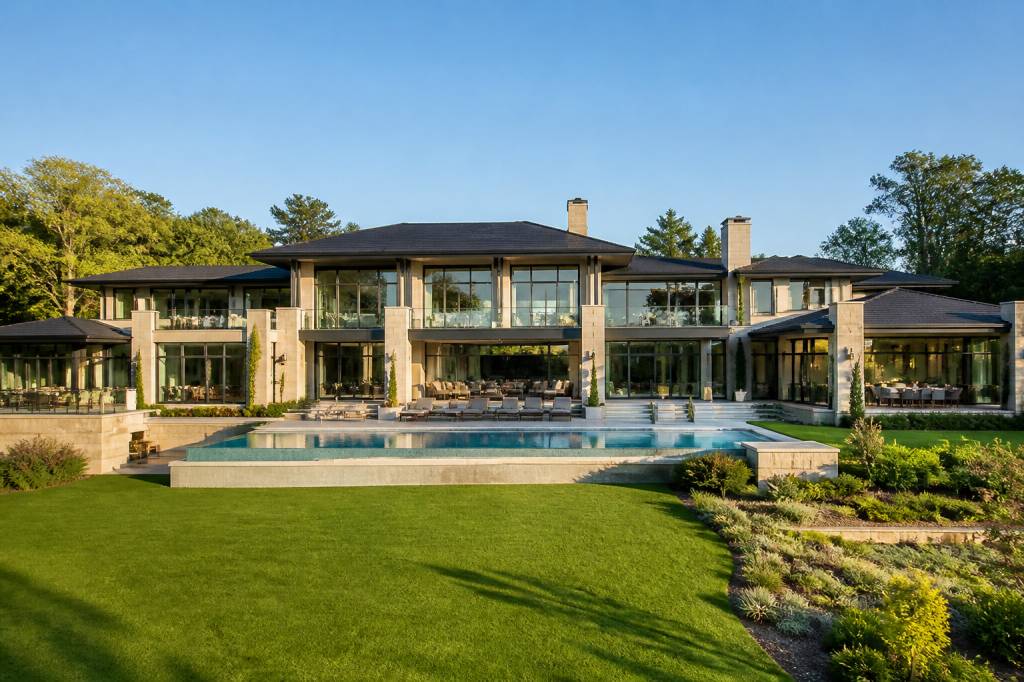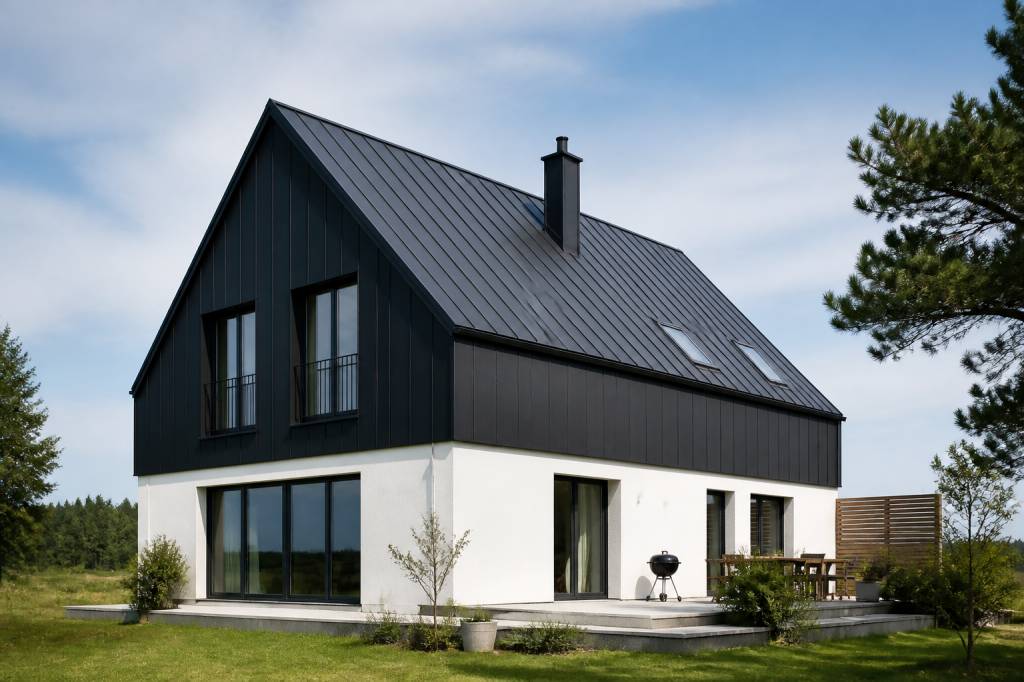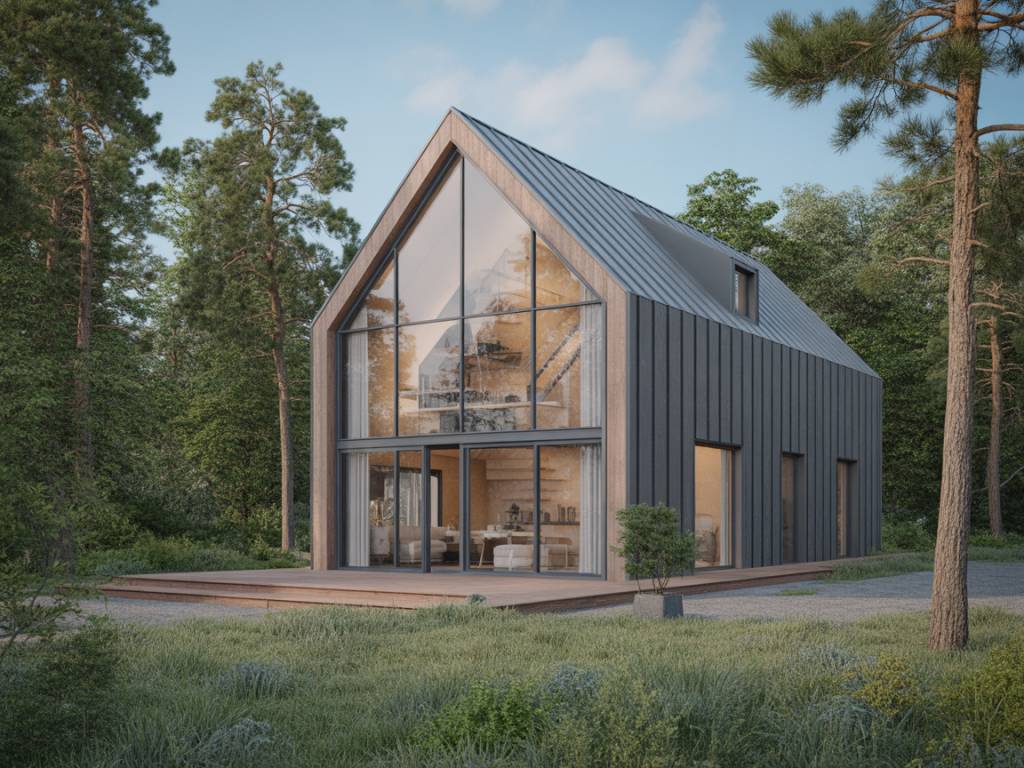





When families start looking for a home that can actually keep up with real life, the brief is usually more complex than “three bedrooms and a big kitchen.” You need privacy and togetherness. Quiet corners and play zones. Room for homework, home working, guests, hobbies, and the inevitable pile of stuff that comes with family living. That is exactly where a four-storey house can make sense.
At first glance, four levels may sound ambitious, even a little dramatic. But in modern architecture, extra storeys are not just about adding floor area. Done well, they create a more flexible layout, better separation of functions, and often a slimmer footprint on the plot. That matters on tighter urban sites, narrow plots, or anywhere outdoor space is precious. The trick is to design vertically without turning daily life into a stair-climbing competition.
Below are four strong four-storey house design approaches that work particularly well for contemporary family living. Each one uses the vertical arrangement differently, depending on the site, lifestyle, and budget. And yes, each one comes with practical points you should check before you fall in love with the render.
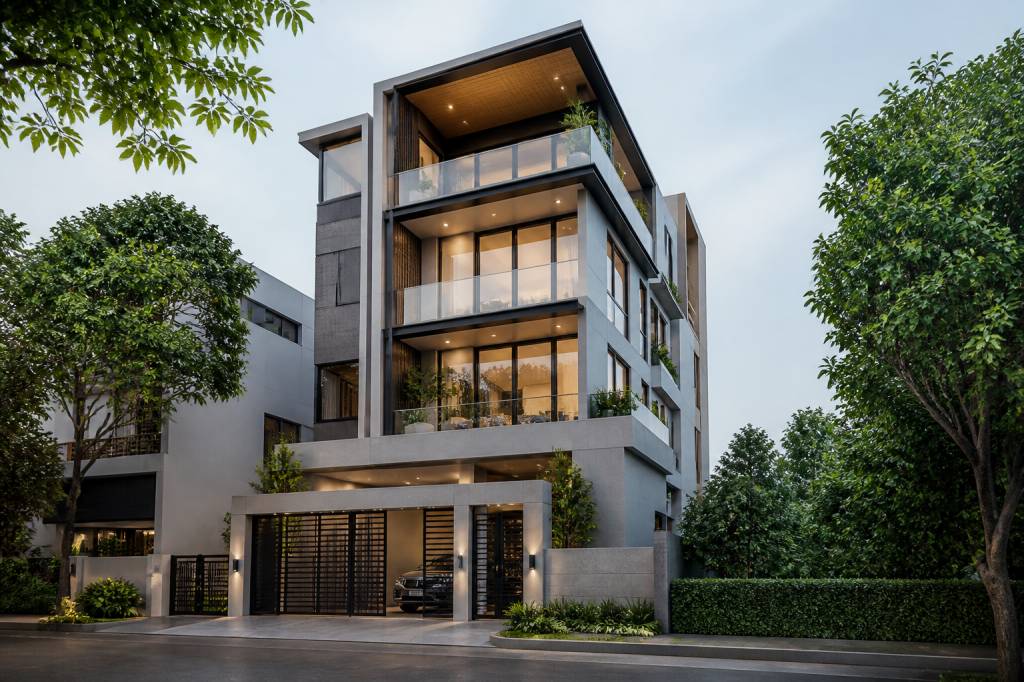
The stacked family home with social living at the top
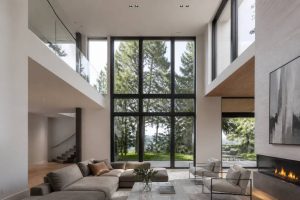
This is one of the most common modern approaches: put the most public spaces on the upper floors, where light and views are better, and reserve the lower levels for service spaces and private rooms. In a dense urban setting, this can transform the experience of the home. Instead of accepting a gloomy ground floor living room, you lift the main living area above street level and let daylight do the heavy lifting.
A typical arrangement might look like this:
This layout works because it creates a clear daily rhythm. Kids can have their own level, parents get privacy, and the main entertaining space benefits from views and daylight. If you have ever tried to host a birthday party in a dark ground-floor room while children run up and down the stairs every ten minutes, you already understand the appeal.
Practical point: lift access becomes worth considering in this configuration, especially for long-term living. Even if you do not install a lift immediately, design the core around the possibility. It is far cheaper to reserve the shaft space now than to discover later that the only route for future mobility is a very expensive structural rethink.
Budget note: compared with a two-storey house, the structural costs are higher because of the staircases, fire strategy, and load-bearing requirements. As a rough guide, a four-storey scheme can add 10–20% to structural and circulation-related costs, depending on complexity and local regulations.
The split-level family home that softens the climb
If you worry that four floors will feel too vertical, a split-level design can be a better answer. Rather than stacking full storeys in a rigid column, the levels are staggered by half-flights or short runs of stairs. The result feels more connected and less formal, while still delivering multiple zones for family life.
This design works especially well on sloping plots, where the building can follow the land naturally. It can also be an elegant way to create visual separation without losing the openness that modern interiors often need. You get layered spaces, borrowed light, and a house that feels larger than its footprint suggests.
Here is how a split-level four-storey family home might function:
The advantage is circulation. You are not constantly climbing a whole staircase just to move between small tasks. A parent can supervise homework from one level while dinner is cooking on another, which sounds simple but makes a huge difference in everyday life.
There is one catch: split-levels demand careful structural coordination. Floor heights, stair positions, and services need to be planned from the start. If you leave it to the last minute, you end up with awkward headroom, expensive steelwork, or a “feature” staircase that only looks good in renderings. In real life, the details matter more than the pretty picture.
Materials that suit this type of house often include concrete, steel, brick, and timber in combination. That gives you flexibility with spans, acoustic separation between levels, and a chance to create a warmer interior finish where the family actually spends time.
The courtyard tower house for privacy and daylight
On narrow urban plots, a four-storey house can become a compact tower wrapped around a central lightwell or courtyard. This is one of the smartest ways to bring daylight deep into the plan while preserving privacy from neighbouring buildings. It is also a very contemporary move architecturally: clean lines outside, surprise generosity inside.
Instead of trying to make every room face the street, the house turns inward. Bedrooms, bathrooms, circulation spaces, and even the kitchen can borrow light from the central void. For family living, this has a big advantage: the home feels calm and protected, even when it sits in a busy setting.
A typical organisation might include:
One thing people often underestimate is acoustic control in these homes. A courtyard can be beautiful, but if you do not detail the openings properly, sound travels. Use quality glazing, insulated internal partitions, and careful door seals. Otherwise, the family dog’s midnight opinions will be heard in every bedroom.
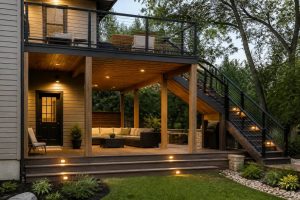
From a design perspective, the courtyard is where you can create a real sense of character. Think planted gravel, a small tree, timber decking, or a reflective water feature if maintenance is realistic. The point is not to create a mini Versailles. The point is to draw light, air, and attention into the centre of the house.
Planning note: the courtyard often becomes the key determinant of whether the house meets daylight and ventilation requirements. If you are in a dense area, ask early about overlooking, privacy distances, and fire escape routes. Those rules can shape the whole project.
The family house with a flexible lower level
Families change. Children grow, grandparents visit, one parent starts working from home, a teenager needs independence, and suddenly the “spare room” is doing seven jobs badly. That is why the most successful four-storey houses are not rigid. They include at least one level that can switch function over time.
This design approach usually places a highly adaptable floor at the lower ground or first floor level. It might begin as a playroom, then become a teen den, later turn into an office, and eventually serve as a guest suite or annexe space. The key is to plan the services and proportions so the room can evolve without a major refurb.
Good flexible spaces usually share these features:
This is where many families get it wrong. They design for the photograph, not for life. A “flex room” with no sockets where you need them, no storage, and no acoustic separation is not flexible. It is just vague. Real flexibility comes from practical planning.
If you are converting a lower ground floor or basement into this kind of room, check damp-proofing, ventilation, and escape routes carefully. Costs can escalate quickly if excavation or waterproofing is involved. In many projects, the flexible level is the budget wild card, so get proper surveys and compare quotes line by line before committing.
What makes a four-storey family house work in practice
Designing across four levels is not just about arranging rooms. It is about making the house live well every day. There are a few non-negotiables that separate a smart design from a tiring one.
First, the stair must be central, comfortable, and safe. This sounds obvious, but too many four-storey houses rely on steep, narrow stairs that look elegant in photos and exhausting on school mornings. A good family staircase needs consistent risers, adequate width, good lighting, and practical handrails. If you can, make it an architectural feature that is also genuinely easy to use.
Second, think hard about zoning. The most successful layouts usually separate noisy, active, and quiet functions. Bedrooms should not sit directly over the TV room unless you enjoy ceiling-based complaints. Likewise, the kitchen should be near the main living area, not isolated on a different level unless there is a very good reason.
Third, plan storage at every level. Families generate clutter with impressive efficiency. Built-in cupboards, under-stair storage, linen closets, and concealed utility spaces make a four-storey home feel orderly. Without them, the house will look good for about twelve minutes after moving in.
Fourth, consider accessibility from the beginning. Even if everyone is fit and energetic today, long-term planning matters. A four-storey house should ideally allow for a future lift or at least a practical way to reduce reliance on stairs later on. This is especially important if you are building a home intended to serve a family for decades.
Finally, make daylight a priority. Vertical homes can become surprisingly dark if the section is not carefully designed. Use rooflights, tall windows, internal glazing, and lightwells where possible. The best modern houses feel open because light moves through them, not because every wall has been removed.
Materials, budgets, and the reality check before you build
Modern four-storey houses often look sleek and minimal, but the cost is hidden in the engineering. More storeys mean more structure, more coordination, more fire safety considerations, and usually more expensive services. That does not make them a bad idea. It just means the budget needs to be honest from day one.
For the external envelope, durable materials tend to perform best: brick, render, metal cladding, fibre-cement panels, engineered timber, and high-performance glazing. The right choice depends on local planning context, maintenance expectations, and your willingness to clean windows that are high up. Four storeys means ladders become somebody else’s problem, which is worth factoring in.
Typical cost drivers include:
If you are working with an architect, ask for early test fits and section drawings. A four-storey house is all about section: how the levels relate, how light moves, where views land, and how the stair connects everything. A plan alone will not tell you whether the house will feel generous or frustrating.
Time-wise, expect a longer design phase than for a standard house. Coordination between planning, structure, building regulations, and services is more complex. A cautious timeline would allow several months for design development and approvals before construction even begins. Rushing this kind of project is a false economy.
Choosing the right design for your family
So which four-storey approach is right? The answer depends on your site and how your family really lives, not how you imagine living on a perfect Sunday. If you want views and strong social space, the stacked family home is hard to beat. If your plot slopes or you want a softer internal flow, split-level living is worth exploring. If privacy and daylight are the priority, the courtyard tower can be remarkably effective. And if your household is likely to evolve, the flexible lower level is probably the smartest investment.
The common thread is this: a four-storey house only works when each level has a clear job. The best designs do not simply add floors. They use vertical space to separate activities, improve light, and give the family room to grow without immediate renovation.
If you are planning one, start with the everyday realities: where the bags land, where homework happens, where the teenagers disappear to, and where you want to drink coffee without tripping over a scooter. That is the real design brief. The architecture comes next.