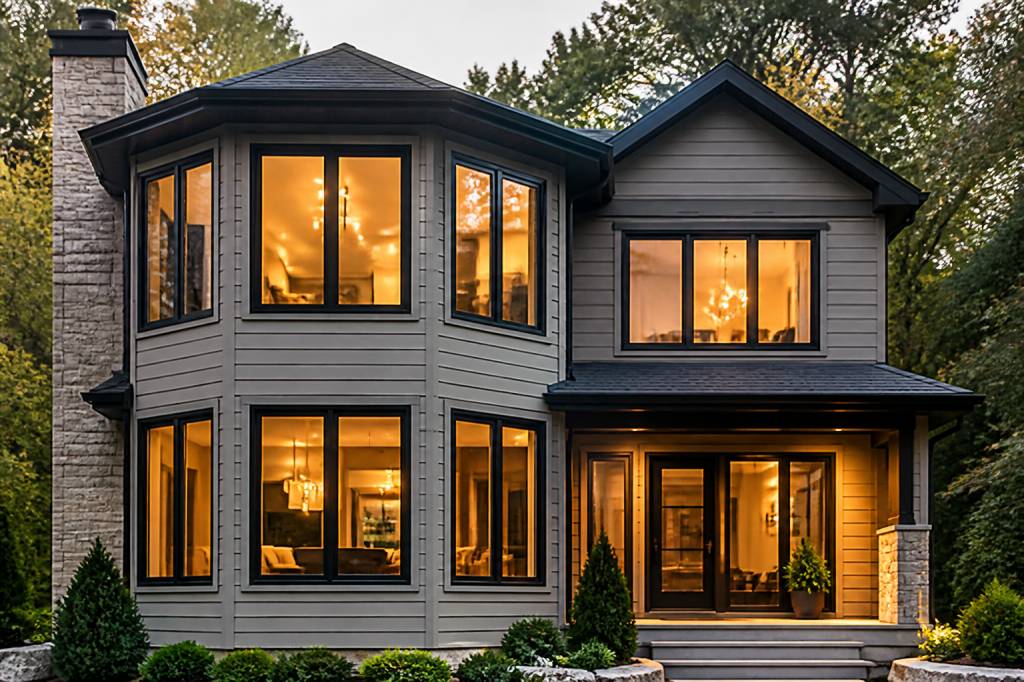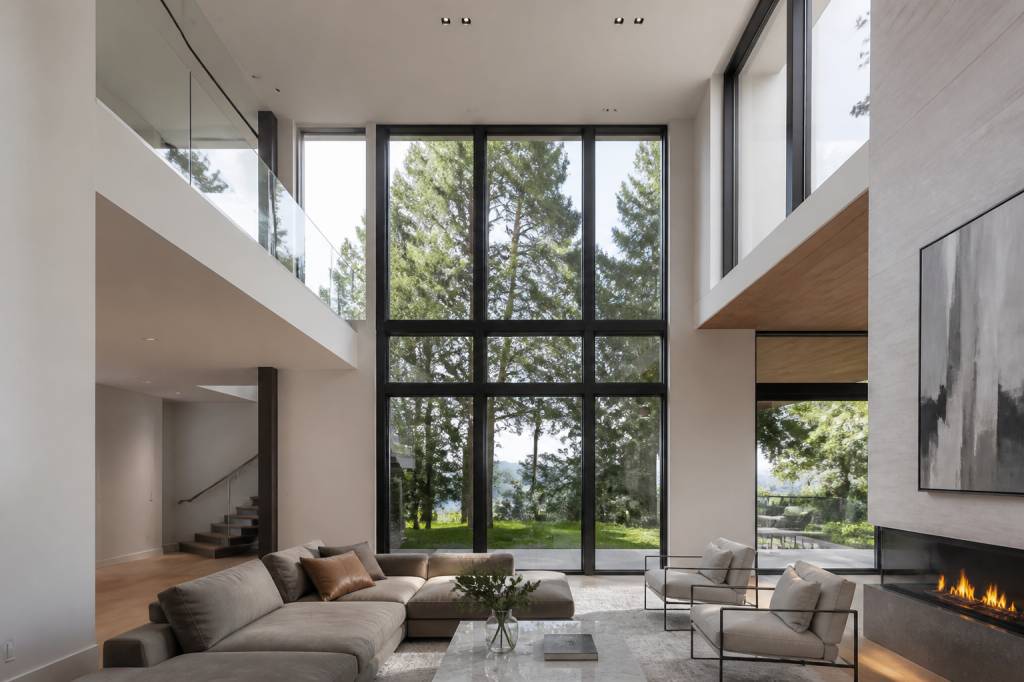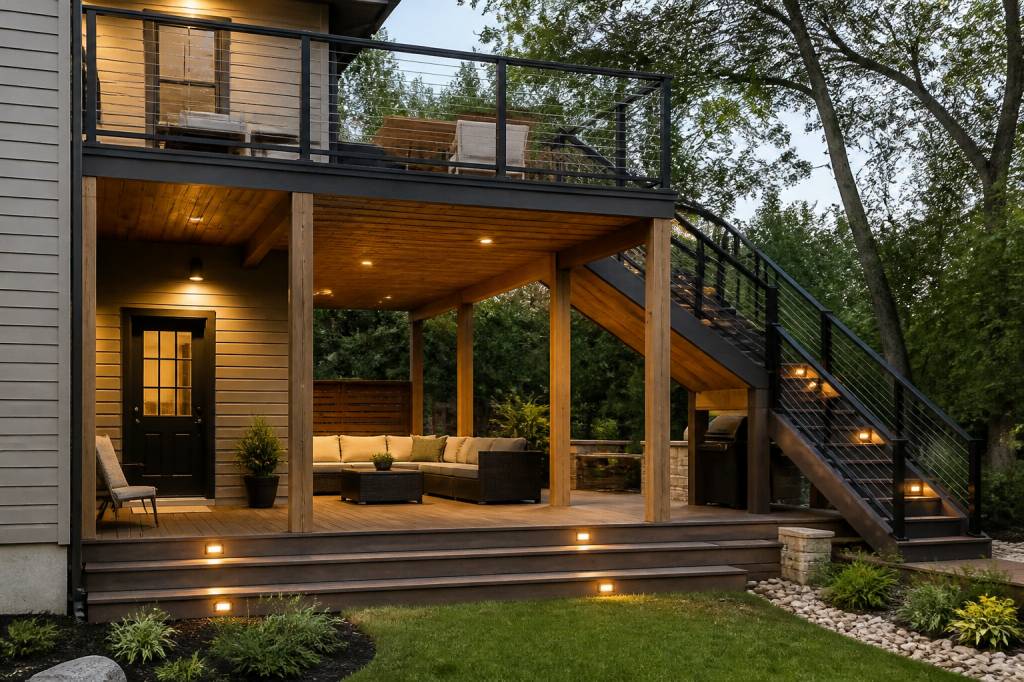
Start with a quick exterior audit
Before you touch a paintbrush or order a new mailbox, you need a clear diagnosis. “Curb appeal” is just the visible result of many small choices about lines, proportions, colors and materials.
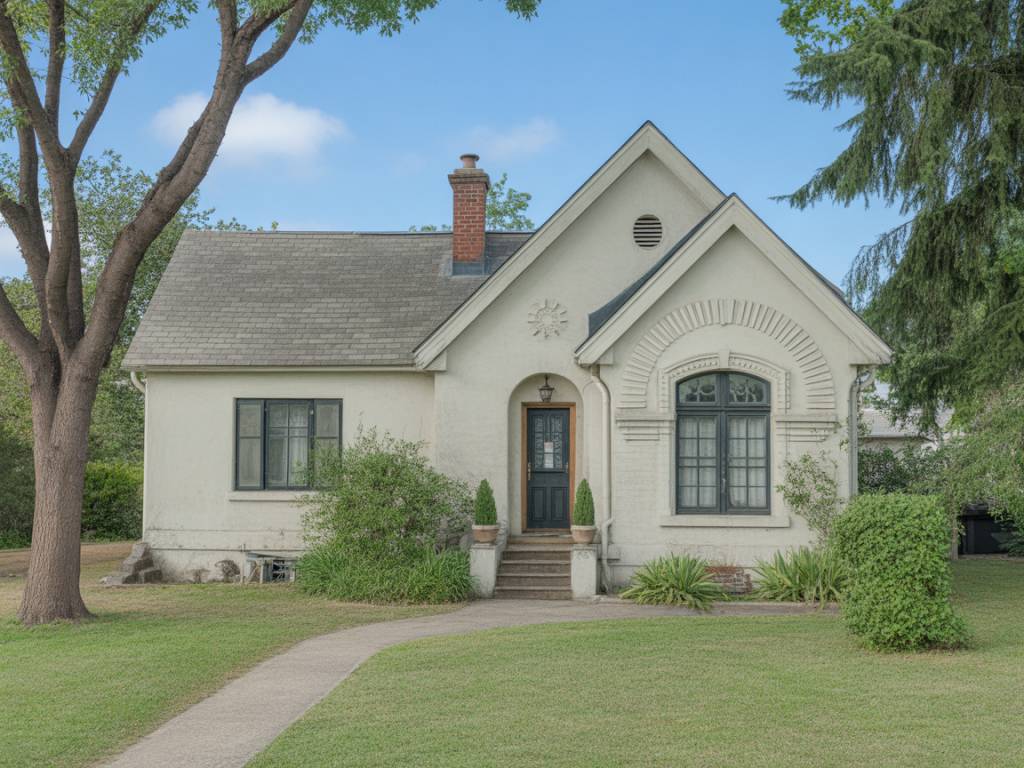
Stand across the street (or use a straight-on photo) and ask yourself:
- What looks dated first: color, materials, shapes (arches, small windows), roof, or details (shutters, lighting, railings)?
- Is the house heavy and dark, or too busy with textures and colors?
- Where does the eye go first – to the door (good) or to the garage / meter box / satellite dish (less good)?
- Does the landscaping support the architecture… or hide it?
Now list the elements from “most visible / most annoying” to “can wait”. This will help you hi-jack budget into the upgrades that really modernize the overall look instead of dispersing money into details nobody sees.
Clarify your modern style direction
“Modern” can mean a lot of things: minimal, mid-century, contemporary farmhouse, industrial… If you don’t define your direction, you risk mixing styles and ending with a half-renovated look.
Choose a guiding line, for example:
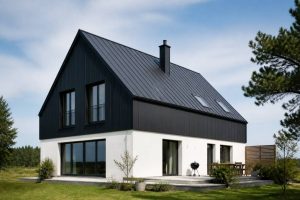
- Clean contemporary: flat colors, simple volumes, few materials, aligned elements, almost no ornament.
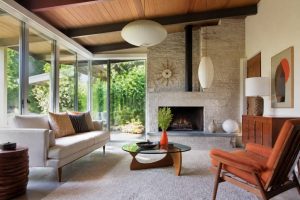
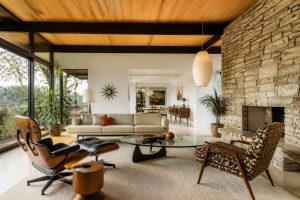
- Warm modern: same clean lines, but with wood, warm neutrals, textured renders, soft lighting.
- Modernised traditional: you keep some original features (stone base, classic roof) but simplify everything else: no fussy trims, limited colors, streamlined hardware.
Create a moodboard (Pinterest, screenshots, photos of new builds in your area) and use it as your visual filter. Each decision must answer: “Does this fit my board or not?”
Repaint or re-clad: the biggest impact per euro
If your façade is structurally sound but visually tired, paint is often the most cost-effective first move.
What works to modernize quickly:
- Reduce to 2–3 colors max: one main color (walls), one secondary (trims or details), one accent (door, maybe garage). That alone takes you out of the “1990s patchwork” effect.
- Neutral, slightly warm bases: off-whites, greige, warm light grey work on most volumes and with most roofs.
- Soft contrast: very high-contrast white + black can look harsh on older shapes. A dark charcoal with off-white is often more chic and less “Instagram filter”.
Typical budget (façade paint): for an average two-storey house, expect around 25–40 €/m² including scaffolding and labour, depending on façade condition and region.
If your cladding is dated (yellowed PVC, fake stone, busy brick patterns), consider partial or full re-cladding:
- Wood or composite slats on one key volume (entrance, upper floor) to break a massive façade.
- Fibre cement panels in large formats for a very contemporary, flat look.
- New render to smooth old textured walls and get crisper lines.
Points to check:
- Planning rules (local zoning, color restrictions, heritage zones).
- Insulation opportunity: if you are re-cladding, ask for quotes with and without exterior insulation; the marginal cost is often worth it.
- Compatibility between existing support and new material (weight, fixings, vapour barrier).
Upgrade the entry door: the focal point of your façade
On almost every exterior I review, the entry door is either invisible or painfully dated. Yet it’s the easiest way to shift the whole façade toward “now”.
Three modernisation levels:
- Cosmetic refresh (150–400 €): sand and repaint the existing door in a deep, solid color (charcoal, midnight blue, olive, terracotta). Replace handle and lock set with simple, long lines (stainless steel or black). Add a plain, oversized house number.
- Semi-renovation (400–1 200 €): replace the door slab only (keeping the frame) if standards allow it. Choose a flush or almost flush model with one or two vertical glass inserts, clear or frosted.
- Full replacement (1 200–3 000 € and more): change frame + door, and possibly enlarge height or width when the structure allows. Align the reveal with the façade (no random steps or protrusions), and integrate a fixed panel for more light if you can.
Design rules that instantly modernize:
- Avoid small decorative panes, fake grids and complex mouldings.
- Prefer solid panels, large simple glazing, vertical emphasis.
- Align door handle, mailbox and bell in one vertical or horizontal line.
Attention points:
- Thermal performance (Uw coefficient) and security (multi-point locks).
- Existing floor levels: a higher modern threshold may require adjusting exterior steps.
- Neighbourhood style: you can be contemporary without becoming the spaceship of the street.
Windows, trims and shutters: simplify and align
Old exteriors often suffer from a “frame zoo”: different window types, busy trims, mismatched shutters. Modern façades are calmer: lines align, frames are thinner, colors are unified.
If you keep existing windows:
- Paint all trims in the same tone as the façade, or one slightly darker tone for a subtle frame. Avoid strong contrast on small windows.
- If shutters are necessary, choose simple flat-panel or horizontal slat models. Remove decorative hinges and cut-out motifs.
- Align shutter colors with the door or the roof, not something random.
If you’re replacing windows (major budget, but huge visual payoff):
- Opt for slim, simple frames in a dark neutral (anthracite) on a light façade, or matching color on a dark façade.
- Reduce divisions: one or two large panes look far more contemporary than many small ones.
- Where possible, enlarge existing openings vertically to bring in more light and give a more modern proportion.
Typical costs: from 500–900 € per standard window supplied and installed, more for large sliders. If you’re touching the structure, add masonry and finishing costs.
Roofline, gutters and eaves: clean the silhouette
From the street, the outline of your roof and eaves is a big part of the overall style. Modern exteriors avoid visual clutter under the roof.
Action list:
- Upgrade gutters to a simple, smooth profile in one of three options: matching the façade, matching the roof, or in a deliberate dark contrast if the lines are very straight.
- Replace damaged or scalloped fascia boards with flat, continuous boards. No decorative shapes, no mix of widths.
- Hide or re-route cables and satellite dishes where possible. One messy corner near the eaves can ruin the impression of a newly painted façade.
- Consider adding a thin metal drip edge trim for a sharper roofline.
Budget: for aluminium or steel gutters, expect around 30–60 €/linear metre installed, depending on complexity and heights.
Check carefully: access and safety. Anything near the roof usually implies scaffolding or proper roofers, not a DIY ladder adventure.
Porch, steps and railings: from fussy to minimal
Your entrance sequence (path, steps, porch) tells visitors what to expect inside. To modernize, think “fewer elements, but better drawn”.
On the floor:
- Replace small patterned tiles with large-format porcelain tiles or concrete pavers in a neutral tone.
- Remove mixed materials (three different stones plus bricks) and aim for one or two maximum.
- Level and widen the main step if possible; generous treads and risers feel immediately more contemporary and safer.
On the railings:
- Say goodbye to ornate wrought iron curls and turned balusters.
- Choose flat metal bars, vertical or horizontal, with clean welds and a matt finish.
- If budget allows, glass railings or cable rail can almost disappear and highlight the architecture instead of the railing itself.
Budget overview: a simple metal railing runs roughly 150–350 €/linear metre, glass upwards of 300 €/m. Re-tiling a small porch (materials + labour) often lands between 800 and 2 000 € depending on substrate condition.
Lighting: design the house for the evening too
Most people choose exterior lights as an afterthought. Yet a modern house at night is almost another project: volumes sculpted by light, clear entry, layered ambiance.
Where to add or upgrade lighting:
- Entry: one or two wall sconces with simple geometry, or a slim linear light integrated in the recess or ceiling. No lanterns with fake candles.
- Garage: discreet, downward wall lights instead of a single floodlight above the door.
- Path and driveway: low bollards or in-ground spots marking the route rather than tall “lamp posts”.
- Façade accents: a few up/down lights on key verticals (pilasters, corners, around the door) to give rhythm without turning the house into a showroom.
Technical and safety points:
- Verify IP ratings (minimum IP44 for exposed areas, higher for direct water exposure).
- Use warm white (2700–3000K). Cold white (6000K) makes even a fresh façade look like a parking lot.
- Integrate motion sensors and timers instead of leaving everything on all night.
DIY vs pro: installing a new light on existing wiring is a typical DIY job; adding new circuits, drilling exterior walls and routing cables outside is electrician territory.
Garage doors and driveway: tame the “big mouth” of your façade
If the garage dominates the street view, it must be part of the modernization strategy, not an afterthought.
For the garage door:
- Switch to a flat or very lightly textured panel with horizontal or vertical lines, no fake “carriage” details or faux windows.
- Color: either integrate it with the façade (similar tone) or deliberately match it with windows and entry door for a coherent block.
- If replacement is too expensive, paint the existing door in a solid color and remove decorative hardware.
For the driveway:
- Reduce visual clutter: avoid mixing gravel, old concrete, brick and pavers. One material + a clear edging already looks more designed.
- Simple materials that modernize: brushed concrete, large rectangular pavers, well-compacted gravel framed with steel or stone edges.
- Rationalise layout: clear, straight or gently curved lines feel more contemporary than complicated curves and random islands.
Budget indications: replacing a single garage door: 900–2 500 € installed depending on size and motorization. Driveway resurfacing: from 40–120 €/m² depending on material and excavation needs.
Landscaping: frame, don’t hide
Planting can quickly date a house (old rose bushes, conifers, overgrown shrubs), or on the contrary, give it a contemporary, composed look.
Goals for a modern exterior:
- Reveal architecture: trim or remove plants that block windows, doors and key volumes.
- Simplify palette: fewer species, repeated in groups, rather than a collection of one-offs around the garden centre.
- Use structure: hedges, clipped shrubs, ornamental grasses and simple trees create a framework that feels intentional.
Quick-win actions:
- Cut all shrubs below window sills to bring the façade back into view.
- Define clean planting beds with a straight edge (metal or stone) and a continuous mulch (bark, gravel) instead of bare soil.
- Introduce one or two feature trees with clear stems (olive, birch, small ornamental trees) to add verticality without clutter.
Budget and maintenance: a basic refresh with pruning, a few new plants and mulch can stay under 1 000 €. A professionally designed front garden with new paths, planting and lighting can range from 5 000 € upwards, but will radically change curb appeal.
Details and hardware: small pieces, big impact
Once the big surfaces and volumes are under control, details finish the modernization. The key is coherence: same finishes, same geometry language everywhere.
Elements to align:
- House number and nameplate: large, simple typography, good contrast, backlit if possible.
- Mailbox: integrated in a fence pillar or wall, or a free-standing, minimal model. Avoid plastic boxes with curved lids.
- Door hardware: long bar handles or simple levers; match finish with lights (black with black, stainless with stainless).
- Exterior vents and grilles: replace yellowed plastic with metal covers painted to match the wall.
None of these items alone will transform your house, but mismatched or old-fashioned hardware can undermine an otherwise good modernization.
Plan your upgrades in phases and avoid common traps
If replacing everything at once is unrealistic, plan a two- or three-phase approach where each step already improves the whole.
Example of a 3-phase plan:
- Phase 1 (visual quick wins, lower budget): façade repaint, door repaint + new hardware, new house numbers, pruning and basic landscaping cleanup, a few modern wall lights.
- Phase 2 (structural upgrades): new entry door, maybe key window replacements on the front, porch re-tiling, new gutters and fascia if needed.
- Phase 3 (heavy works): partial re-cladding, driveway redo, major landscaping, garage door replacement.
Common pitfalls to avoid:
- Skipping planning rules: always check local regulations before changing cladding, colors, windows or roofline. Fines and forced reversals are real.
- Mixing too many styles: a hyper-modern black metal door on a still-cream, very traditional façade will look like a patch, not a project. Advance in coherent blocks.
- Underestimating prep work: sanding, repairs, scaffolding and weather windows matter more than the paint brand in the final result.
- Ignoring maintenance: choose materials you are realistically ready to maintain (oiled wood cladding, for example, requires regular care).
Approach your exterior like a renovation project, not just “a bit of paint”. Define your target style, prioritise the big surfaces and the entry sequence, then refine with lighting, landscaping and details. Step by step, you can take even a very outdated façade into the present, without necessarily rebuilding everything from scratch.