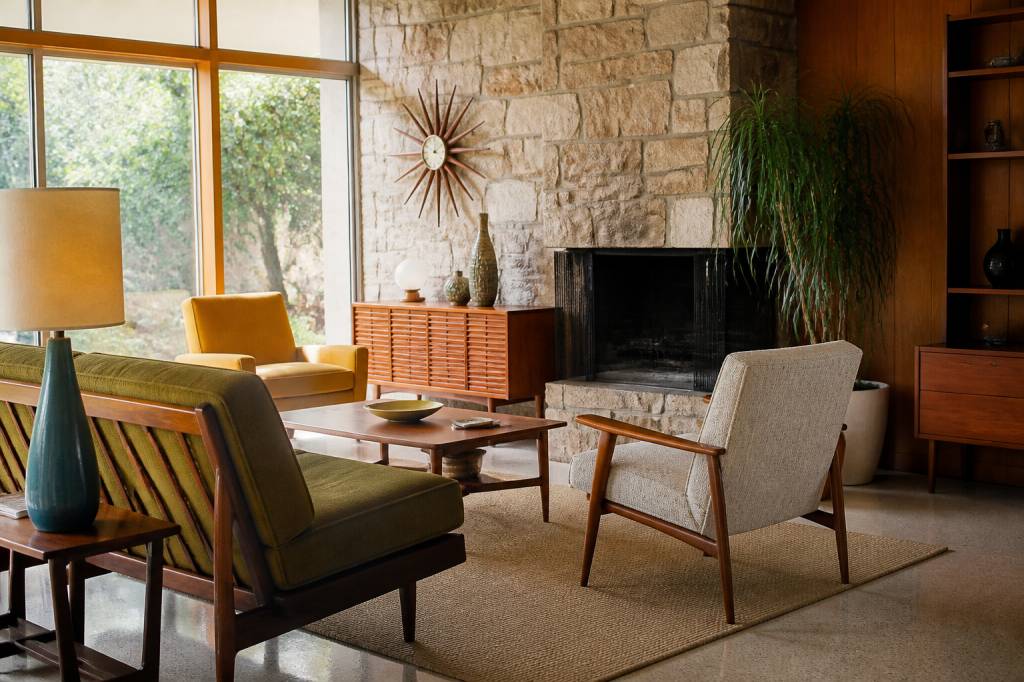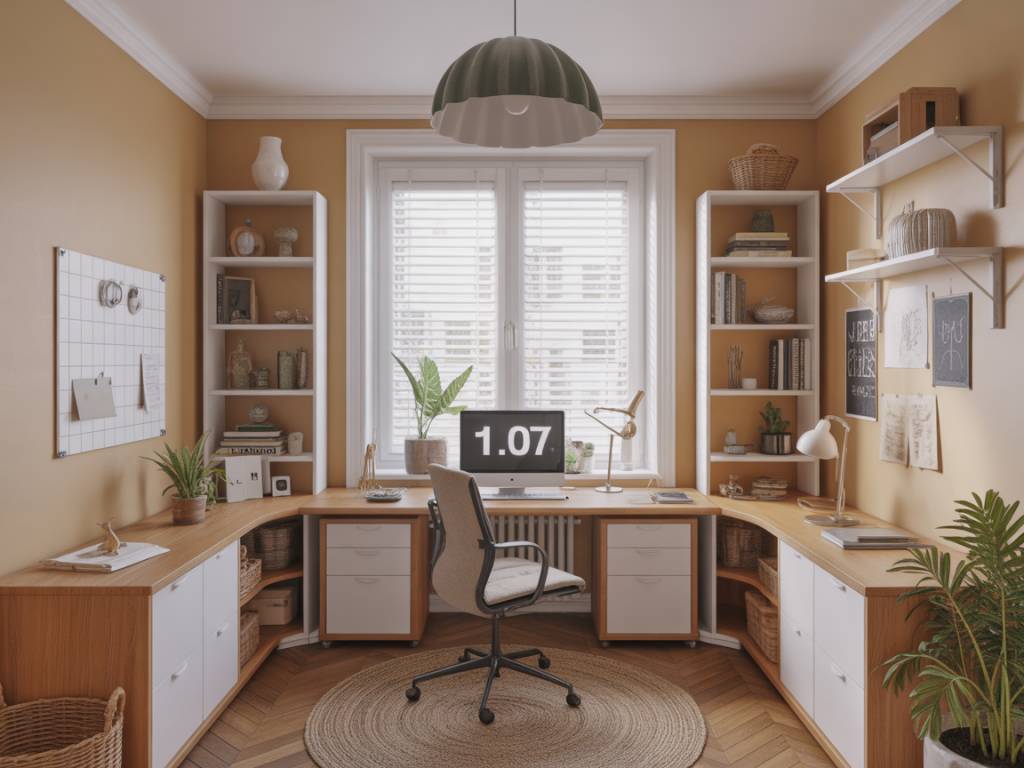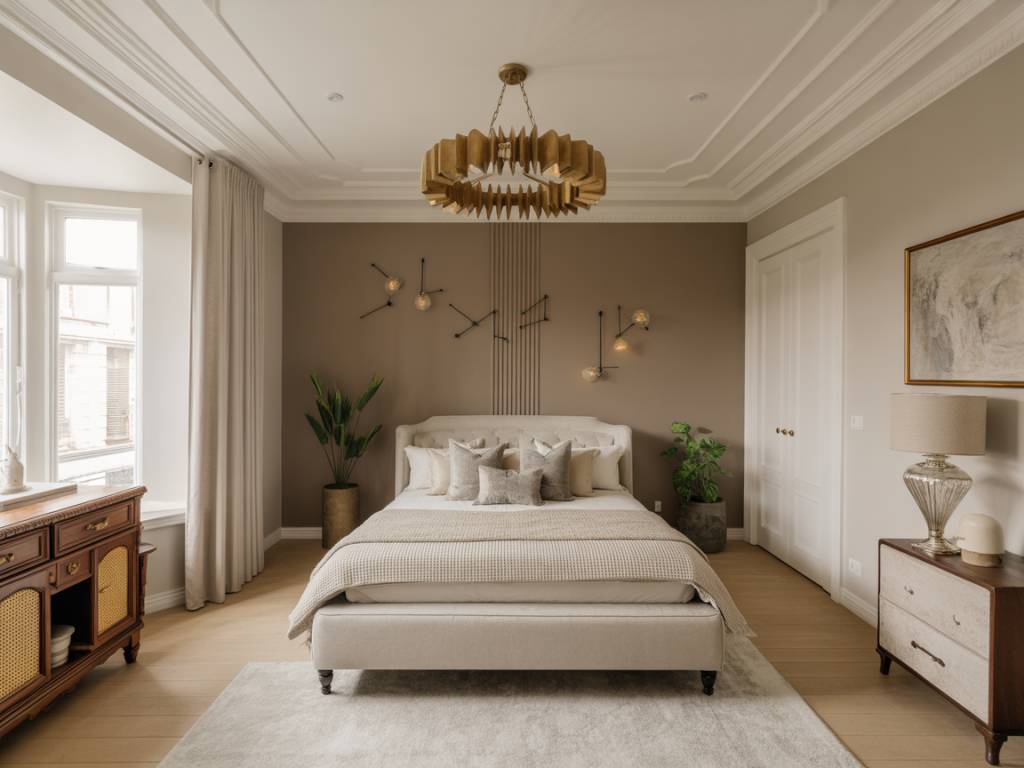







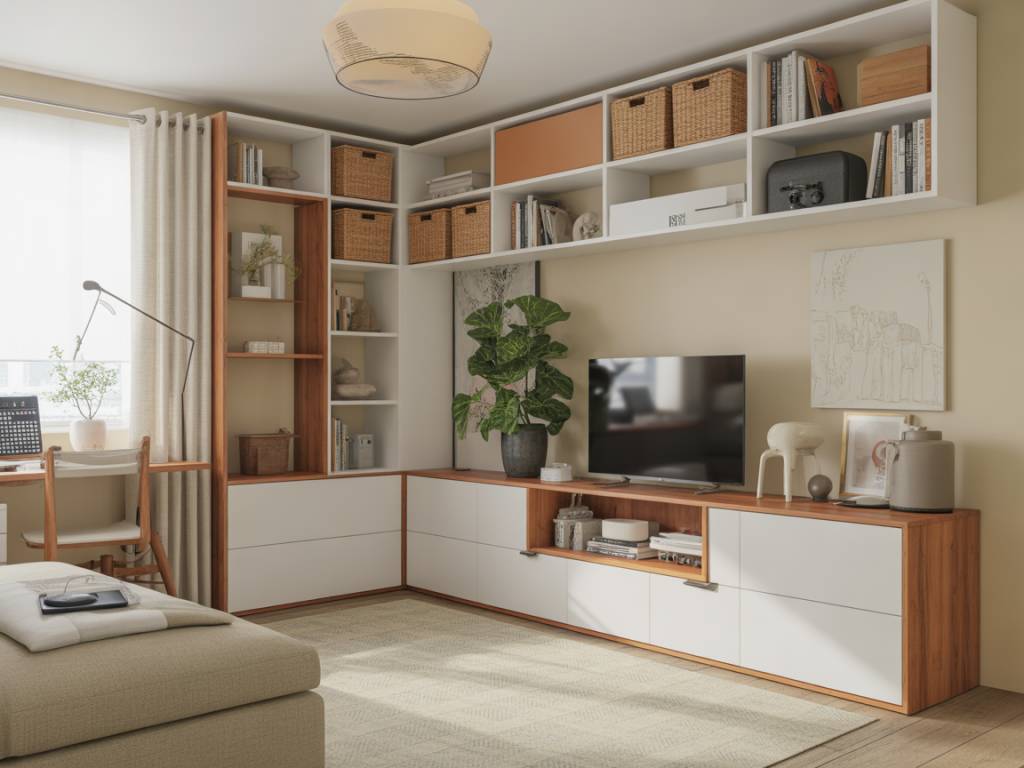
If your living room looks like a design magazine until you open a cupboard… this article is for you. A modern interior only feels “clean” when storage is doing 80% of the work in silence. The good news? You don’t need a bigger home, juste smarter square meters.
We’ll go through concrete storage ideas you can actually implement, with indications of budget ranges, materials, time frames and what to watch out for. Keep your plan of the house nearby or open it on screen: the goal is that you finish this article with a small action list, not just inspiration.
Start by auditing your clutter (before buying a single box)
Storage is not about adding furniture, it’s about subtracting chaos. Before you call the carpenter, you need to know exactly what you’re trying to house.
Take one room at a time and ask three questions:
- What lives permanently here? (books, records, coats, kids’ toys, paperwork…)
- What is just passing through? (laundry, mail, sports bags, deliveries…)
- What should not be here at all? (storage overflow from other rooms)
Practical exercise (plan 30–45 minutes par pièce) :
- Empty one visible area that annoys you daily: the entry console, the coffee table, the chair-that’s-actually-a-closet.
- Group items by family: “papers”, “cables”, “bags”, “beauty products”…
- Estimate volume per family in liters or boxes (1 shoe box ≈ 5–6L). This sounds obsessive but it changes everything when designing storage depth and number of shelves.
- Decide what must stay in this room and what can migrate elsewhere.
Only when you know you have, for example, “about 60L of board games” or “12 pairs of daily shoes” can you design storage that fits your real life instead of an idealized Pinterest version.
Built-in storage: using your architecture as a closet
In contemporary interiors, the most effective storage is often invisible. The wall stays visually calm, but it works hard in the background.
Where to look for built-in potential:
- Unused niches or recesses
- Either side of a fireplace or structural column
- Hallways wider than 110–120 cm
- Under stairs with closed risers
- Under windows (perfect for shallow cabinets or benches)
Three highly effective built-in strategies:
- Full-height, flush wardrobes
From floor to ceiling, plain fronts, no visible handles (push-to-open / recessed pulls). They visually disappear, especially if painted the same color as the wall. - Storage walls with mixed depth
Deeper modules at the bottom for bulky items, shallower up top for books and decor. Vary depth by 10–15 cm to keep the wall dynamic without cluttering the space. - Window-seat storage
Base cabinet 35–45 cm high with a hinged top or front drawers. Ideal for blankets, magazines, kids’ toys in a living room.
Budget & materials (indicative, for EU prices):
- Custom, MDF painted: from 900–1 500 € per linear meter (floor-to-ceiling, mid-range finish).
- Semi-custom (IKEA or similar bases + custom doors/top): 400–800 € per linear meter.
- Timeframe: design + quotes 2–4 weeks, fabrication + installation 1–3 days for a standard wall.
Points of vigilance:
- Plan electrical outlets and lighting before building: inside cabinets (charging), under cabinets (LED strip), and on the facade (sconces).
- Think ventilation for electronics: leave 2–3 cm at the back or provide ventilation grills.
- Check opening radius of doors in tight corridors; in some cases, sliding doors or fabric panels are more practical.
Case in point: in a 65 m² apartment, we “lost” 30 cm of depth along a 4 m hallway to create flush closets. The corridor visually shrank on plan, but in real life it felt more spacious because coats, shoes and suitcases disappeared completely.
Multi-functional furniture that actually works
Multi-use furniture is often sold as a miracle but disappoints in daily use (unstable, not enough storage, awkward to open). The key is to choose pieces where storage is the primary function, not an afterthought.
Living room ideas:
- Coffee table with drawers or lift-top
Perfect for remotes, chargers, coasters, current magazines. Avoid deep chests without internal organization: they become black holes. - Sideboard instead of TV stand
A 40–50 cm deep, 60–75 cm high sideboard provides way more storage than a low, open TV bench. Choose models with doors (visual calm) and only one or two open niches for devices. - Modular poufs with storage
Light enough to move, with removable tops. Great for throws, extra cushions, kids’ toys.
Bedroom ideas:
- Bed with integrated drawers
Ideal in small rooms where you can’t add a dresser. Check the clearance around the bed so drawers can fully open. - Headboard as storage wall
Shelves, niches, or a full-width box headboard (30–40 cm depth) can absorb books, bedside clutter, and even some clothing.
Budget & practicality:
- Storage coffee table: 150–600 € depending on quality and materials.
- Storage bed base: 400–1 200 € (beware of cheap mechanisms that jam after a year).
- Time: 1–2 evenings to assemble and reorganize, if bought ready-made.
Non-negotiables to check before buying:
- Check maximum load per shelf/drawer (especially for books and records).
- Test opening system in store if possible: can you open drawers while seated on the sofa or lying on the bed?
- Measure your real storage needs: no point in a bed with 4 giant drawers if you own 30 pieces of clothing and no spare linens.
Vertical and overhead storage: go up, not out
Walls are the most underused resource in modern interiors. Used intelligently, they increase storage without eating floor space.
In a living room or office:
- Wall-mounted shelves with rhythm
Alternate closed elements (cabinets) and open shelves. Keep heavy visual elements low and lighter ones high. Avoid saturating every centimeter; aim for 60–70% coverage. - Picture ledges
Shallow shelves (8–12 cm) perfect for books, frames, candles, small plants. They create visual layers without large volumes intruding into the room.
In the kitchen:
- Ceiling-height cabinets
Even if you can’t easily reach the top, that last 30–40 cm is ideal for things you use 2–3 times a year (serving platters, seasonal decor). Use labeled boxes. - Rail systems
A metal rail with hooks and small shelves frees up worktop space: utensils, spices, small planters. Choose a consistent finish (black, stainless, brass) to keep it contemporary.
In the hallway and entry:
- Over-door storage
Shelves above door frames (with a minimum ceiling height of 260 cm) are perfect for rarely used items. Keep baskets or boxes for a clean line.
Budget & materials:
- Wall shelves (DIY boards + brackets): from 60–150 € for 2–3 linear meters.
- System shelves (Elfa, String, etc.): 200–800 € depending on length and accessories.
- Ceiling-height kitchen extensions: 300–800 € if you add modules to an existing kitchen.
Points of vigilance:
- Check wall type (plasterboard vs masonry) and choose appropriate anchors.
- Avoid deep shelves (more than 30 cm) high on the wall; they visually weigh down the space and can feel oppressive.
- Leave at least 2 m head clearance for anything above circulation zones.
Smart storage for small spaces and awkward corners
If your apartment is more “compact studio” than “loft”, storage must be micro-planned.
Entryway (even if it’s 80 cm of wall next to the door):
- Ultra-shallow shoe cabinets (depth 18–22 cm)
- Rail with double row of hooks (children’s level + adult level)
- One small closed cabinet or basket for “stuff that lands here”: keys, mail, masks, sunglasses, etc.
Under-stairs:
- Pull-out drawers for shoes and bags
- Open niches for books and decor
- Hidden utility closet for vacuum, cleaning products and toolbox
Behind doors:
- Over-door racks for bathroom towels, bedroom accessories, or cleaning tools
- Thin custom shelving in the 10–15 cm gap between door and wall
Mini-budget ideas (under 200 € per zone):
- Entry kit: shallow shoe cabinet + rail + mirror with small shelf.
- Bathroom kit: over-toilet shelving + over-door rack + drawer organizers.
- Office corner: wall-mounted desk + one vertical shelf column.
Time needed: a focused weekend can completely change the storage potential of a small apartment if you target these micro-zones one by one.
Room-by-room quick wins for a clutter-free look
Sometimes you don’t need a full renovation. A few well-chosen interventions can visually declutter a room in 48 hours.
Living room:
- Replace open bookcases overflowing with items by one or two units with doors + one lighter open shelf.
- Add a basket per person in the household near the entry of the room: at the end of the day, everything lying around goes in the basket, to be emptied later in the right room.
- Hide cables with a simple cable trunking and a small “tech box” (router, multi-plug, chargers) placed inside furniture with ventilation.
Kitchen:
- Install one extra interior shelf in half of your cabinets: vertical space is often wasted.
- Use drawer organizers for cutlery, utensils and spices; set a maximum space for each category.
- Keep only three items on the worktop daily: coffee machine, kettle, and one decorative/functional element (board, plant, fruit bowl).
Bedroom:
- Divide your wardrobe by frequency of use: daily (easy access), weekly (higher up), seasonal (very high or under-bed).
- Use identical hangers for visual calm; it genuinely changes the perception of order.
- Limit bedside table surfaces: choose models with drawers or a small door to hide books, glasses, cables.
Bathroom:
- Add a mirrored cabinet instead of a simple mirror: immediate storage gain for small objects.
- Use clear, labeled boxes inside drawers to group products by use (face, body, hair, first aid).
- Set a rule: products that don’t fit into the designated storage don’t stay in the room.
Planning, budget and phasing your storage project
To avoid spending a fortune in pretty but useless boxes, treat storage like a mini-renovation project.
Step 1 – Define your priorities (1–2 hours)
- List the 3 rooms that stress you the most in terms of clutter.
- For each, identify the main problem: clothes, papers, toys, kitchenware, hobby equipment…
- Rank them by impact on daily life (not by “Instagram potential”).
Step 2 – Fix your budget range
- Low budget (under 500 €): focus on modular shelves, wall storage, organizers, and one or two strategic pieces of furniture.
- Medium (500–3 000 €): add one semi-custom built-in or a large wardrobe/storage wall.
- High (3 000 €+): consider a full rethinking of a corridor, living room wall, or bedroom with custom carpentry.
Step 3 – Choose your materials
- MDF painted: smooth, contemporary, can be painted wall color; needs good ventilation in damp rooms.
- Plywood / birch: warmer, visible grain, great for Scandinavian-modern interiors.
- Melamine / laminate: budget-friendly, very resistant, but more “furniture-like” in appearance.
- Metal: rail systems, industrial vibe, ideal for garages, studios, creative spaces.
Step 4 – Quotes and timing
- Ask at least two quotes for any custom work.
- Ask for 3D or at least elevation drawings with dimensions before validating.
- Plan storage works before painting and flooring whenever possible, to avoid touching up later.
Keeping it clutter-free: systems, not heroics
The most creative storage in the world is useless if you can’t maintain it with minimal effort. You’re not trying to become a professional organizer; you’re building systems that work on tired evenings.
Some simple rules that actually hold over time:
- One home for each object type
Cables live in one box. Tools have one toolbox. Important documents in one filing system. No duplicates. - Visible limits
Each category gets a defined container: one shelf for shoes, one drawer for t-shirts. When it’s full, something has to go before something new comes in. - Labels are not optional
For closed boxes, especially those higher up, labels are essential: otherwise you’ll pull everything out to find one thing, and chaos returns in 24 hours. - Small daily reset
5–10 minutes in the evening to put the visible mess back where it belongs. It’s only possible if every item actually has a place.
Designing storage is not about discipline or aesthetics alone. It’s about making the “tidy choice” the easiest one. When the hook is exactly where you drop your bag, when the drawer for cables is closer than the table edge, order wins by default.
Pick one room, one corner even, and start there: an entry hook rail, a coffee table with hidden drawers, a custom closet wall. Modern, clutter-free interiors are rarely the result of a single big transformation; they’re built detail by detail, with storage that’s as intentional as your furniture choices.