








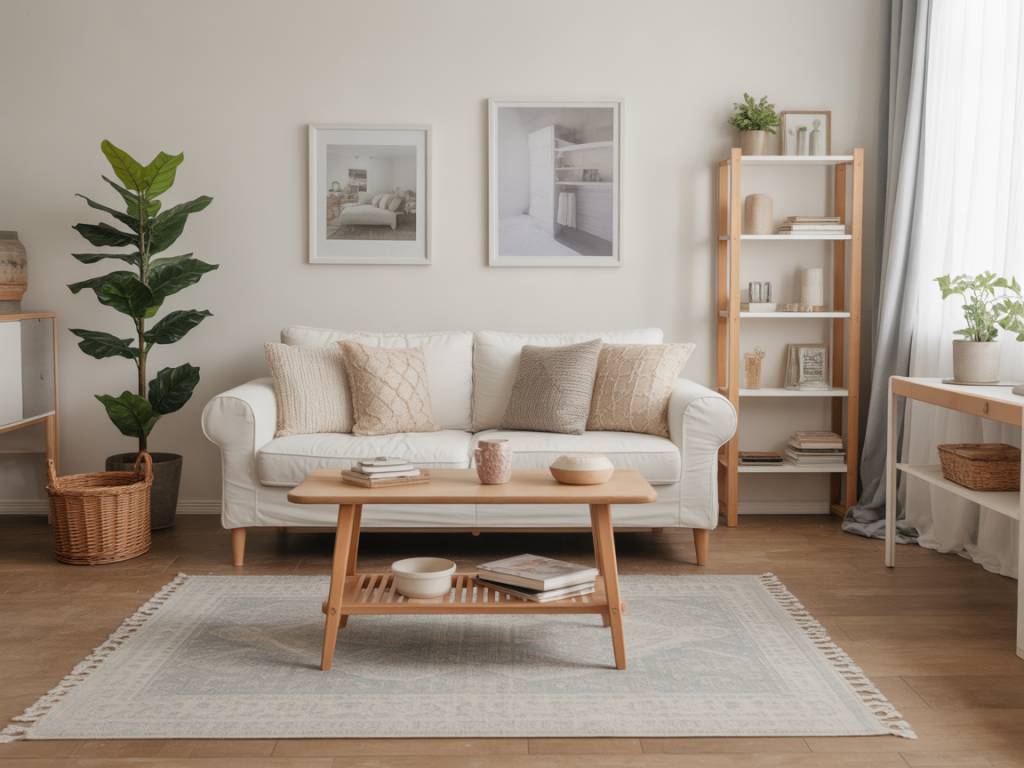
Before you start: set your weekend game plan
Your living room looks tired, you have a free weekend, a small budget and two functioning hands? Perfect. Let’s structure this properly instead of buying a random cushion and hoping for a miracle.
First, take 30 minutes (Friday evening if possible) to observe your living room in three situations:
- Daytime: ride of natural light, zones that look dull or cluttered.
- Evening: lighting quality, shadows, “dead” corners.
- From the entrance: first impression when you walk in.
Now grab a notebook and list three problems that really bother you. Examples:
- “The sofa wall is depressing.”
- “Everything is beige and flat.”
- “The lighting is cold and gloomy.”
- “The TV wall looks like a student rental.”
Then pick 2 or 3 projects maximum for the weekend, in this order of impact:
- Paint or wall treatment (accent wall, woodwork refresh).
- Layout and focal point (what you see first, where you sit).
- Lighting and textiles (immediate atmosphere boost).
Try not to touch everything at once. A focused weekend gives a real “wow” instead of four half-finished ideas.
Indicative budget for the weekend (you can reduce or increase easily):
- Low (under 100 €): paint one wall, rearrange furniture, add a lamp, 2–3 cushions.
- Medium (150–300 €): paint + lighting + rug or coffee table update.
- Comfort (300–500 €): all of the above + a small piece of furniture or shelving.
Paint: the fastest way to reset a tired room
If your walls are yellowed, marked, or just sad, paint is your best ally for a weekend project. The goal isn’t to repaint everything, but to create a strong, clean backdrop where the eye can rest.
3 simple options that fit in a weekend:
- Accent wall behind the sofa
Ideal if the sofa wall is currently “blank and boring”. Choose a colour 2–3 tones darker than the rest. - Slightly darker colour on all walls
If the room is already fairly clear, a warmer neutral (greige, sand, taupe) can instantly modernise the space. - Refresh skirtings, door frames and radiators
Often forgotten, and yet a coat of crisp white or soft beige on woodwork sharpens the whole room.
Material checklist (for a 10–15 m² living room):
- 2.5 L to 5 L of wall paint (good mid-range, washable).
- Undercoat if the current colour is dark or stained.
- Masking tape, roller (medium pile), angled brush, tray.
- Filler, fine sandpaper (120–180), dust sheet or old sheets.
Estimated time:
- Friday evening: choose colour, buy materials.
- Saturday morning: prep (filling, sanding, masking, protecting floor).
- Saturday afternoon: 2 coats with drying time between.
- Sunday: touch-ups, tidy up, rehang frames, reposition furniture.
Things to watch out for:
- Test the colour in natural and artificial light before painting everything (a 50×50 cm patch is enough).
- Don’t skip surface prep: clean, degrease, fill, sand. Paint doesn’t hide cracks or greasy marks.
- Remember ceiling and wall lines are never perfectly straight. Follow the existing line, not the spirit level, or it will look visually “off”.
Rethink the layout: your free, high-impact project
Many “tired” living rooms are simply poorly organised. The sofa is pushed against the wall, the TV is the only focal point, and circulation cuts the room in two. Before buying anything, try changing the layout.
Step-by-step for a 1-hour reshuffle:
- Empty the room as much as possible
Move small furniture, side tables, plants and rugs out of the way. You’ll see the space more clearly. - Define the real focal point
Is it the TV, a window, a fireplace, a nice piece of furniture? Choose one main focal point and one secondary. - Reposition the sofa
If possible, avoid having it stuck against the wall. A sofa slightly “floating” in the room with a console or bench behind can structure the space. - Create a conversation area
Place armchairs at 90° or face-to-face with the sofa, around a coffee table. Aim for 45–90 cm between seats and table. - Clarify circulation paths
Leave at least 80 cm for main walkways. You shouldn’t have to zigzag between furniture to cross the room.
Quick layout wins:
- Move the TV slightly off-centre and balance with a floor lamp or plant rather than making it the only star.
- Use a rug to “anchor” the seating area: front legs of sofa and armchairs on the rug (even a cheap flatwoven one).
- If the living room is narrow, align lower furniture by the walls and keep taller pieces (bookcase, high cabinet) grouped instead of scattered.
Take photos before/after. It helps you see what works and prevents you from going back to the old layout “by habit”.
DIY wall upgrade: shelves, ledges or gallery wall
Bare or randomly decorated walls contribute hugely to the “tired” feeling. Two projects are perfectly doable in a weekend with a drill and a level: picture ledges or a structured gallery wall.
Option 1: picture ledges above the sofa
Materials:
- 2–3 picture ledges (IKEA, Leroy Merlin, etc.).
- Wall plugs and screws adapted to your wall (plasterboard vs brick/concrete).
- Mix of frames, small objects, books, art prints.
Steps:
- Mark a straight line 20–30 cm above the sofa back (or 110–120 cm from the floor if there’s no sofa).
- Drill, plug, fix the ledges following the manufacturer’s spacing recommendations.
- Build your composition on the floor first, then place it on the ledges: vary heights, colours and frame sizes.
Option 2: structured gallery wall
Materials:
- 6–12 frames (preferably in 2 or 3 formats max for cohesion).
- Art prints, photos, fabric samples, vintage finds.
- Kraft paper, masking tape, level.
Steps:
- Trace each frame on kraft paper, cut out, and tape the “dummies” on the wall until the composition feels balanced.
- Keep 5–8 cm spacing between frames for a structured look.
- Drill and hang the frames following the kraft templates.
Budget: 60–150 € depending on frames and shelves chosen.
Time: 3–5 hours including layout tests.
Things to watch out for:
- Check your wall type before drilling: hollow, solid, mixed? Choose the right plugs.
- Don’t hang your frames too high. The centre of the composition should be around 140–150 cm from the floor.
- Limit text posters with “Live, laugh, love” unless you really, really love them. Your living room can do better.
Fix the lighting: from hospital neon to warm cocoon
You can repaint and rearrange all you want; if your lighting is bad, the room will look tired at night. The goal for this weekend: set up 3 levels of light instead of relying on that single sad ceiling fixture.
Shopping list (modular according to budget):
- 1 floor lamp with a soft shade (or an arc lamp over the sofa).
- 1–2 table lamps (for sideboard, console, bookshelf).
- 1 warm LED bulb pack (2700–3000 K, dimmable if possible).
- Optional: plug-in wall lights with visible cords (no electrician required).
Plan:
- Keep or simplify the ceiling light (avoid multi-spotlights blinding you from above).
- Add a floor lamp in a dark corner, ideally near the sofa or a reading chair.
- Place a table lamp on a sideboard or low cabinet to light the wall and visually enlarge the room.
- If you have shelves or a media unit, add a small lamp or LED strip behind objects for a soft halo (not in your direct line of sight).
Budget: 80–250 € depending on sources chosen.
Time: 2–3 hours including cable management.
Things to watch out for:
- Choose warm white bulbs (2700–3000 K). “Cool white” = office, not cosy living room.
- Watch out for glare: you should never look directly into a bare bulb when seated.
- Hide cables with cable covers, adhesive clips or trunking. Visual mess kills the cosy effect instantly.
Textiles: the “soft renovation” you can do in an afternoon
Textiles are your shortcut to a fresh living room without touching the structure: sofa covers, cushions, throws and rugs. They also allow you to test a colour palette before committing it to the walls.
Start with a colour rule: choose 3 dominant colours and stick to them.
- 1 base (neutral: white, beige, grey, taupe).
- 1 secondary (muted colour: terracotta, olive, petrol blue, mustard).
- 1 accent (more saturated, used sparingly: brick red, emerald, ochre).
Projects for this weekend:
- Sofa cover or plaid “cheat”
If your sofa is visually tired but structurally sound, a fitted cover (Ikea, Bemz, etc.) or a large cotton/linen throw neatly tucked in can buy you a few extra years. - Cushion refresh
Aim for 5–7 cushions max for a 3-seater sofa, mixing sizes (40×40, 50×50, lumbar). Combine plain + subtle patterns, avoid everything matching. - Rug reset
Too small a rug makes the room look cramped. Ideally, at least the front legs of the sofa and armchairs should rest on it.
Budget (indicative):
- Sofa cover: 80–200 €.
- Cushions and covers (4–6): 60–120 €.
- Rug 160×230 or 200×290: 80–250 €.
Things to watch out for:
- Check maintenance: can it go in the washing machine? Dry cleaning only?
- With pets, avoid very thick pile rugs and ultra-delicate fabrics. Flatwoven rug + washable covers = your friends.
- Do not buy everything online without checking dimensions. Measure, mark with tape on the floor if needed.
Furniture quick hacks: upgrade what you already own
No need to replace all your furniture to refresh the living room. A few targeted DIY hacks can modernise existing pieces at low cost.
Idea 1: transform the TV unit with handles and paint
If you have a basic white or wood-effect unit:
- Lightly sand the fronts.
- Paint them in a satin or eggshell finish (neutral or deep colour: graphite, forest green, inky blue).
- Add new handles or knobs (black metal, brass, leather pulls, etc.).
Budget: 40–100 € for paint + hardware.
Time: 4–5 hours including drying.
Idea 2: upgrade a basic coffee table
- Option A: paint and protect
Sand, paint in a strong colour or black, then apply a clear varnish for durability. - Option B: “faux stone” or “faux concrete”
Apply a decorative plaster/microcement kit following instructions. Immediate contemporary effect.
Idea 3: create a small reading nook
- Move an existing armchair near a window or a lamp.
- Add a small side table (or repurpose a stool) for books and a mug.
- Install a floor lamp or wall light, plus a throw and a cushion.
Cost: often 0 €, just reallocation of pieces you already have.
Things to watch out for:
- Check the material of furniture before painting (laminate, varnished wood, raw wood). Adapt primer and paint accordingly.
- Respect drying times listed on paint pots. Yes, even if you’re impatient.
- Do a small test on an inconspicuous area to check adhesion.
Sunday evening: checklist before you put the tools away
To make your weekend efforts really pay off, finish with a 30-minute “finishing touches” session. This is what separates a “we painted quickly” from a living room that looks intentionally redesigned.
Checklist:
- Declutter visible surfaces
Keep only what you want to see daily on the coffee table and sideboard. The rest goes in boxes, drawers, or out. - Re-hang or reposition art and mirrors
Now that walls and furniture have moved, your old hooks may no longer be relevant. Take the time to adjust. - Style 2–3 key spots
Example: coffee table (tray + 2–3 objects), sideboard (lamp + stack of books + plant), TV unit (balanced with objects on both sides). - Check the room at night
Turn on your new lighting, sit on the sofa, and look around. Any dark corners? Any bulb too aggressive? Adjust now. - Note what’s left to do later
Maybe the sofa truly needs replacing, or the windows deserve new curtains. Write it down, allocate a rough budget, and plan the next step.
A living room doesn’t have to be perfect in 48 hours. The goal of this weekend is to trigger a clear, visible change: fresher colours, better layout, softer light, and a few intentional details that make you want to sit down and stay. If you’ve achieved that, your weekend project is already a success.