Blank walls look clean on photos, but dans la vraie vie they often feel… unfinished. If your room looks “ok” but a bit cold or impersonal, chances are your vertical surfaces aren’t doing their job. The good news: transforming blank walls with modern art and texture is one of the fastest, most impact-per-euro upgrades you can do at home.
In this guide, we’ll stay very concretely on the “how”: what to hang, what to build, which materials to choose, how much it costs, how long it takes, and where you absolutely must think before you drill.
Start by reading the room, not the trend
Before opening any shopping app, stand in the room and really look at it. You’re not decorating a wall in abstract; you’re finishing a volume.
Ask yourself:
- What is this room for? Relaxation (living room, bedroom), concentration (office), circulation (hallway), repas (dining area)? The wall should support that function.
- How much natural light? A north-facing, dim wall doesn’t need the same treatment as a sun-flooded south-facing one.
- What are the dominant colors and materials? Sofa fabric, floor, kitchen fronts, window frames… Your art and textures should either echo or deliberately contrast them.
- What height and width are we dealing with? High ceilings, long corridors, awkward niches: each configuration calls for a different solution.
- What’s the wall made of? Plasterboard, brick, concrete, stone? This impacts fixings, weight, and sometimes budget.
Time: 20–30 minutes with a notebook and a tape measure. It sounds basic, but it will save you expensive mistakes (like a canvas that looks tiny once hung or a shelf wall that visually crushes a small room).
Define your impact level and budget
Not every blank wall needs a full architectural intervention. Decide first what kind of “project” this will be.
- Quick refresh (1–3 hours, €50–€250)
Ideal for renters or small budgets.
- Framed prints or posters
- Gallery wall with mixed frames
- Lightweight textile or tapestry
- Peel-and-stick textured panels or decals
- Intermediate makeover (1 day, €200–€800)
- Large statement canvas or diptych
- Wall-mounted picture ledges with layered artworks
- Painted color block or simple geometric mural
- 3D panels (wood, MDF, slats) painted to match or contrast
- Structural transformation (weekend to 3 days, €600–€3,000+)
- Full slatted wood wall
- Textured plaster, limewash, or microcement finish
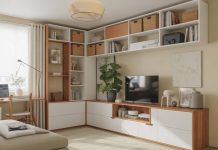
- Built-in shelving with integrated lighting and art
- Oversized custom piece or multi-panel installation
Be honest about your time, tools, and tolerance for dust. A slatted wood wall is spectacular, but it’s not the same effort as hanging three frames.
Modern art: choose the right strategy for your space
“Modern art” can mean a €20 print or a €4,000 original painting. The point here isn’t price; it’s the visual language: abstraction, strong lines, minimalism, bold color blocks, photographic work, or sculptural pieces.
Here are four strategies that work particularly well on blank walls.
1. One big statement piece
This works best when:
- The wall is wide and relatively unobstructed (e.g. above a long sofa or low sideboard).
- You want a calm, sophisticated atmosphere (rather than lots of small things to look at).
Practical rules:
- Size: Aim for artwork width between 60% and 80% of the furniture below it. Too small is worse than nothing.
- Height: Center roughly at eye level (about 145–155 cm from floor to center), adjust if most viewing is seated.
- Color: Pick 2–3 colors already present in the room, plus one bolder accent if you want energy.
Budget:
- Print on canvas with frame: €80–€300
- Original painting from emerging artist: €300–€1,500+
2. Gallery wall with structure (not chaos)
Perfect for:
- Hallways, staircases, or above a console
- People who like to change things or mix family photos and art
To keep it modern (not “flea market”):
- Stick to 2 frame colors max (e.g. black + oak, or all white).
- Keep a regular gap between frames (4–6 cm) and use a level.
- Mix formats (A3, A4, A5) but keep an overall rectangular or square outline.
- Prints and photos should share a color palette: all color, or all black & white, or muted tones.
Budget:
- Set of 6–10 frames: €60–€200
- Prints (downloadable or purchased): €30–€150
Time: 2–4 hours including layout on the floor, measuring, drilling, and hanging.
3. Sculptural and 3D pieces
Modern art is not only flat. A blank wall is an opportunity to add depth.
- Metal or wooden abstract wall sculptures
- Ceramic wall pieces
- Folded textile or padded wall panels
Good for:
- Echoing architectural lines (e.g. vertical metal rods echoing window mullions)
- Bringing softness in echoing an upholstered headboard
Watch out for:
- Weight and fixings: Use wall plugs suited to your material (plasterboard needs special anchors).
- Circulation: Avoid sharp or protruding pieces near doorways or in narrow corridors.
4. Art + function: shelves, picture ledges, rails
If you like to rotate art or are renting, picture ledges or slim shelves are your friends.
- Install 1–3 horizontal ledges
- Layer frames of different sizes, with 2–3 objects (vases, small sculptures, books)
- Keep colors and heights controlled so it doesn’t become visual clutter
Budget:
- Picture ledges: €10–€50 each, depending on size and finish
Time: 1–2 hours to install and style.
Add texture: from “flat wall” to architectural element
Texture is what takes a wall from “someone hung a print” to “this feels like a designed space”. You can combine a modern art piece with one of these texture solutions for a much more layered result.
Option A: Paint effects (the simplest structural cheat)
- Color blocking: Paint a rectangle, arch, or band behind the art to visually anchor it. Use matte finish for a contemporary look.
- Tonal variations: Same color family, one shade darker on the art wall to create depth.
- Soft shapes: Rounded forms and arches counteract very boxy, modern architecture.
Budget: €50–€120 for good quality paint and materials.
Time: 1 day maximum including prep and drying.
Point of vigilance: Masking tape quality matters. Cheap tape = bleeding edges. Test on a small area.
Option B: Slatted or ribbed wood wall
Very popular in contemporary interiors for a reason: it adds warmth, acoustic comfort, and rhythm. You can treat a full wall or just a vertical band behind a TV, a desk, or a bed.
Materials options:
- Ready-made acoustic slat panels: quick, more expensive, usually MDF with wood veneer on felt backing.
- DIY slats with raw battens (pine, oak, etc.) fixed onto battens or directly on the wall.
Indicative budget (3 m wide x 2.5 m high):
- Ready-made panels: €400–€1,000 depending on brand and finish
- DIY battens + paint/oil: €200–€500
Key steps:
- Check wall material and use correct plugs/screws.
- Plan spacing (usually 1–2 cm between slats) and mark vertical lines with a laser level.
- Pre-finish wood (stain, oil, or varnish) before installation to avoid messy brushwork near the ceiling.
- Integrate electrical outlets and switches from the start.
Time: 1–2 days for an experienced DIYer, 1 day with a professional team.
Vigilance: Wood moves. In humid rooms (bathroom, kitchen) use appropriate species and finishes or avoid full-height wood near direct water sources.
Option C: Textured plaster, limewash, microcement
For a very architectural, gallery-like feeling, the wall itself becomes the art.
- Limewash: matte, cloudy, slightly irregular; perfect for soft, contemporary interiors.
- Textured plaster: can be subtle or very marked; plays beautifully with natural light.
- Microcement: smooth, concrete-like; very modern, but requires proper substrate prep.
Budget (per m², supply + pro labor):
- Limewash: €25–€60/m²
- Decorative plaster: €40–€90/m²
- Microcement: €80–€150/m²
Time: from 1 to 3 days depending on products and drying times.
Vigilance: These finishes are more technical than simple paint. If you are not comfortable with trowel work, factor in a professional. Ask for samples before committing to a full wall.
Option D: Fabric and soft panels
Textile panels (upholstered, pinned, or stretched) bring both texture and acoustic comfort.
- Behind a headboard: linen, wool, or velvet panels create a hotel-like atmosphere.
- In a home office: acoustic panels covered in fabric to control echo while displaying pinned inspiration.
Budget:
- Ready-made acoustic panels: €40–€150 per piece
- DIY (wood frame + foam + fabric): €25–€70 per panel
Vigilance: Avoid fragile fabrics in areas exposed to stains (kids’ rooms, dining area). Choose removable or washable covers if possible.
Lighting: the multiplier you shouldn’t skip
Even the best art and texture will feel flat in bad lighting. Plan at least one dedicated light source for your feature wall.
- Picture lights: Mounted above frames or canvases. Works best for single large pieces or small series.
- Wall washers or spots: Ceiling-mounted or track lighting that grazes the textured wall (wood slats, plaster, etc.). Very effective for adding depth.
- LED strips: Hidden behind a slat panel, a shelf, or a headboard, creating indirect glow.
Indicative budget:
- Simple picture light: €40–€150
- Track lighting system for a wall: €150–€500+
Vigilance:
- Use warm white (2700–3000K) in living spaces; colder light kills the warmth of wood and art.
- Check CRI (Color Rendering Index) above 90 if you care about accurate art colors.
- Anticipate wiring before closing walls or installing heavy panels.
Common mistakes to avoid
Some errors come back on almost every project I visit. You can avoid them in 10 minutes of planning.
- Art hung too high
If you have to tilt your head up to see it, it’s too high. Prioritize the seated eye line in living rooms and dining areas. - Pieces too small for large walls
A lonely A4 frame in the middle of a 3-meter wall will look sad. Either go big or create a composition. - Ignoring furniture alignment
Art should relate to something: sofa, console, bed, dining table. Floating pieces with no visual anchor feel random. - Mixing too many styles and colors
Yes, eclectic can work, but it’s much harder. If you’re not sure, limit yourself to 3 main colors and 2 frame finishes. - Overloading a small room with heavy textures
Full-height ribbed plaster + dark color + large art in a tiny room = oppressive. In small spaces, keep either color or texture subtle. - Forgetting future flexibility
If you like to change art often, avoid drilling for each new piece. Use rails, ledges, or a pre-planned grid.
Three realistic project scenarios
To help you project yourself, here are three typical cases and the strategies that work.
1. Small rental living room, blank wall behind sofa
- Constraints: Limited budget, no major holes, neutral landlord-approved walls.
- Solution:
- Paint a soft color block (if allowed) or use a large, removable textile as backdrop.
- Add 2–3 picture ledges fixed with minimal holes.
- Compose a mix of prints and photos in consistent frames.
- Budget: €150–€400 for paint, ledges, and frames.
- Time: One day including drying and hanging.
2. New-build house, long blank wall in corridor
- Constraints: Long, cold, echoey space; risk of feeling like an office corridor.
- Solution:
- Install a band of vertical wood slats along 2/3 of the wall length.
- Add a series of small, evenly spaced black-and-white photos on the opposite wall.
- Use track lighting to wash light over the slats.
- Budget: €800–€2,000 depending on material and lighting.
- Time: 2–3 days with a pro, 2 weekends DIY.
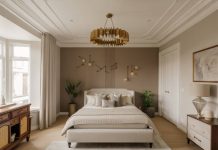
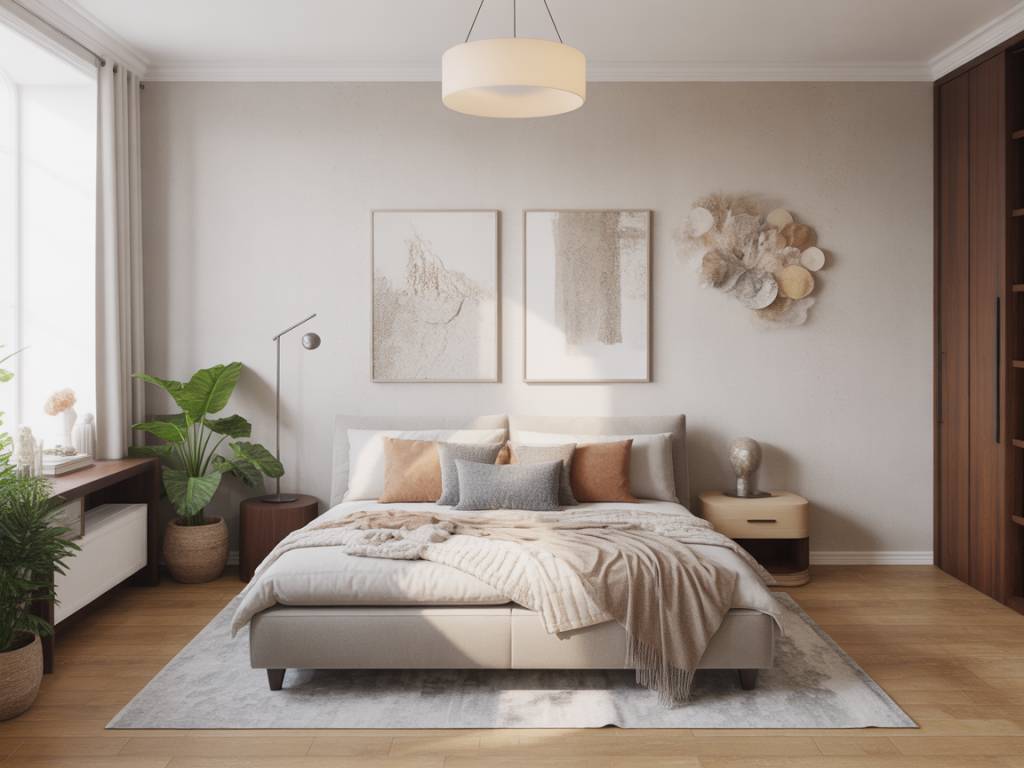
3. Existing bedroom, blank wall behind bed
- Constraints: Room feels cold, bed visually lost against a white wall.
- Solution:
- Paint a wide horizontal color band or apply limewash behind the bed.
- Add a padded or fabric panel to create a “headboard wall”.
- Hang one large abstract canvas centered above the bed.
- Use two simple wall lights acting both as reading lights and art lighting.
- Budget: €400–€1,200 depending on finishes and lighting quality.
- Time: 2 days (paint + panel + lights).
How to get started this week
If your instinct is to keep scrolling and “think about it later”, transform that into a mini-plan:
- Today: Choose one wall only. Take photos, measurements, and note the room’s function, light, and existing colors.
- Tomorrow: Decide your impact level (quick, intermediate, structural) and set a realistic budget range.
- This weekend: Order or buy your main elements (artwork, paint, panels, lighting) and the right fixings for your wall type.
- Within two weeks: Block one full day in your calendar and treat it like a mini renovation: tools ready, furniture protected, steps listed.
Blank walls are not a sign of minimalism; they’re just potential waiting for structure. With one or two well-chosen pieces of modern art, a considered dose of texture, and decent lighting, you can change not only how your room looks, but how it sounds, feels, and functions every day.