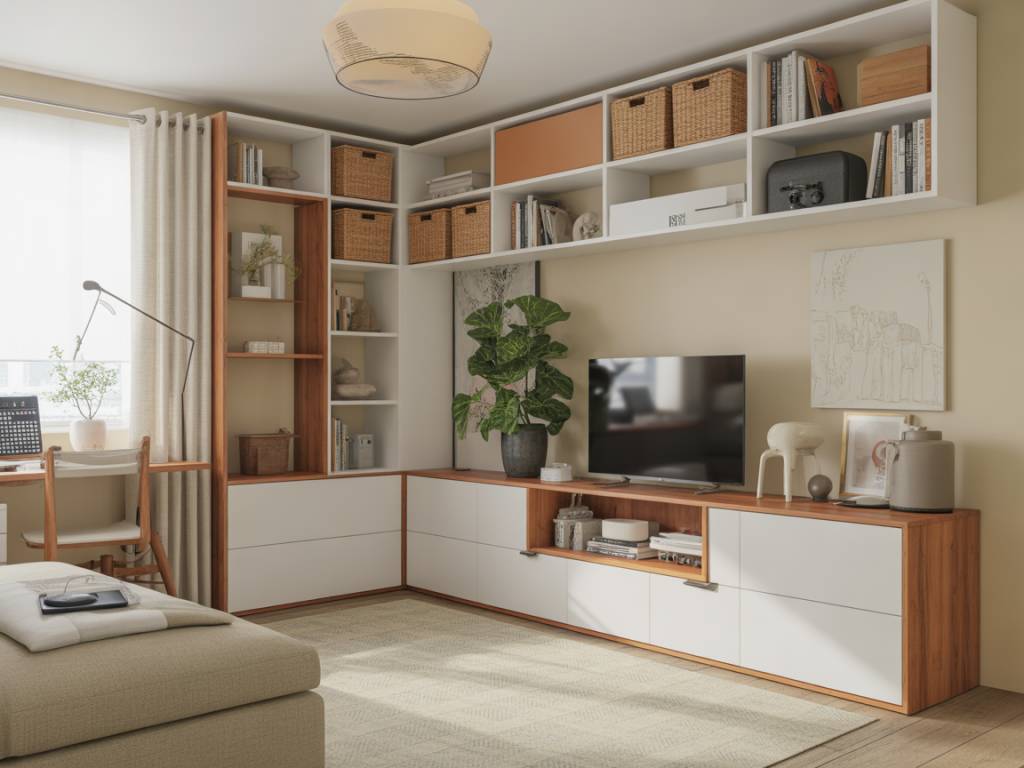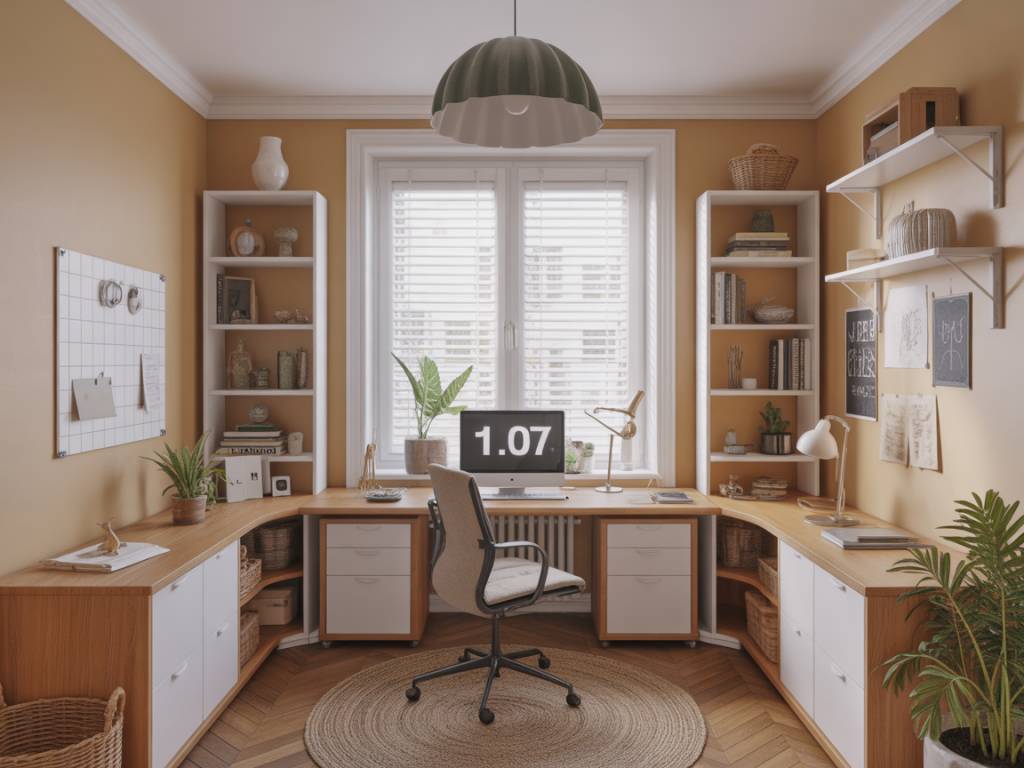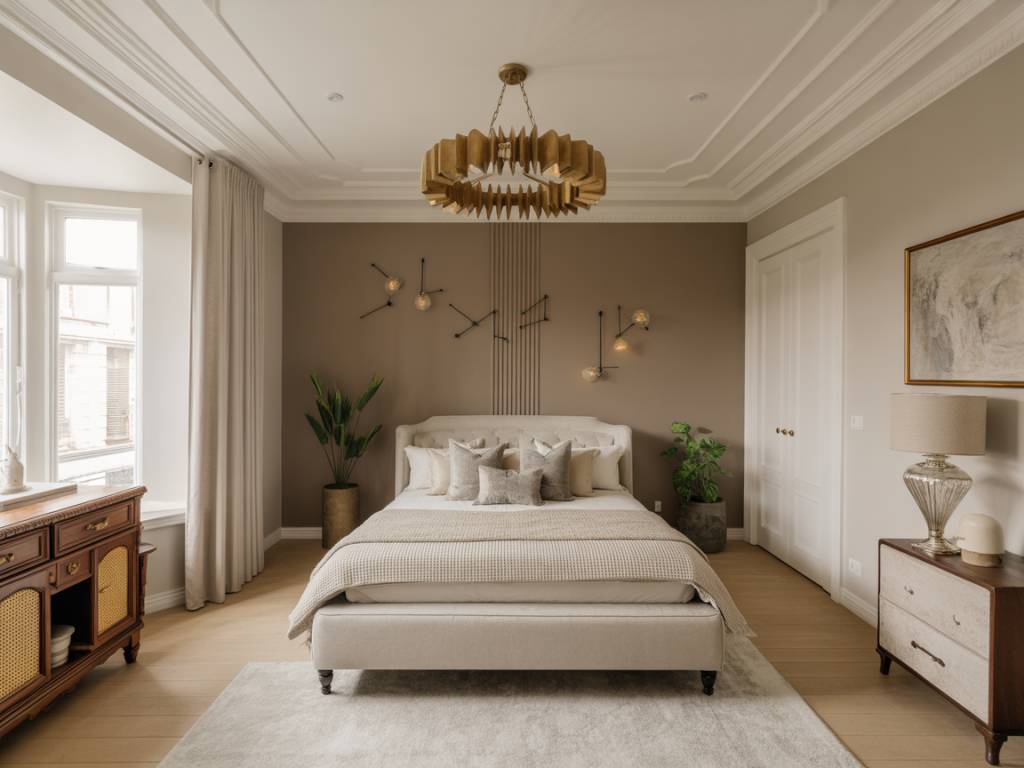


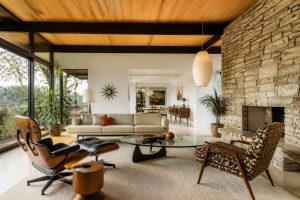
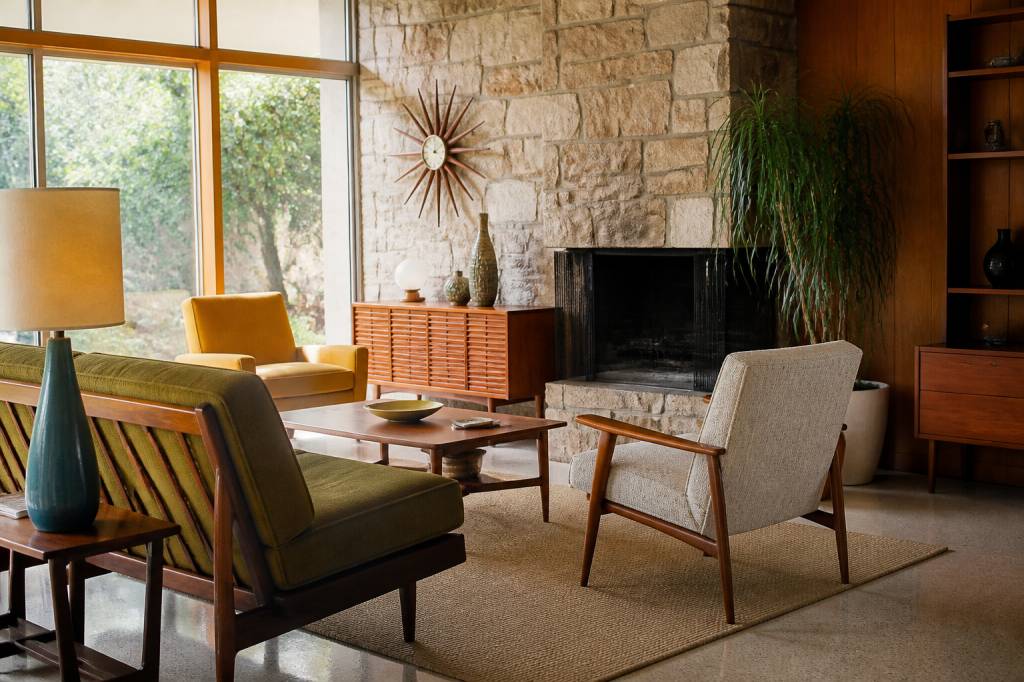
The 1950s living room is having a very deserved second life. Think warm wood, sculptural furniture, practical layouts and just enough colour to keep the room from feeling flat. Done well, a mid-century interior does not look like a museum set or a themed rental. It feels calm, functional and surprisingly modern.
The key is not to copy every detail from a period photograph. A successful 1950s-inspired living room borrows the principles of the era: honest materials, compact furniture, strong silhouettes and a layout designed around everyday life. Here is how to create that look without turning your home into a time capsule.
Why 1950s design still works today
Post-war interiors were shaped by practical constraints. Homes were often smaller, budgets were controlled and furniture had to work hard. Designers responded with lighter pieces, clever storage and cleaner forms. This is one reason mid-century design adapts so well to contemporary homes and apartments.
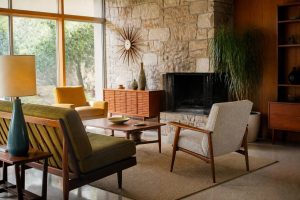
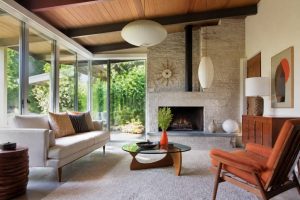
A typical 1950s living room is visually light but not empty. Tapered wooden legs lift sofas and cabinets away from the floor. Rounded corners soften the geometry. Textiles add comfort, while a limited colour palette keeps the space coherent.
There is also a useful discipline behind the style. Instead of filling a room with accessories, you choose a few well-proportioned objects and let them breathe. That is good news if you are renovating on a budget: you do not need to buy everything at once.
Start with the layout, not the accessories
Before choosing a starburst clock or a vintage armchair, check how the room functions. A 1950s living room was usually arranged around conversation, reading, radio or television. Your room may now need to accommodate a screen, remote work, children, pets and more charging cables than any designer could have predicted.
Measure the room carefully and mark the main circulation routes. Allow at least 70 to 90 cm for a comfortable passage where possible. A coffee table should sit approximately 40 to 50 cm from the sofa, close enough to reach but not so close that knees become part of the furniture arrangement.
- Choose the sofa position first, ideally facing the main focal point.
- Keep one clear route from the entrance to the windows or adjoining rooms.
- Use two smaller armchairs instead of one oversized chair if the room is narrow.
- Place the television discreetly rather than allowing it to dictate every angle.
- Check door swings, radiator locations and electrical outlets before ordering furniture.
A useful test is to mark the furniture footprint on the floor with masking tape. Live with the outline for a day or two. It is much cheaper to move tape than a solid walnut sideboard.
Select the right mid-century furniture shapes
You do not need an original 1950s suite to create the atmosphere. In fact, matching furniture sets can make the room feel generic. Instead, combine a few characteristic forms with simpler contemporary pieces.
Look for sofas with slim arms, gently angled backs and visible legs. A two- or three-seat model in textured fabric is usually more versatile than a very low, deep contemporary sofa. If you have children or pets, choose a tightly woven upholstery or a removable, washable cover. Style is useful; maintenance is essential.
Wooden furniture should have a clear, elegant profile. Teak, walnut, oak and darker-stained beech all work, depending on the rest of the room. Tapered legs, sliding doors and simple handles are more important than the exact species of wood.
- Sofa: choose a compact silhouette with raised legs and medium firmness.
- Armchairs: add one sculptural chair or a pair of lighter lounge chairs.
- Coffee table: consider an oval, kidney-shaped or softly rectangular top.
- Storage: use a low sideboard or wall-mounted cabinet to preserve floor space.
- Occasional tables: nesting tables are practical and visually authentic.
Pay attention to scale. A beautiful vintage chair can still look wrong if it is too small beside a large sectional sofa. Take measurements, including seat height and arm height, before mixing pieces from different eras.
Build a restrained 1950s colour palette
Mid-century colour is often associated with mustard yellow, avocado green, burnt orange and petrol blue. These shades can be striking, but using all of them at once is a reliable way to make the room feel dated for the wrong reasons.
Begin with a calm base. Warm white, mushroom, pale grey, sand or soft beige create a useful background for wood and colour. Then introduce one dominant accent and one smaller supporting shade.
- Warm base: ivory, oatmeal, greige or muted taupe.
- Main accent: rust, ochre, olive, petrol blue or terracotta.
- Secondary colour: chocolate brown, dusty pink, cream or charcoal.
- Metal detail: aged brass, black steel or brushed chrome.
Use the 60-30-10 principle as a starting point: around 60 percent of the room in the base colour, 30 percent in wood or a secondary tone, and 10 percent in stronger accents. This is not a building regulation, thankfully, but it helps prevent visual noise.
Paint samples are essential. Colours change dramatically between morning and evening, especially in north-facing rooms. Test large boards rather than small patches and leave them in place for at least 24 hours before deciding.
Use walls and flooring to establish the period feeling
The background matters as much as the furniture. Many 1950s interiors used simple, durable finishes rather than elaborate decoration. A flat-painted wall, timber floor and carefully chosen lighting can do most of the work.
For walls, choose a low-sheen matt or eggshell finish in a warm neutral. If you want more character, consider one accent wall in olive green, muted blue or tobacco brown. Wallpaper can work beautifully, but keep the pattern controlled. Geometric motifs, abstract leaves and small-scale atomic patterns are good options; covering every wall in a loud print is a different project altogether.
Flooring should provide warmth and continuity. Original timber floors are worth restoring if they are structurally sound. Depending on condition, sanding and refinishing may cost approximately £35 to £70 per square metre, including labour, although regional prices vary. Add a 10 to 15 percent contingency for repairs, damaged boards and awkward edges.
If the original floor cannot be saved, consider engineered timber, cork or a good-quality wood-effect floor. Cork is particularly appropriate for a mid-century room: it is warm underfoot, resilient and naturally acoustic. Always check moisture conditions and subfloor levels before installation.
Choose lighting with architectural intention
Lighting is one of the fastest ways to make a living room feel convincingly mid-century. The period favoured expressive, sculptural fixtures, but the underlying principle was practical: several light sources at different heights create a flexible room.
Plan at least three layers:
- Ambient lighting: a ceiling fixture or indirect wall light for general illumination.
- Task lighting: a reading lamp beside an armchair or sofa.
- Accent lighting: a table lamp, picture light or cabinet light to add depth.
Look for globe pendants, cone shades, tripod floor lamps and articulated metal lamps. Opal glass gives a soft glow, while perforated or slatted shades create attractive patterns on the walls. Use warm white bulbs, generally between 2,700K and 3,000K, rather than cold blue-white light.
Do not forget the controls. Dimmers are particularly valuable because a living room needs different settings for reading, entertaining and watching a film. If you are rewiring, ask your electrician to provide switched outlets and separate lighting circuits. This small investment has a major effect on daily comfort.
Add textiles without losing the clean lines
Mid-century furniture can look slightly hard if every surface is exposed. Textiles bring in the comfort that makes the room liveable. Start with a rug large enough to connect the main seating group. Ideally, the front legs of the sofa and chairs should sit on the rug. A tiny rug floating in the centre of a large room usually makes the furniture feel disconnected.
Choose wool, flatweave cotton or a durable wool-blend rug in a geometric or abstract pattern. If you already have strong upholstery, select a quieter rug. If the furniture is neutral, the rug can carry more colour.
Cushions and curtains should support the palette rather than repeat it mechanically. Combine one patterned cushion, one textured cushion and one plain cushion. For windows, linen or cotton curtains soften the room without hiding the architecture. If privacy is a concern, pair them with discreet roller blinds or woven shades.
Acoustics deserve attention too. Hard floors, large windows and minimal furniture can create an uncomfortable echo. A rug, curtains, upholstered seating and a few books will improve sound quality without adding clutter.
Bring in authentic details carefully
Small details create personality, but they should look collected rather than purchased in one afternoon from a themed catalogue. Search for original pieces in charity shops, flea markets, architectural salvage stores and online marketplaces. Check dimensions, electrical safety and the condition of veneers before buying.
- A framed abstract print or vintage travel poster.
- A ceramic table lamp with a fabric shade.
- A sculptural bowl, ashtray or small planter in a controlled colour.
- A brass, teak or black metal wall clock.
- Books arranged by subject and colour, but not artificially colour-coded.
- One large indoor plant with a simple ceramic or woven planter.
When buying vintage lighting, do not assume that a beautiful shade is safe to use. Old wiring may be brittle, earthing may be absent and fittings may not meet current standards. Have the lamp checked and rewired by a qualified professional. The inspection is less glamorous than the styling, but considerably more useful.
Mix vintage and contemporary pieces successfully
The most convincing interiors rarely contain furniture from a single decade. A contemporary sofa can sit comfortably with a vintage sideboard, while a modern artwork may give an inherited armchair a sharper context.
To keep the mix intentional, repeat at least one element across the room. This might be the tone of the timber, the shape of the legs, a metal finish or a colour accent. Contrast is welcome; randomness is not.
Try this practical formula: one strong vintage hero piece, two or three supporting mid-century references and contemporary basics for comfort and function. For example, pair a restored teak sideboard with a modern upholstered sofa, a vintage lounge chair, a simple contemporary rug and a new floor lamp inspired by 1950s forms.
If you are working with a limited budget, prioritise the pieces that occupy the most visual space. Spend more on the sofa and lighting, then save on accessories and side tables. Replacing cushions or repainting a cabinet is easier than correcting an uncomfortable sofa later.
A realistic budget and project sequence
For a modest living room refresh, set aside a minimum of £1,500 to £3,000 for paint, lighting, a rug, accessories and second-hand furniture. A more complete redesign with a new sofa, flooring and electrical work can easily reach £5,000 to £12,000 or more, depending on finishes and labour.
Work in this order:
- Measure the room and define the furniture layout.
- Inspect flooring, walls, sockets and lighting before decorating.
- Set a colour palette and collect material samples.
- Complete electrical and building work first.
- Paint or install wall finishes.
- Repair or replace the flooring.
- Place the main furniture and check circulation.
- Add lighting, textiles, artwork and accessories gradually.
Allow a contingency of at least 10 percent, and closer to 15 percent in an older property. Uneven floors, damaged plaster and outdated wiring have a habit of appearing after the first layer is removed. The mid-century look may be relaxed, but the preparation should not be.
Avoid the most common styling mistakes
The first mistake is over-theming. Starburst motifs, atomic patterns, orange plastic and teak furniture can all be excellent individually. Together, they may overwhelm the room. Choose references with restraint.
The second is ignoring comfort. A chair can be historically accurate and completely unpleasant to sit in. Test seating whenever possible. Check seat depth, back support and fabric durability, particularly if the living room is used every day.
The third is placing furniture against every wall. Mid-century layouts often benefit from a little breathing space. Float the sofa if the room allows it, or leave a visible gap behind a sideboard so the composition feels lighter.
Finally, do not sacrifice modern performance for appearance. Use LED bulbs, add discreet cable management, choose fire-rated upholstery where required and confirm that any renovation work meets local regulations. A stylish room should also be safe, comfortable and easy to maintain.
The best 1950s-inspired living rooms are not frozen in the past. They combine the era’s thoughtful proportions and warm materials with the realities of contemporary life. Start with a workable layout, choose fewer but better pieces, layer the lighting and let the room develop over time. That balance is what makes mid-century design remain timeless rather than merely nostalgic.