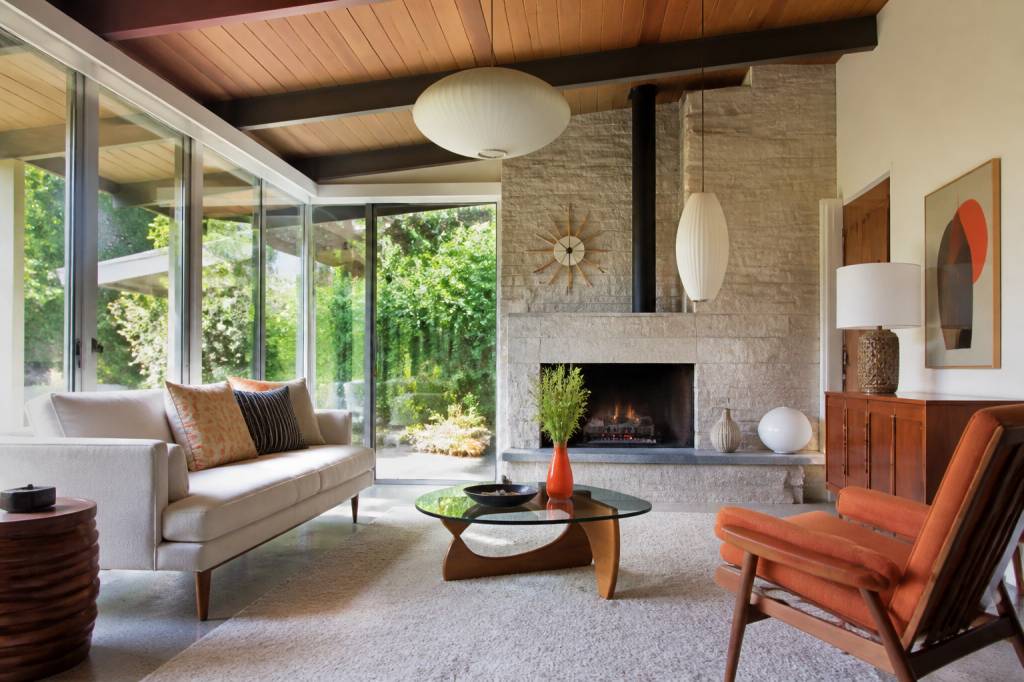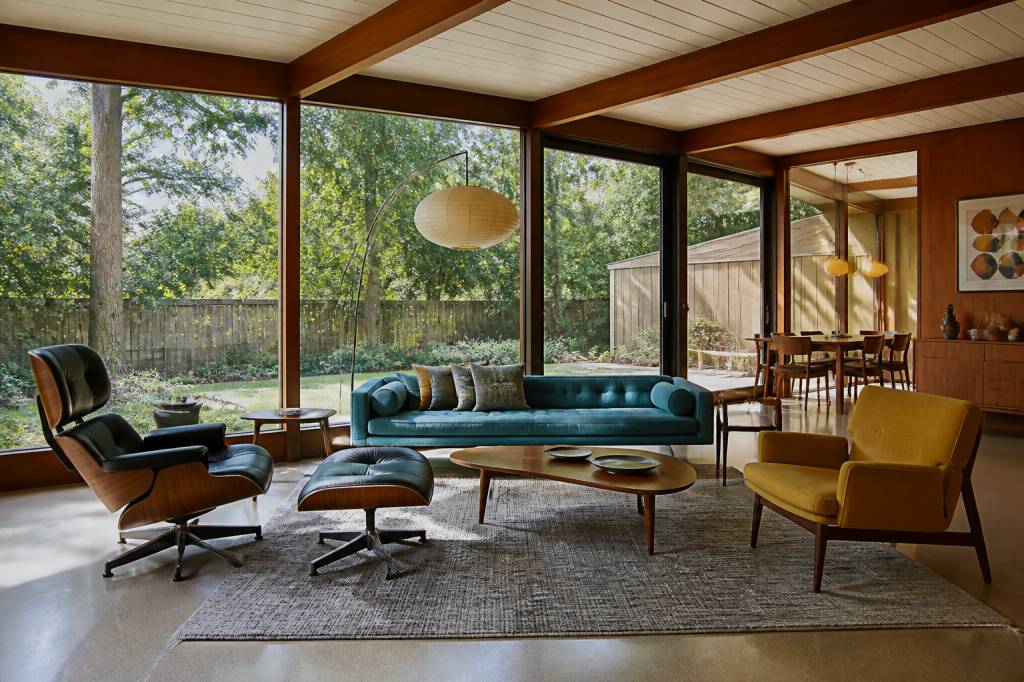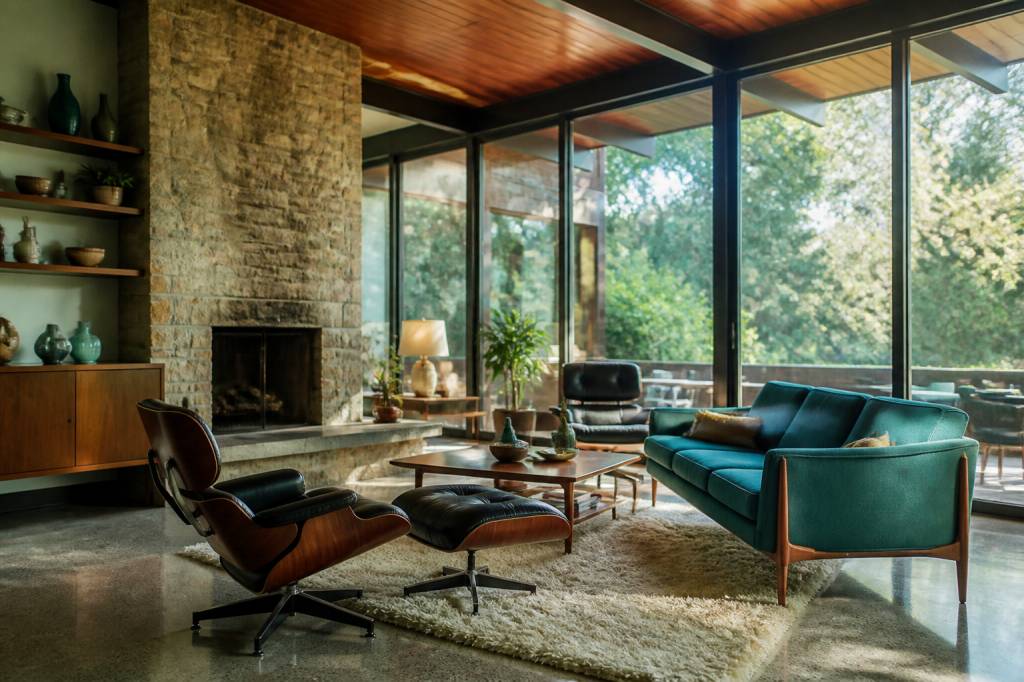



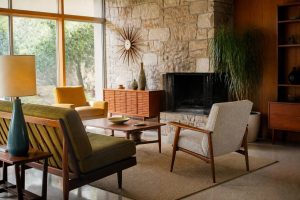
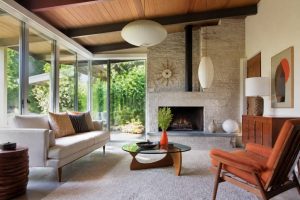


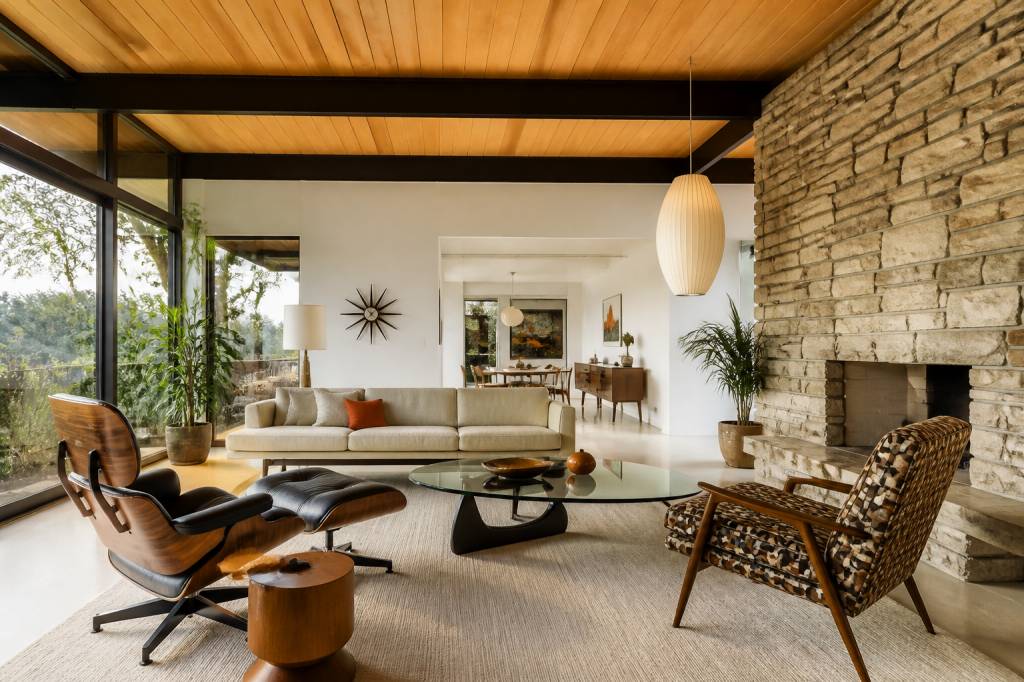
If you like the clean lines, calm colours and practical layouts of a contemporary home, but you also have a soft spot for the optimism of the 1950s, you are not alone. The good news is that 50s-inspired design can work beautifully in a modern interior — as long as you edit it carefully. The aim is not to recreate a movie set or turn your house into a nostalgia museum. It is to borrow the best parts of the decade: honest materials, sculptural shapes, clever storage, and a warm, human scale.
That balance matters. A contemporary house can easily feel cold if everything is too sharp, too white, too perfect. A few 1950s references soften the space and give it personality. But there is a fine line between “considered retro” and “theme park living room”. The trick is to use 50s cues as accents, not as a full costume. Think of it as a design seasoning: just enough to change the flavour, not enough to overwhelm the dish.
Start with the right 1950s references
The 1950s were not one single style, which is useful because it gives you options. In practical terms, the decade offers three strong directions you can adapt to a contemporary home:
- Mid-century modern: clean silhouettes, tapered legs, teak, walnut, low-profile furniture, and a strong focus on function.
- Atomic and retro-futurist details: starburst mirrors, geometric patterns, boomerang motifs, and bold but controlled colour accents.
- Suburban comfort: cosy upholstery, rounded forms, compact but efficient layouts, and a more relaxed domestic feel.
For a contemporary house, mid-century modern is usually the safest starting point. It feels current because it shares many values with modern design: simplicity, efficiency, and uncluttered spaces. If you add a few atomic details on top, you get character without chaos. That is the sweet spot.
Use furniture with honest, simple lines
If you only change one thing, make it the furniture. 50s-style pieces work well because they often have light visual weight. Raised legs make a room feel less crowded, which is especially useful in smaller homes. A bulky sofa with a low, boxy profile may look “modern” in a catalogue, but it can also flatten a room. A sofa with slimmer arms and visible legs gives you breathing space.
Look for these features:
- Tapered legs in wood or black metal
- Organic shapes with slightly rounded corners
- Compact proportions instead of oversized modules
- Natural finishes such as oak, teak, walnut or ash
- Upholstery in textured neutrals, moss green, rust, mustard or muted blue
Practical tip: do not match everything. A 50s-inspired home works best when it looks collected over time. Pair a sleek sideboard with a contemporary sofa, or place a vintage-style armchair next to a modern floor lamp. If every item comes from the same retro collection, the room can start to feel staged rather than lived in.
Choose a colour palette that feels modern, not nostalgic
The easiest mistake is to use too many bright vintage colours at once. Yes, the 1950s loved optimistic shades, but your contemporary home still needs restraint. The most successful scheme usually combines a calm base with one or two warm accents.
A reliable formula is:
- Base: warm white, soft grey, sand, beige, charcoal, or muted off-white
- Wood tones: medium walnut, honey oak, smoked oak, or teak-inspired finishes
- Accent colours: olive green, terracotta, mustard, petrol blue, salmon pink, or ochre
If you want the room to feel more contemporary, keep the walls neutral and introduce colour through smaller elements: cushions, a rug, ceramics, a pendant light, or a single painted niche. If you want a stronger 50s reference, use colour on cabinetry or a statement wall, but keep the rest of the room quiet. Too many saturated shades in one open-plan space will make the architecture disappear.
One helpful rule: if the eye keeps jumping from one bright object to another, you have gone too far. Step back and reduce the number of colours by half. It sounds harsh, but it usually works.
Bring in textures that age well
Mid-century style is often associated with smooth surfaces and polished wood, but contemporary homes need more texture to feel grounded. A carefully layered mix of materials stops the space from looking flat. This is where the 1950s can be surprisingly useful, because the decade celebrated practical, durable finishes rather than decorative excess.
Good material combinations include:
- Wood veneer with linen or wool upholstery
- Terrazzo with matte paint
- Leather with brushed brass or blackened steel
- Glass with timber and textured ceramics
- Patterned tile with plain plaster walls
In a renovation project, I would always prioritise finishes that can handle daily life. A glossy table may look elegant, but if you have children, pets or a habit of putting mugs down without coasters, you will spend your life polishing fingerprints. Choose materials that improve with use rather than exposing every mark. That is very much in the spirit of 1950s design: beautiful, yes, but not fragile for the sake of it.
Use lighting as a sculptural feature
Lighting is one of the simplest ways to introduce 50s style into a contemporary home. In the 1950s, lamps were not only functional; they helped shape the mood of the room. You can do the same today with a few carefully chosen pieces.
Look for lighting with:
- Globe shades
- Conical or drum forms
- Brass, opal glass, frosted glass, or matte black finishes
- Tripod bases
- Articulated arms or adjustable heads
A starburst pendant can work in an entrance hall or dining area, but use it sparingly. It is a strong graphic gesture, so it needs space around it. In a compact room, a pair of simple globe wall lights or an arc floor lamp may be a better choice. Ask yourself: do you want the light fitting to be a focal point, or do you want it to quietly support the furniture? The answer should guide the scale.
Layer your lighting properly. One overhead point light is not enough in a contemporary home, retro style or not. Use a combination of ambient, task and accent lighting. A 1950s-inspired interior looks far better when the shadows are soft and the corners are not left to fend for themselves.
Add pattern with discipline
The 1950s had no shortage of pattern, from boomerangs to chevrons to abstract florals. In a contemporary home, though, pattern should be used like punctuation. A little is effective; too much becomes noisy.
Good ways to introduce pattern without taking over the room:
- A rug with a restrained geometric print
- Cushions in one or two retro-inspired fabrics
- Artwork referencing mid-century graphics
- Tile in a small area such as a splashback or cloakroom
- Wallpaper on a single wall or inside fitted joinery
If you are nervous, start with removable elements. Textiles are the easiest thing to change if the look does not work. Wallpaper can be more ambitious, especially in a hallway or powder room, but it gives a strong payoff if the scale and palette are right. Just remember that a bold pattern looks different under daylight and artificial light. Always test samples on the wall before committing. That “perfect” print in the shop can look surprisingly busy at home.
Mix vintage and contemporary with intention
This is where many people go wrong. They buy one retro chair, one replica lamp, one geometric print, and then wonder why the room feels confused. The answer is simple: style needs repetition. A 50s-inspired detail becomes credible when it is echoed elsewhere in the room.
For example:
- A walnut sideboard pairs well with slim black-framed shelving
- A rounded armchair feels intentional if the coffee table also has soft edges
- Brass handles on cabinetry can connect to a brass floor lamp or mirror frame
- Terrazzo on a vanity can be echoed by a terrazzo tray or vase
When mixing old and new, keep the proportions calm. If your contemporary home has large windows, open-plan volumes or polished concrete floors, you can handle stronger retro pieces. In a small terrace house or apartment, use lighter furniture and fewer accessories. Design is always about scale, not just style. A beautiful object that is too big for the room is still the wrong choice.
Make storage part of the aesthetic
One reason 1950s design still feels relevant is that it understood everyday life. Storage was built into the concept rather than added as an afterthought. That is a lesson worth keeping. A contemporary home looks better when clutter is under control, and mid-century style is especially suited to practical storage solutions.
Consider:
- Low sideboards for living rooms and dining areas
- Built-in shelving with open and closed sections
- Bench seating with hidden storage in an entryway
- Freestanding cabinets on legs rather than heavy floor-standing units
- Compact bedside tables with drawers instead of open piles of clutter
If you are renovating, think about joinery early. A good storage plan is cheaper to integrate before finishes go in than to retrofit later. It also helps you keep the visual language consistent. Flat-fronted cabinets, simple handles and warm wood veneers can all nod to the 1950s while staying firmly contemporary.
Practical ways to introduce the look without a full renovation
You do not need a major budget to bring 50s style into a contemporary home. In fact, small targeted changes often have the best impact because they force you to edit. Here is a realistic approach if you want to test the style before committing.
- Budget under £300: swap cushions, add a statement lamp, update a mirror, and choose one retro-inspired rug or artwork.
- Budget £500–£1,500: invest in a sideboard, dining chairs, or a new coffee table with mid-century proportions.
- Budget £2,000+: consider bespoke joinery, a kitchen dresser, reupholstery, or a coordinated lighting scheme.
Time-wise, the simplest changes can be done in a weekend. Repainting a room, updating hardware, or sourcing second-hand furniture may take a bit longer, especially if you want quality rather than convenience. If you are hunting vintage, allow time for repairs, reupholstery and delivery. Good pieces are worth waiting for. Cheap “retro-style” items can end up costing more in the long run if they do not wear well.
Where to be careful: the common mistakes
A 50s-inspired scheme can look fantastic, but only if you avoid a few predictable traps.
- Too much theme: one starburst mirror is charming; six is a warning sign.
- Wrong wood tone: not every brown finish reads as mid-century. Avoid shiny orange stains that look dated rather than deliberate.
- Overcrowding: 1950s furniture often appears light because it has room to breathe.
- Poor quality replicas: a cheap copy with awkward proportions undermines the whole scheme.
- Ignoring comfort: style only works if the sofa is actually comfortable and the chair is actually usable.
Before buying anything, ask three questions: Does it solve a practical need? Does it fit the scale of the room? Does it connect to at least one other element in the space? If the answer is no, keep looking. Contemporary homes reward discipline.
A simple formula that always works
If you want a quick route to a 50s-inspired contemporary interior, use this formula:
- One warm wood anchor piece
- One sculptural light fitting
- One muted retro colour
- One geometric or atomic pattern
- Several calm, contemporary background surfaces
That combination is enough to create atmosphere without making the room feel dated. It works in living rooms, bedrooms, kitchens and even hallways. The idea is not to mimic the past, but to borrow its clarity, optimism and craftsmanship. That is why the 1950s still matter in contemporary design: they offer a human-scale way to make modern spaces feel more welcoming.
If you approach it with restraint, a 50s-inspired interior does exactly what a good contemporary home should do: it feels practical, comfortable and visually confident. And unlike a lot of trends, this one does not rely on novelty. It relies on good proportions, decent materials and a bit of common sense. Refreshing, isn’t it?