

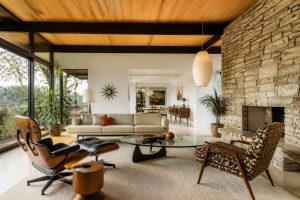
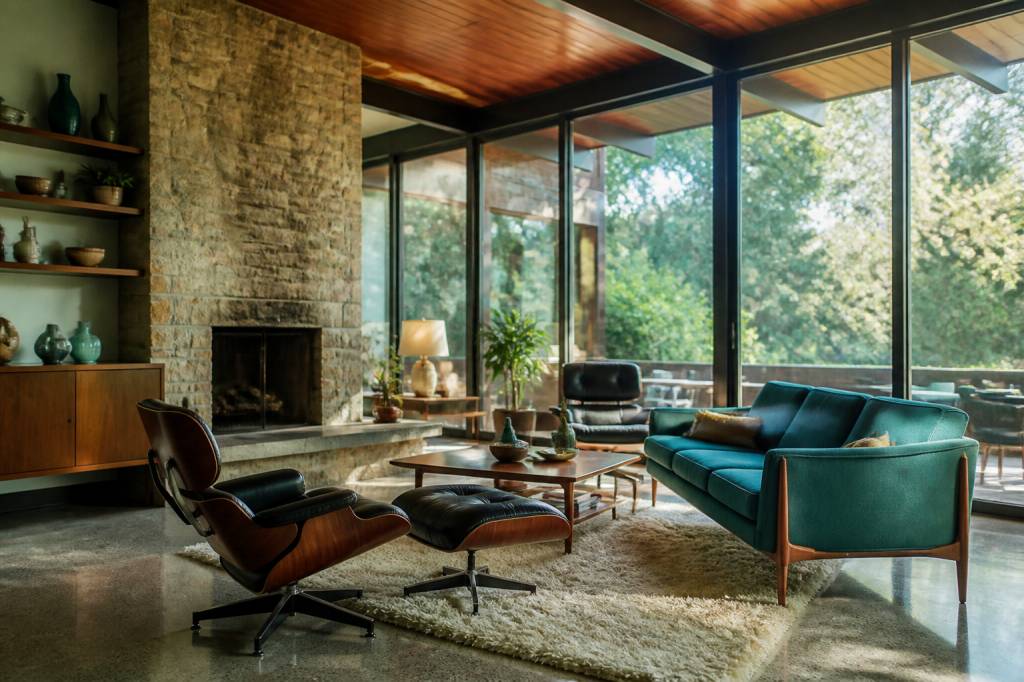
1950s design still has a strong pull on contemporary homes. And that makes sense: the decade gave us clean lines, practical layouts, honest materials, and a softer kind of modernism that still feels livable today. If your first instinct is to picture dusty vintage armchairs and avocado appliances, fair enough. But the real value of 1950s design is not nostalgia for its own sake. It is about borrowing the right ideas and adapting them to modern living, better insulation, better storage, better lighting, and fewer regrets.
The trick is not to turn your home into a set from a period drama. It is to use 1950s design language with restraint. A curved chair here, a walnut sideboard there, a clever tiled splashback, maybe a grid of slim timber slats. Enough to create character. Not enough to make your house feel like a museum. If that sounds like the right balance, here is how to do it properly.
What makes 1950s design work so well today?
The 1950s were a transition decade. Homes were becoming lighter, more open, and more practical after the heavier styles of the earlier twentieth century. In architecture and interiors, that meant a move toward simplicity: lower-profile furniture, slimmer legs, organic curves, geometric patterns, and a preference for materials that looked natural rather than over-decorated.
That philosophy fits contemporary homes beautifully. Modern interiors often need visual breathing space. We want rooms that feel open, functional, and calm. The 1950s deliver exactly that, provided you select the right elements. The key is structure and proportion. A well-placed mid-century lamp can do more for a room than an entire wall of decorative objects. Useful, yes. Fussy, no.
There is also a practical reason this style keeps coming back. Much of 1950s design is based on pieces that were built for everyday use. Think storage units, dining tables, sideboards, armchairs with tapered legs, and modular shelving. These are not just decorative statements. They solve problems. And that is usually where good design starts.
The core elements to borrow from the 1950s
If you want a home with a subtle 1950s influence, focus on a few defining features rather than trying to copy the whole decade. You do not need a retro fridge and patterned curtains unless you really want them. Start with the following building blocks:
These elements work because they are adaptable. You can use them in a house built in 1954, a city apartment from the 1990s, or a newly built open-plan home. The style is more about attitude than strict historical accuracy.
Colours that feel authentic without looking dated
Colour in 1950s interiors was not all pastels and novelty brights, although those definitely existed. The palette often combined earthy, grounded tones with pops of optimistic colour. For a contemporary home, that is a very useful formula.
Good base colours include warm white, cream, soft grey, mushroom, taupe, and muted olive. These shades create a calm backdrop and make wood furniture feel richer. Then, add one or two accent colours inspired by the period: mustard, rust, teal, petrol blue, terracotta, or a softened red. The point is not to shout. The point is to create contrast with discipline.
If you are repainting a room, test your colours in daylight and evening light. Mid-century-inspired tones can shift dramatically depending on the orientation of the room. North-facing rooms often tolerate warmer shades better, while south-facing spaces can handle deeper, cooler accents. Do not trust a tiny paint sample under a shop’s fluorescent lighting. That is how people end up with “terracotta” that looks suspiciously like orange soup.
Furniture: choose a few signature pieces, not a full set
One of the easiest ways to get 1950s style wrong is to overdo it. Matching furniture sets can flatten a room, especially in a modern home where you need flexibility. Instead, mix one or two standout mid-century inspired pieces with quieter contemporary items.
A walnut sideboard is a good example. It gives you storage, visual weight, and a clear 1950s reference without taking over the room. Pair it with a modern sofa in a plain linen or textured weave, and the room immediately feels more considered. The same applies to dining tables: look for simple rectangular or round shapes, slim legs, and natural timber finishes.
When buying furniture, check the proportions carefully. A lot of reproductions get the silhouette right but miss the scale. A 1950s-inspired chair that is too bulky can make a small room feel crowded. Measure your space, test circulation routes, and leave enough clearance around key pieces. In a dining area, for instance, you need room to pull chairs back comfortably. Style should never make daily life annoying. That is not design. That is punishment.
Materials that do the heavy lifting
1950s design has a material honesty that still reads well today. Wood, glass, metal, leather, wool, and ceramic are all part of the visual language. The good news is that these materials are easy to blend into modern homes without major renovation.
For floors, timber remains one of the best choices. If you have original parquet, keep it if possible and restore it properly. If you are replacing flooring, a natural oak finish works well with both period-inspired and contemporary furniture. Avoid overly orange stains unless you are very sure. They can quickly tip a room from stylish to dated.
In kitchens and bathrooms, consider ceramic tile with a simple, geometric layout. Subway tile is not exclusive to the 1950s, but it fits the era nicely when used with restrained grout lines and a clean finish. Terrazzo is also having a long and deserved revival. Used carefully, it brings movement and texture without overpowering the room.
For upholstery, look for wool blends, boucle, leather, or tightly woven fabrics. These suit the shape-driven nature of the style and tend to wear well. If you want a softer, updated feel, mix one tactile fabric such as boucle with more structured materials like wood and metal. It keeps the room from feeling too literal.
Lighting: one of the simplest ways to get the look right
Lighting is where 1950s inspiration can become genuinely useful rather than just decorative. Mid-century lighting was often sculptural, but not overly ornate. Think pendant lights with simple globes, starburst forms, tripod floor lamps, and adjustable wall lights.
In a contemporary home, lighting should do three jobs: provide general illumination, highlight key areas, and add visual interest. A single ceiling fitting is rarely enough. Layer your lighting instead.
If you want the 1950s feel without the vintage-shop gamble, buy new fixtures inspired by the era but designed for modern wiring standards. That matters more than people think. Old fittings can be charming, but they also need checking by a qualified electrician. Style is not worth a dodgy cable.
1950s patterns: use them with a light hand
The decade loved pattern, but contemporary homes usually need a quieter approach. A full wall of bold atomic print may look fun in a magazine spread and exhausting in real life. The better strategy is to use pattern selectively.
Start with textiles: cushions, a throw, a rug, or curtains. Geometric motifs, starbursts, abstract shapes, and stylised botanicals all work well. In smaller doses, they bring energy without taking control of the room.
Tiles are another smart place to introduce pattern. A backsplash with a grid of colour, a checkerboard floor in a hallway, or a patterned bath panel can create strong visual identity without requiring a full renovation. If you are nervous about commitment, use removable or easy-to-replace elements first. That gives you flexibility if your enthusiasm fades after six months, which is often when the first “inspiration boards” meet actual cleaning.
How to blend 1950s style into different rooms
Not every room needs the same treatment. In fact, the best results usually come from tailoring the references to the function of the space.
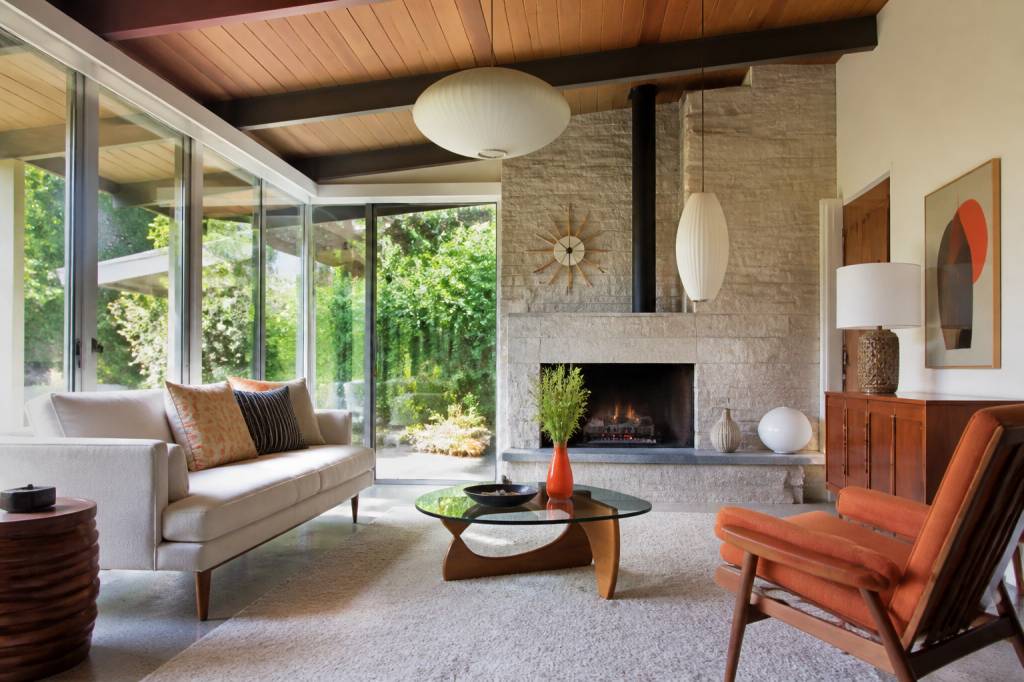
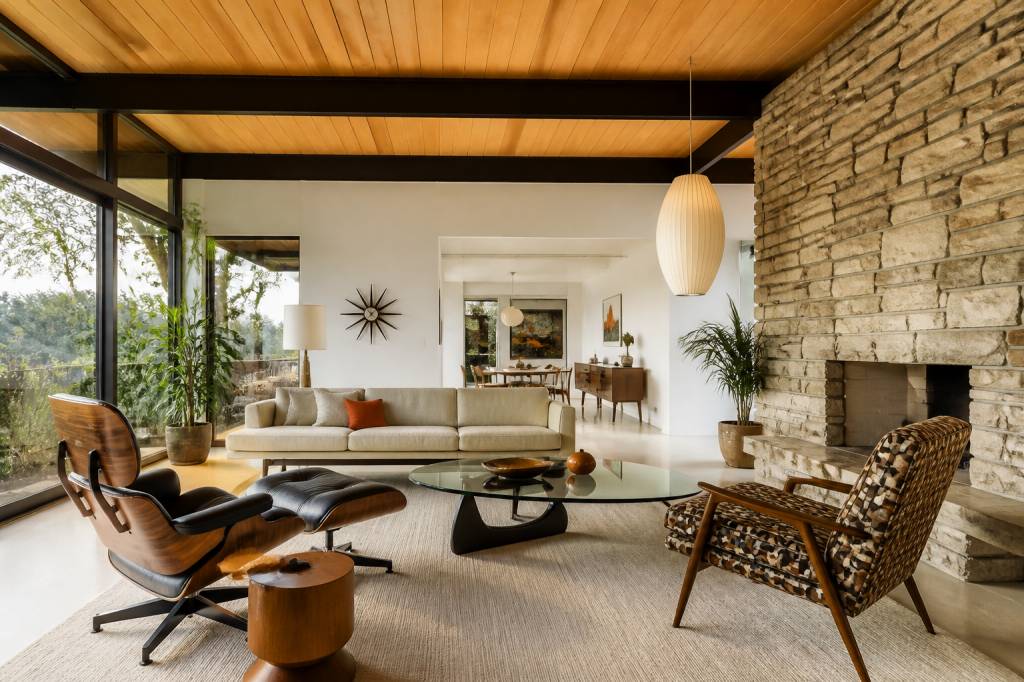
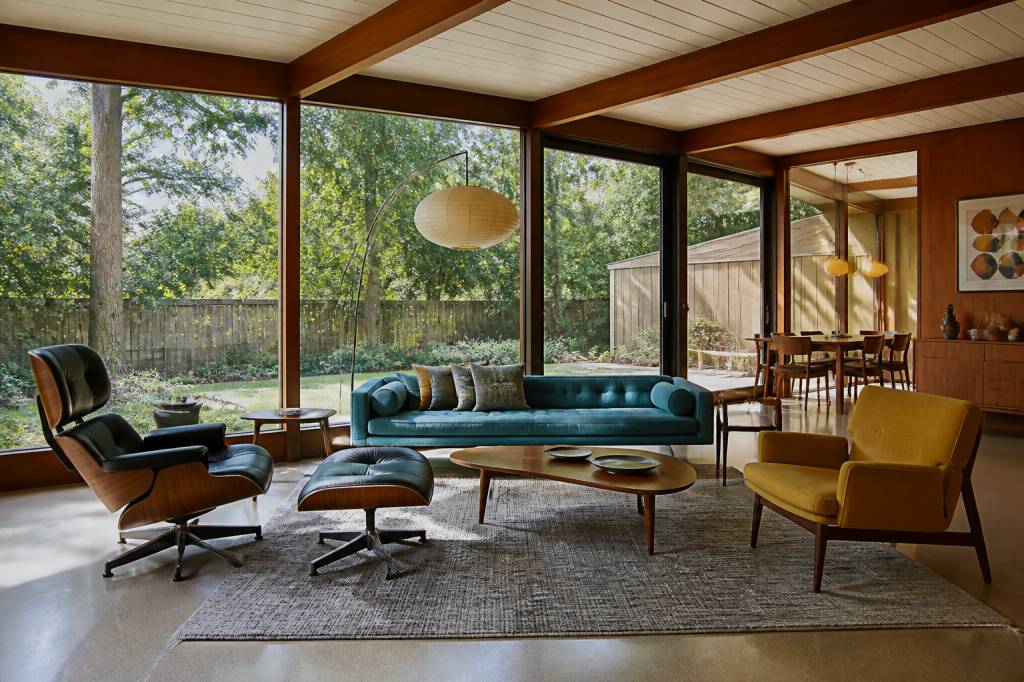
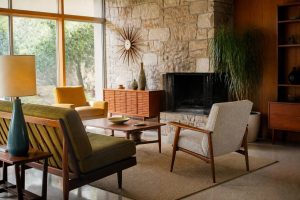
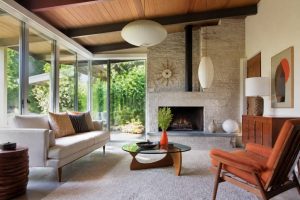
In the living room, focus on a low sofa, a walnut coffee table, a statement lamp, and one graphic artwork. Keep the layout open and avoid overfilling the room. The 1950s love a bit of air around the furniture.
In the kitchen, use timber fronts, simple handle profiles, and a restrained colour palette. If full retro cabinets feel too much, combine plain contemporary units with one mid-century-inspired feature, such as open shelving in wood or a vintage-style breakfast nook.
In the bedroom, the style should be calmer. A platform bed, a pair of pared-back bedside tables, and soft textured bedding can nod to the era without making the room feel themed. Keep the decor simple. Bedrooms benefit from restraint more than most spaces.
In the hallway, one strong piece of furniture can be enough: a slim console, a round mirror, or a bench with tapered legs. Hallways are often overlooked, but they are ideal for setting the tone of the house.
What to avoid if you want the style to feel contemporary
This is where many people go wrong. They collect too many obvious references and lose the balance. A successful contemporary home should feel current first, vintage second.
Also, be careful with scale. A small room packed with heavy furniture will not feel like sophisticated 1950s design. It will just feel full. The era’s best interiors usually had strong shapes but a sense of order and openness. That should remain your guide.
A practical way to get started without overcommitting
If you want to introduce 1950s design ideas into your home, begin with a low-risk plan. You do not need a full renovation. You need a sequence.
Budget-wise, this can be done at very different levels. A small refresh with paint, textiles, and one or two accessories might cost a few hundred pounds. A more serious update with new furniture and lighting can move into the low thousands. If you are buying vintage, always allow room in the budget for restoration, rewiring, reupholstery, or delivery. The hidden costs are often where projects become awkward.
Time-wise, a soft update can be done in a weekend. Sourcing quality vintage pieces, however, takes longer. Be patient. Good design is rarely the result of a frantic one-click shopping spree.
Why the 1950s still feel relevant in modern homes
What keeps this era alive is not just style. It is the underlying logic. 1950s design values clarity, function, and beauty in ordinary objects. That is still exactly what most homes need. We do not need more clutter, more gimmicks, or more trends that expire before the paint dries. We need rooms that work and still feel distinctive.
Used well, 1950s design ideas can give a contemporary home warmth, structure, and personality without making it feel stuck in the past. That is the sweet spot: a space that respects history but still works for everyday life. If you can achieve that, you are not decorating nostalgically. You are designing intelligently.